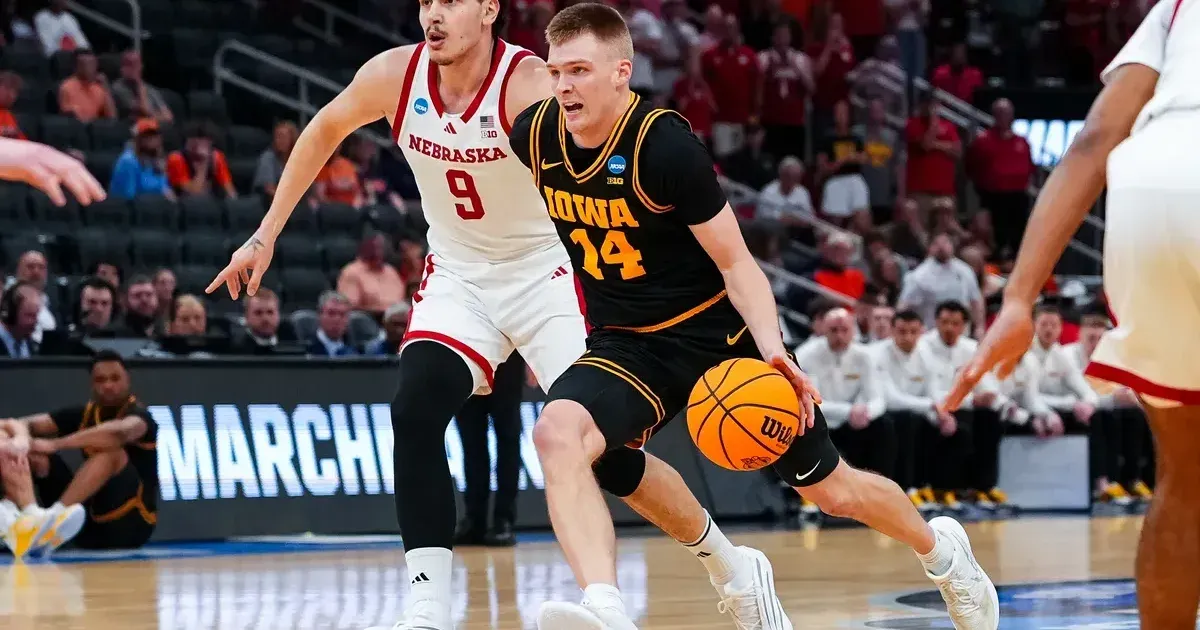
Iowa turned a tense regional matchup with Nebraska into the kind of postseason result that changes a program's memory. The Hawkeyes controlled the late possessions, protected the ball when the game tightened, and advanced to their first Elite Eight. For a team that had spent the tournament answering pressure, the win felt earned rather than sudden.
Nebraska made the game uncomfortable by forcing Iowa to defend deep into the shot clock. Neither side found an easy rhythm for long stretches, and March 27, 2026, became less about pace than composure. Iowa's advantage came from cleaner late execution.
The final minutes showed why tournament games often turn on small details. A defensive rebound, a composed entry pass and a foul-line possession mattered as much as any highlight. Iowa did not need a perfect game; it needed the steadier one.
Defense Carried the Closing Stretch
The Hawkeyes leaned on containment rather than gambling. Nebraska's guards found fewer clean angles late, and Iowa's help defenders closed the lane without giving up a flood of open perimeter looks. That discipline kept the game inside Iowa's preferred margin.
On offense, Iowa resisted the temptation to chase quick answers. The Hawkeyes used the middle of the floor, forced switches and made Nebraska defend multiple actions. Even when shots missed, the possessions were organized enough to prevent runouts.
The bench also mattered. Tournament wins often require one or two supporting players to survive foul trouble, absorb defensive assignments or finish a short scoring burst. Iowa received enough of that support to keep its stars from carrying every possession.
Why the Run Matters
Reaching the Elite Eight changes expectations. It gives recruits a fresh image of the program, gives returning players a higher internal standard and gives the fan base a result that can be referenced for years. One win does not build a power by itself, but it can reset the conversation around what is possible.
Nebraska exits with frustration, but not embarrassment. Its defensive plan forced Iowa into difficult work, and the game stayed competitive because Nebraska matched the physical tone. The difference was late-game clarity.
Iowa now carries both momentum and a heavier spotlight. The next opponent will test whether this run is a peak or a platform. Either way, the win over Nebraska has already given the Hawkeyes a place in the program's postseason history. The matchup also showed the value of tournament adaptability. Iowa did not win by simply repeating its preferred regular-season rhythm; it adjusted to Nebraska's pressure, accepted a slower game and found enough scoring through structure rather than panic. That matters in the next round because Elite Eight opponents rarely allow a team to live on its first option. The Hawkeyes will need the same patience, especially if the game becomes physical early or foul trouble changes rotations. The win over Nebraska gives them evidence that they can survive that kind of contest. It does not make the next step easy, but it makes the belief more concrete. There is also a recruiting dimension to a run like this. Coaches can point to the Elite Eight not as a slogan but as proof that the program can carry players into the deepest part of March. That matters for prospects who want a visible stage and for veterans deciding whether to return. Iowa still has to convert the moment into sustained standards, because one bracket run can fade quickly if the next seasons do not build on it. For now, though, the Nebraska win gives the Hawkeyes a reference point that future teams will have to answer. The players will also have to manage the emotional drop after a milestone win. Teams can spend so much energy reaching a historic threshold that the next game feels like a bonus. Iowa's staff will try to avoid that trap by treating the Elite Eight as a preparation problem, not a celebration tour. That mental reset may decide whether the milestone becomes an ending point or a launch point. In March, the teams that keep improving after the big win are usually the ones still playing a week later. The next round will show whether Iowa can carry that steadiness against a team with more size, speed or shot creation.