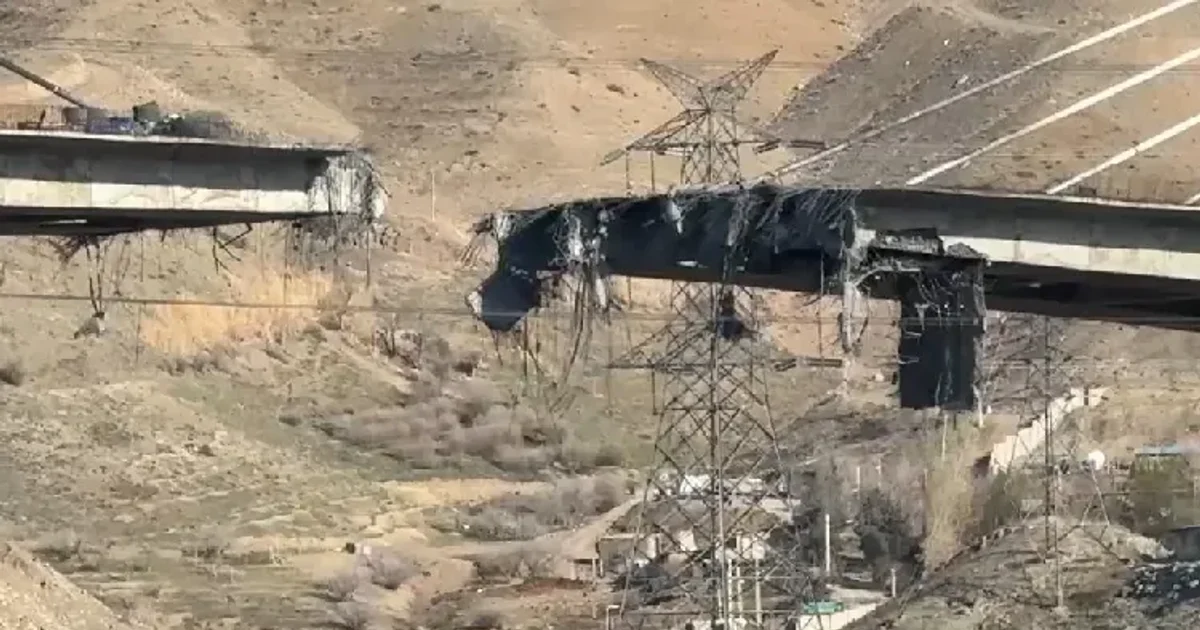
A lethal escalation unfolded in the regional conflict as rescue teams in Iran recovered more bodies from the wreckage of an essential transportation link. Missile strikes launched by US-Israeli forces targeted the B1 bridge in Karaj, the capital of Alborz province, resulting in a death toll that reached 13 individuals by Friday morning. Reports from the official IRNA news agency confirmed that another 95 people sustained injuries during the two waves of aerial bombardment that leveled portions of the structure. The April 4, 2026 casualty update placed the bridge strike inside a widening civilian crisis.
Many victims were families celebrating Nature Day, a traditional Iranian festival known as Sizdah Bedar, which concludes the Nowruz new year holidays. Civilians from the nearby village of Bileqan were among the dead and wounded. Two waves of missiles struck the bridge while municipal workers and holiday travelers were present on the span. Amir-Hossein Daneshkohan, director general of the provincial Foundation of Martyrs and Veterans Affairs, identified four women among the deceased. Provincial records show that 44 civilians have died in Alborz province since military operations started in late February.
The strike hit a structure regarded as one of the tallest and most engineering-intensive projects in the Middle East.
Alborz Province Infrastructure Targeted in Missile Strike
Engineers designed the B1 bridge to handle high-capacity traffic through the Alborz mountain range, making it a critical node for both civilian and potential military logistics. Two separate missile waves hit the bridge on Thursday, causing sections of the roadway to collapse into the valley below. Qodratollah Seif, deputy governor for political and security affairs in Alborz, stated that the timing of the strike coincided with peak holiday travel. Residents of Bileqan village reported windows shattering several kilometers away from the impact site.
Emergency responders struggled to reach survivors trapped in vehicles that had been tossed by the force of the explosions. Medical facilities in Karaj reported a surge in trauma cases, with 95 individuals requiring urgent surgical intervention. Most of the injured suffered from shrapnel wounds and respiratory distress caused by falling debris and smoke. Local authorities have suspended all Nature Day festivities as the provincial government declared a period of mourning for the victims. Security forces have cordoned off the remaining sections of the bridge to assess structural integrity.
The Alborz mountains now serve as a backdrop for a widening humanitarian crisis that shows no signs of stabilizing.
Escalation Follows Death of Supreme Leader Ali Khamenei
Hostilities between the coalition and Tehran intensified sharply following the events of February 28, 2026. Joint US and Israeli operations on that date targeted the Iranian capital and several other urban centers, resulting in the death of Supreme Leader Ali Khamenei along with his top military advisers. Military commanders in the Islamic Revolutionary Guard Corps were also neutralized in those initial strikes. Iran responded to the decapitation of its leadership by launching hundreds of drones and ballistic missiles at Israeli cities and US bases across the region.
This retaliatory cycle transformed a localized shadow war into a full-scale regional conflict involving heavy ordnance and long-range precision strikes. Intelligence sources suggest the B1 bridge was targeted to disrupt the movement of hardware between Tehran and the northern provinces. Military analysts, however, point to the high civilian presence on the bridge as a factor that may complicate international diplomatic support for the campaign. The loss of the Supreme Leader created a power vacuum that hardline factions in the Iranian military have filled with aggressive defense postures.
Tehran continues to maintain that its missile strikes on coalition assets are a necessary response to the assassination of its head of state. Current casualty figures indicate that the urban centers of Karaj and Tehran remain the primary targets of the coalition air campaign.
"The victims, including four women, were civilians," said Amir-Hossein Daneshkohan, director general of the provincial Foundation of Martyrs and Veterans Affairs.
Provincial officials confirmed that the B1 bridge was not a known military site, though its strategic importance to the national highway system is undeniable. Construction of the bridge required over a decade of planning due to the complex terrain and seismic risks of the region. Local residents often gathered at the base of the bridge for picnics during the Nowruz season. The strike on Thursday has effectively severed one of the primary arteries connecting the capital to the Caspian Sea coast. Search parties continue to sift through the rubble for at least three individuals reported missing by their families.
Iranian state television has broadcast images of charred vehicles and personal belongings scattered across the bridge deck. Military experts from the region suggest the use of bunker-busting munitions may have contributed to the total failure of the bridge support. The provincial governor's office has asked for international aid to manage the influx of displaced families from the border regions. The death toll is expected to rise as several of the 95 wounded remain in critical condition. Hospital officials in Karaj noted a shortage of specialized burn treatments and blood supplies.
Total civilian fatalities in the northern provinces have surpassed several hundred since the initial February 28 strikes.
Bridge Strike Deepens Civilian Cost
The bridge attack carries weight because the victims were using civilian infrastructure during a public holiday. Even if the route had strategic value, the casualties will intensify scrutiny of target selection and proportionality.