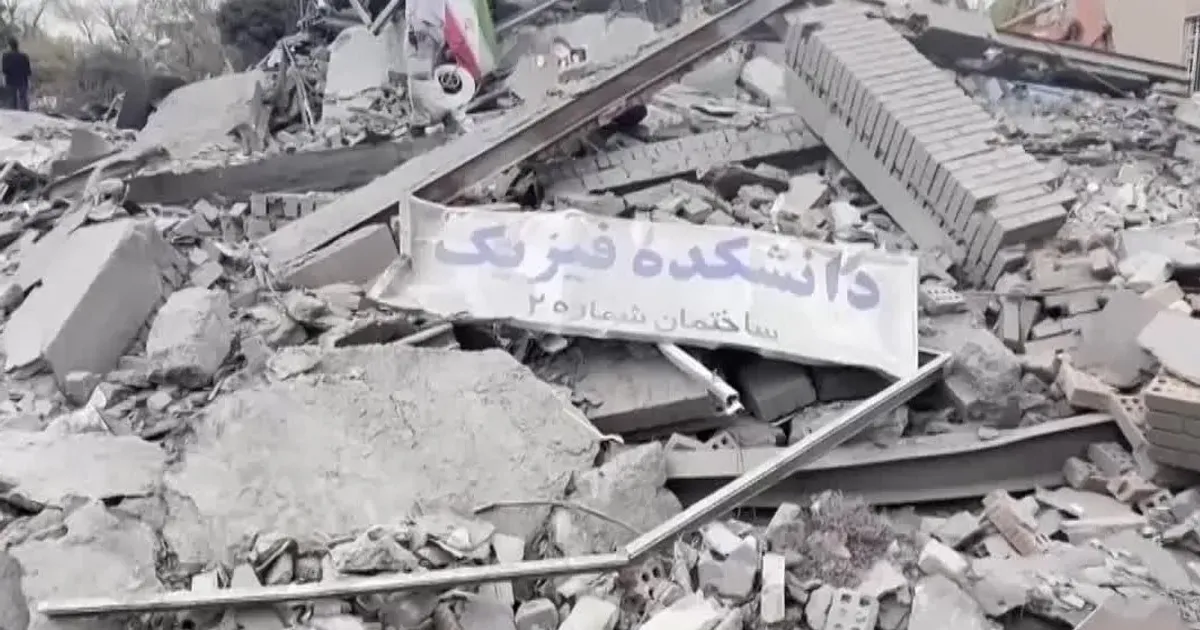
Iran's warning against U.S.- and Israel-linked universities in the Middle East turned academic space into part of the regional security crisis. The Islamic Revolutionary Guard Corps warned that such institutions could be treated as legitimate targets after alleged U.S.-Israeli attacks on Iranian academic and scientific sites. The threat was alarming because it moved retaliation language toward campuses, students, faculty and research communities. Inside Higher Ed reported the warning after attacks on Iranian institutions including Tehran University of Science and Technology and Isfahan University of Technology. Other reports said the IRGC advised people to stay at least one kilometer away from affected campuses.
Branch Campuses Became Security Symbols
American universities in the Gulf are not military bases. They are classrooms, laboratories, libraries and student communities. But they also carry symbolic value: U.S. prestige, elite training, English-language education and long-term soft power.
Their symbolism makes them vulnerable to political framing. Once a campus is described as an extension of an adversary, the people inside it become easier to threaten rhetorically even though they are civilians.
Education City Shows The Exposure
Qatar's Education City hosts campuses tied to Georgetown, Carnegie Mellon, Northwestern, Virginia Commonwealth, Weill Cornell Medicine and Texas A&M, among others. NYU Abu Dhabi and the American University of Beirut sit in different local contexts but face the same basic issue: U.S.-linked higher education can become a pressure point during regional war.
Reports in the weeks after the warning described campuses moving to remote instruction, limiting access or helping students and staff leave. Those steps were not proof of an imminent attack. They were proof that the threat language was serious enough to change operations.
Students Should Not Become Strategic Leverage
The most immediate risk is fear. Families may wonder whether a degree program has become geopolitical exposure. Faculty may question travel, research access and evacuation plans. Local staff may face risks that visiting faculty can leave behind.
Universities should respond with clear travel guidance, visible security coordination and direct communication with students, not vague reassurance. In a threat environment, silence can create more anxiety than a careful admission of risk.
Iran Undercuts Its Own Academic Claim
Iran has argued that attacks on its academic institutions are unacceptable. That claim is stronger when it defends education as civilian space. It becomes weaker when Tehran threatens other universities as retaliation.
Civilian education cannot be protected only when it belongs to one side. If Iranian campuses deserve protection from attack, so do U.S.-affiliated and Israeli-linked campuses in the region. The legal and moral line has to hold in both directions.
Host Governments Face A Delicate Test
Qatar, the UAE, Lebanon and other host countries have invested in global education partnerships for prestige, workforce development and diplomacy. They also operate in a region where U.S. military ties, Iranian retaliation threats and domestic politics intersect.
The threat creates a difficult balancing act. Governments must protect campuses without turning them into fortresses that defeat their educational purpose. They also have to signal that universities are civilian spaces, not bargaining chips in a military exchange.
The Threat Corrodes Before It Hits
Campus threats are a sign of strategic desperation, not strength. States and armed groups threaten universities when they want symbolic pressure while avoiding the admission that students and teachers would carry the civilian cost.
The threat is not empty. It makes it corrosive. A regional conflict that pulls students into its target language is already widening in the wrong direction. The correct line is blunt: universities are not battlefields, and students are not bargaining chips.