The Iran war is rattling global credit markets while making the foreign-policy divide inside the MAGA base harder to ignore. The market stress deepened on March 11, 2026.
Credit Markets Start Pricing War
The Iran conflict became the point when global credit markets finally buckled under the pressure of regional instability. JPMorgan Chase and Company paused critical investor discussions this week regarding a $20 billion financing package for Electronic Arts Inc., citing extreme nervousness among institutional lenders. Debt sales of this magnitude require a predictable geopolitical environment, yet the escalating conflict in the Middle East has rendered the leveraged buyout market almost unrecognizable. Investors who once flocked to high-yield opportunities now seek the safety of short-term treasuries as the prospect of a protracted war looms. Bankers at JPMorgan aimed to finalize one of the largest debt offerings in history for the gaming giant. Volatility across sovereign bonds and corporate credit spreads turned those ambitions into a cautionary exercise in risk management. Credit markets effectively froze when reports of potential strikes on infrastructure surfaced, leaving the $20 billion deal in a state of suspended animation. Financing for such massive acquisitions relies on the ability to package and sell debt to secondary buyers, but those buyers have vanished into the shadows of uncertainty. Economic anxiety is no longer confined to the marble halls of Wall Street. Rising utility bills are causing domestic distress, with many American families choosing to turn off their heating systems to compensate for soaring energy costs. Household budgets are feeling the squeeze as global oil supply routes face constant threats of disruption. Market analysts suggest that utility providers are pricing in the risk of sustained high fuel prices, a burden that falls directly on the consumer. One suburban homeowner noted that her mother refuses to turn on the heat, driven to desperation by headlines of a widening war.
Tech Giants Become Regional Targets
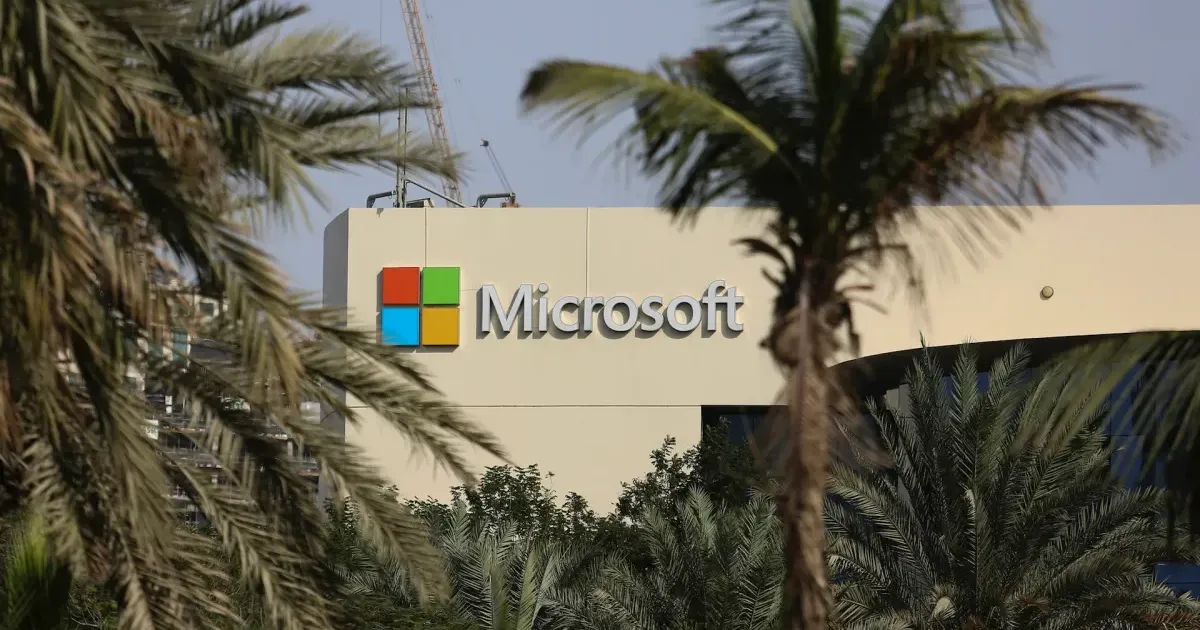
This fear reflects a broader trend of consumer retrenchment that could stifle domestic economic growth throughout 2026. Military commanders in Iran issued a series of chilling directives targeting American corporations operating within the Middle East. Google, Microsoft, and Nvidia received explicit warnings to vacate or downscale their regional footprints. These companies maintain significant infrastructure and data centers in hubs like Dubai and Riyadh, making them soft targets for cyberattacks or physical sabotage. Iranian officials also urged citizens and regional partners to avoid banks affiliated with Western interests, suggesting a coordinated attempt to destabilize the financial architecture of the Persian Gulf. War risk has moved from oil screens into credit desks and party politics. Nvidia faces a particularly precarious situation. High-end semiconductor shipments to the region were already under scrutiny, but the threat of active hostilities puts billions of dollars in hardware at risk. Microsoft and Google have invested heavily in regional cloud regions to serve the growing Middle Eastern tech sector. Now, these assets serve as geopolitical liabilities. Security experts believe the warning is a calculated move to force American private interests to lobby Washington for a de-escalation of the conflict.
Tech firms have not yet announced a full withdrawal from the region. Still, the logistical nightmare of securing physical facilities during an active war has caused shares in these companies to fluctuate wildly. Analysts at several major brokerages downgraded tech stocks this morning, citing the potential for catastrophic asset write-downs if regional hubs are seized or destroyed.
MAGA Media Breaks With the War
The math doesn't add up for investors who expected smooth expansion into the Gulf states. Joe Rogan took to his massive podcast platform on March 10 to voice a sentiment that is rapidly spreading through the MAGA movement: betrayal. Speaking with guest Michael Shellenberger, Rogan lambasted President Donald Trump for engaging in what he described as another endless war. The podcaster reminded his millions of listeners that Trump rose to power on a promise to end senseless foreign entanglements. This lack of clarity regarding the current war's objectives has alienated a significant portion of the president's media ecosystem.
Rogan argued that the administration cannot clearly define why American forces are once again committed to a conflict in the Middle East. Conservative pundits are no longer speaking with a unified voice. Tucker Carlson reportedly lobbied the president privately against the invasion, while Ann Coulter publicly stated the war fails to make Americans any safer. The rift within the right-wing media is deep and visible. Even Megyn Kelly, usually a stalwart supporter of strong defense policies, questioned the human cost of the campaign.
She cited reports of seven dead U.S. personnel and a tragic strike on an Iranian girls school that left 175 children dead. Such casualties make the administration's messaging increasingly difficult to defend on the campaign trail.
Banks and Energy Bills Carry the Shock
President Trump remains dismissive of these criticisms. In a recent interview with journalist Rachel Bade, the president suggested that those opposing the war are not truly part of the MAGA movement. He characterized the conflict as a necessary detour to ensure long-term national security. However, the president remains defiant against the growing chorus of dissenters. This sentiment is creating a vacuum of leadership within the GOP as the 2026 midterm elections approach, with voters unsure if they are supporting a party of isolationism or one of intervention.
Banks across the United Arab Emirates and Qatar are seeing a surge in withdrawals. High-ranking military officials in Tehran specifically mentioned these institutions as hazardous zones for civilians, leading to a quiet bank run in several major cities. The regional banking instability directly affects the liquidity available to Western firms operating in the area. If the banking system in the Gulf falters, the global economy faces a liquidity crisis that could dwarf previous financial contractions. The interconnectedness of global finance means that a failure in Dubai will be felt in London and New York within hours.
Military action has also impacted shipping lanes in the Strait of Hormuz.
Why the Political Brand Is Cracking
History will judge the 2026 Iran invasion as the moment the MAGA movement finally collapsed under its own contradictions. Donald Trump built a political empire on the rubble of the Neocon era, promising a weary public that he would never again trade American lives for Middle Eastern sand. By reversing that stance, he has not just started a war; he has invalidated his own political brand. The outrage from figures like Joe Rogan and Tucker Carlson is not a minor disagreement. It is the sound of the foundation cracking.
You cannot tell your base that 'America First' means isolationism for eight years and then expect them to cheer for a new generation of gold-star families. From a market perspective, the incompetence is even more glaring. Freezing the leveraged buyout market and threatening the assets of Microsoft and Nvidia for a war with no exit strategy is economic malpractice. The administration is gambling with the wealth of the middle class while their utility bills double. If the president believes he can simply redefine what MAGA means to suit his current military whims, he is about to learn that loyalty is a finite resource.
Such a war was a choice, and the bill is coming due.