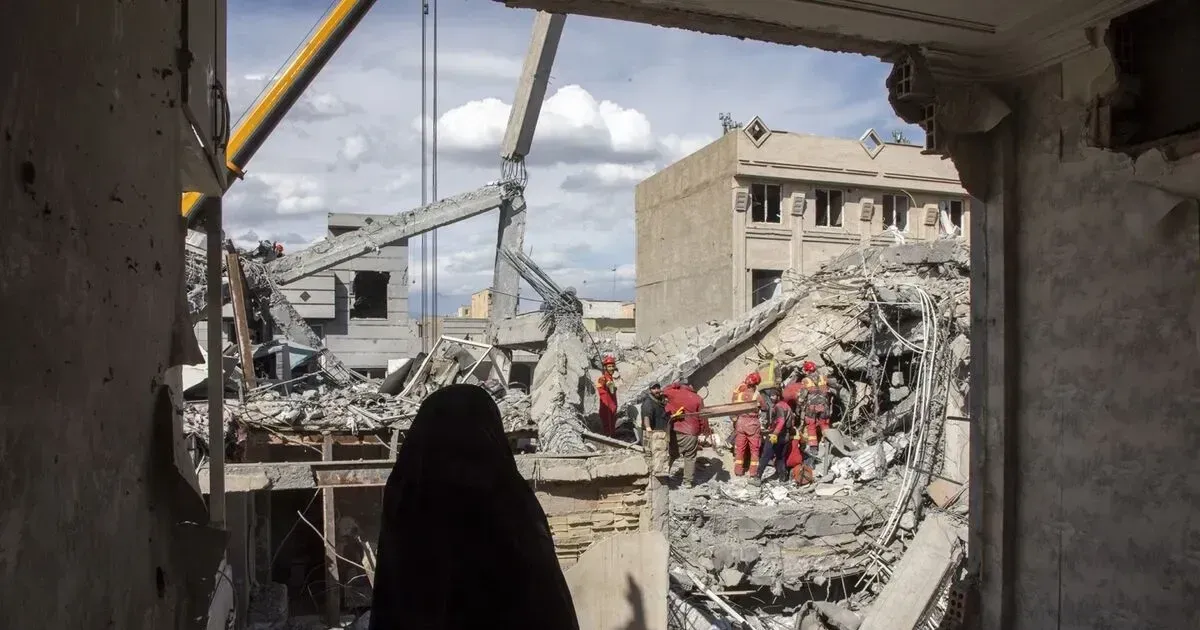
Wall Street's selloff deepened as the Iran conflict forced investors to question assumptions that had held for years. The market stress matters because the Iran conflict is testing both portfolio theory and government-debt demand. On March 27, 2026, traders saw stocks, bonds and supply-chain sensitive sectors weaken at the same time.
The damage was not limited to one asset class. Portfolios built around the usual balance of equities and government debt offered less protection than expected, leaving institutional desks to sell liquid holdings and reduce risk quickly. Investment banks struggled to measure the full market-capitalization loss because derivatives, energy futures and technology exposure are now deeply linked. A move in oil can pressure transport, manufacturing and consumer expectations within hours.
Portfolio Stress
Risk parity funds also took a hit as bonds failed to behave like a clean refuge. The old assumption that Treasuries would automatically rally during equity stress looked weaker as the conflict raised questions about fiscal costs and inflation.
Demand at Treasury auctions softened, making the market signal harder for Washington to ignore. If investors require higher yields to absorb new debt, the war premium moves from the battlefield into the government's own financing costs.
Treasury Anxiety
Weak auctions suggest traders are preparing for a conflict that lasts longer and costs more. That shift matters because the bond market often exposes structural anxiety before equity headlines catch up. Automakers are among the sectors watching the war with particular concern. Shipping disruptions and higher raw material costs can slow the delivery of microprocessors, sensors and specialized components needed for modern vehicles.
The result is a market rout that looks less like a temporary panic and more like a test of globalization's weakest links. Investors are not only pricing fear; they are repricing the reliability of the system itself.
Supply Chain Pressure
Energy prices surged while consumer staples fell, creating a pincer movement on discretionary income expectations. Traders in London and New York reported that traditional safe havens failed to provide the usual cushion. Cash became the only viable refuge, leading to a rare spike in money market fund inflows. The sudden shift in sentiment caught many long-term pension funds off guard, forcing them to re-evaluate their annual return targets before the close of the first quarter.
Decreased demand for government debt complicates the fiscal outlook for the Treasury Department. When auctions fail to attract strong bidding, the government must offer higher interest rates, increasing the national debt service burden. Institutional investors who typically view Treasuries as the ultimate risk-free asset instead focused on liquidity and short-term cash equivalents. Foreign central banks also showed a marked reduction in their participation in the most recent debt sales.
Logistical bottlenecks in the Middle East have slowed the delivery of specialized components. Many modern vehicles rely on hundreds of microprocessors and sensors, many of which involve raw materials sourced or processed in regions now affected by the conflict. Shipping companies have rerouted vessels away from the Strait of Hormuz, adding weeks to transit times and thousands of dollars to the cost of every vehicle. These logistical hurdles directly contribute to the inflationary pressures hitting the consumer market.
Western financial institutions have spent decades building a house of cards on the assumption that Middle Eastern volatility could be contained within a single commodity price. The current rout on Wall Street proves that this was a delusion born of arrogance. For too long, the so-called experts at major banks convinced themselves that their algorithmic defenses could outrun a real-world kinetic conflict. They were wrong. The failure of Treasury auctions is the most damning evidence of this collapse in confidence. When the world stops buying American debt as a safe haven, the primary engine of Western hegemony is stalling.
The evidence points to the death of the old risk-management consensus in real time. The automotive industry’s struggle is merely a symptom of a much deeper rot where efficiency was prioritized over resilience to a suicidal degree. If the United States and its allies cannot stabilize the Persian Gulf, the very concept of a global portfolio will become an artifact of a more peaceful, more naive era. Investors should stop looking for a bottom and start looking for an exit, because the structures that once supported these markets are not coming back.
Market Verdict
Financial stability is no longer a given; it is a luxury that the current geopolitical reality can no longer afford.
The portfolio lesson is that geopolitical shocks do not affect every asset class in a clean sequence. Energy prices, shipping insurance, Treasury demand and automaker input costs can all move at once, leaving balanced portfolios less protected than expected. Investors therefore need to watch liquidity and supply-chain exposure together, not only the headline direction of oil or equities.
That is why the next market signal will come from second-order costs rather than from the first selloff alone. If shipping premiums, credit spreads and commodity hedges stay elevated after the initial shock, portfolio managers will have to treat the conflict as a continuing allocation problem instead of a one-day volatility event. That makes the conflict a balance-sheet problem as much as a geopolitical event.