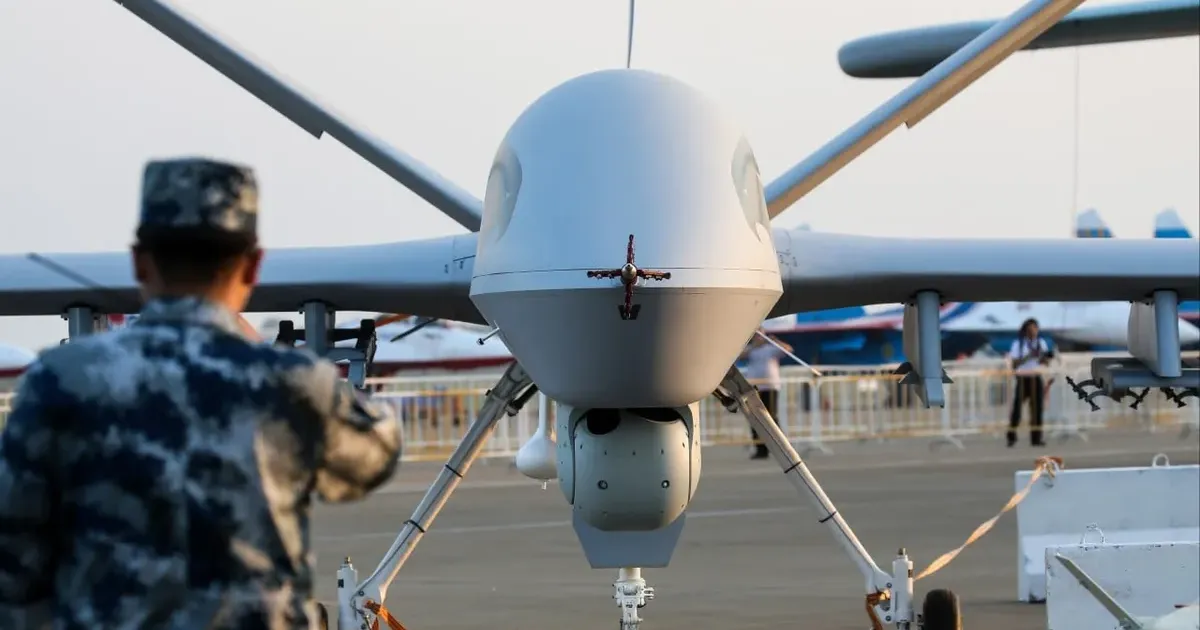
Shiraz military officials confirmed that Iranian air defense units destroyed a Chinese-made Wing Loong II drone during active combat operations involving the United States and Israel. Esmail Baqaei, the Iranian foreign ministry spokesman, released photographic evidence showing the scorched wreckage of the unmanned aerial vehicle scattered across the southern outskirts of the city. National intelligence services in Tehran currently possess the flight recorder and internal circuitry recovered from the site. The April 4, 2026 drone dispute added a China-linked layer to Gulf tensions. This specific hardware suggests the aircraft was configured for high-altitude reconnaissance before it was neutralized.
Tehran is now demanding formal diplomatic explanations from Saudi Arabia and the United Arab Emirates regarding the presence of the drone. Both Gulf nations maintain meaningful inventories of the Chengdu-designed aircraft, which is a primary platform for their respective air forces. Baqaei used his official social media channels to distribute images of the fuselage, which still displayed serial numbers linked to recent international arms shipments. Iranian diplomats have presented these findings to regional intermediaries to enable a formal inquiry into the breach of sovereignty.
Wing Loong II Debris Fuels Regional Friction
Military analysts in the region suggest the presence of the Wing Loong II indicates a widening of the current kinetic theater. These drones, often compared to the American MQ-9 Reaper, carry an array of air-to-surface missiles and laser-guided bombs. Iran claims the aircraft originated from a base within a neighboring Gulf state, though specific radar tracks have not yet been made public. Saudi Arabia has used the Wing Loong series for over a decade in various regional conflicts, including operations in Yemen. United Arab Emirates officials have similarly integrated the platform into their border security and overseas strike capabilities.
Beijing finds itself in an increasingly uncomfortable position as the primary supplier of this technology. Chinese officials traditionally attempt to maintain a balance between their energy partnerships with Iran and their defense contracts with the Gulf Cooperation Council. The shoot-down in Shiraz forces China to address the reality that its hardware is being used in direct confrontations against its strategic partners. Evidence from the crash site suggests the drone was equipped with advanced synthetic aperture radar. Such technology allows for high-resolution imaging of Iranian military installations even in low-visibility conditions.
Intelligence reports from the Shiraz sector indicate the drone was loitering at 30,000 feet before the engagement. Iranian surface-to-air missile batteries tracked the target for fourteen minutes prior to the order to fire. Debris fields indicate the impact occurred directly over sensitive industrial zones. Iranian state media reports that no casualties occurred on the ground.
Shiraz Drone Shoot-Down Rattles Oil Markets
Crude oil futures surged as news of the Shiraz shoot-down reached international trading desks. Brent crude surpassed $115 per barrel on April 4, 2026, as traders weighed the risk of a wider regional escalation. Market participants are specifically concerned about the safety of shipping through the Strait of Hormuz. Any direct conflict between Iran and the Saudi-UAE bloc could effectively shut down 20% of the world's oil supply. Shipping insurance premiums for tankers operating in the Persian Gulf have already tripled since the incident began.
Global logistics companies are rerouting vessels around the Cape of Good Hope to avoid the escalating risk. This detour adds approximately twelve days to the transit time between Asia and Europe. Freight rates for liquefied natural gas carriers have reached the highest levels since the 2022 energy crisis. Supply chain disruptions are expected to impact the availability of consumer goods in the United Kingdom and the United States by early summer.
Tehran maintains its right to defend its airspace with any necessary force. Military officials in the southern command have been placed on high alert. United Arab Emirates air defense units have similarly increased their readiness levels along the coastline. Communication between the rival regional powers is currently restricted to back-channel negotiations enabled by Omani diplomats.
Downed Drone Strains Gulf Diplomacy
The downed drone has become a diplomatic problem because Gulf states are being asked to explain Chinese equipment inside a regional war. Iran's response will shape whether the dispute stays technical or becomes strategic.