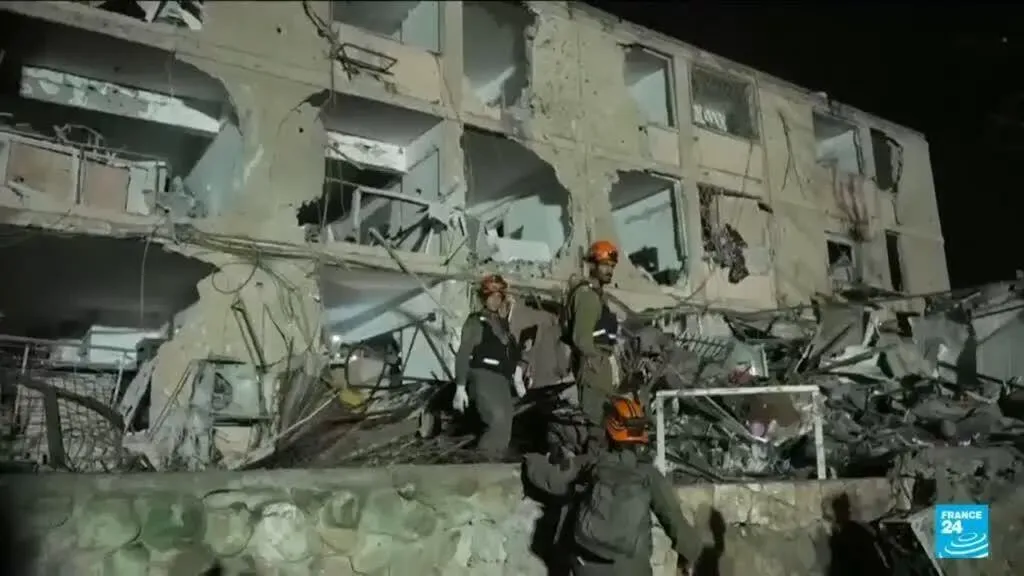
Iranian missiles hitting towns near an Israeli nuclear hub would carry meaning beyond the immediate damage report. Israeli nuclear hub towns had become a focal point in the missile barrage narrative. The geography alone raises alarm because civilian risk, strategic messaging and nuclear-site anxiety can merge in the public mind. Officials have to be precise about what was hit, what was not hit and whether any sensitive facility faced danger. A missile barrage also puts pressure on air defense claims because residents judge protection by what happens over their own neighborhoods. Iran's missile barrage put Israeli nuclear hub towns under renewed civilian pressure. The strikes link military escalation with places that carry national-security symbolism. The public needs exact language about what was hit because towns near sensitive sites can become part of psychological warfare even without strategic damage. The sensitive geography means every official phrase matters. Residents need to know what was hit, what was intercepted and what danger remains.
The risk is that vague language can inflame fear faster than verified information arrives. Israel will want to project control, while Iran will want the strike to look consequential even if military impact is limited. Clear confirmation now matters as much as interception claims. The towns near sensitive facilities make verification urgent. Officials need to say what was hit, what was intercepted and whether any nuclear-linked site faced real danger. If that explanation is slow, Iran can claim psychological effect and Israeli residents can lose confidence even when physical damage is limited.
For Israel, the communication burden is immediate. Officials must tell residents whether defenses worked, whether sensitive sites were exposed and what protective steps come next. If the answer is slow or vague, the barrage becomes useful to Iran even without major military damage. The nuclear-site geography makes official precision essential. Residents need to know whether the barrage threatened a sensitive facility, a nearby town or only the broader region used in public messaging. If the language stays vague, fear fills the gap and both sides can use uncertainty as propaganda.
Missiles Put Civilian Areas on Edge
Each side wants deterrence, but the same signals can be read as preparation for a wider conflict. That makes verification and careful language essential in the first hours after a strike. The military exchange is also a test of warning systems, civilian protection and political restraint.
For Israeli officials, the location of the strikes matters because nuclear-linked towns carry a different symbolic weight from ordinary military targets. Even when damage is limited, the message can harden public opinion and make restraint harder to defend.
The humanitarian layer is immediate. Towns tied to nuclear work still contain ordinary homes, schools and medical services. Missile warnings in those places blur the line between strategic signaling and civilian disruption.
The towns under threat are not abstractions on a security map. They contain families, schools and workers who experience missile alerts as daily danger, even when officials describe the target in strategic terms.
The location of the barrage makes precision essential. Officials need to separate towns near sensitive sites from the sites themselves, because vague wording can spread fear faster than verified damage. Residents will judge the response by what was intercepted, what was hit and what remains exposed.
Why Nuclear Towns Matter
The hard security lesson is that proximity to sensitive sites changes how every missile report is heard. Even limited damage can widen fear if officials leave residents guessing about what was hit and what was protected.