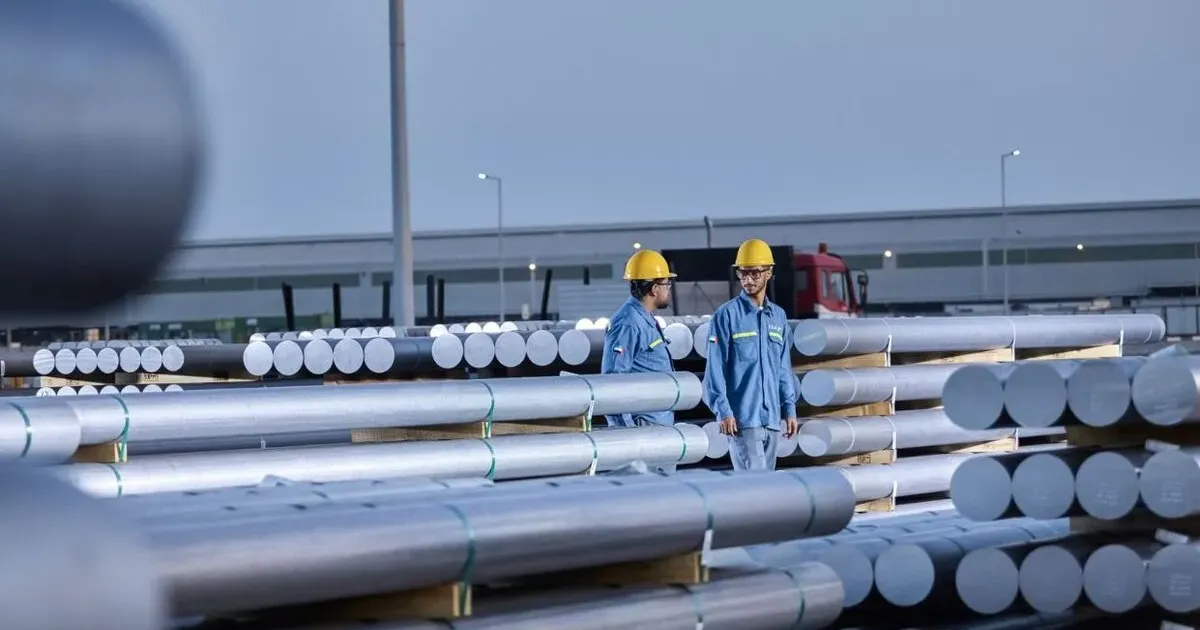
The Iran war is no longer only an energy-market story. Damage at Emirates Global Aluminium's Al Taweelah site in Abu Dhabi and renewed concern over fertilizer supply show how quickly a regional conflict can move into metals, farming costs and industrial logistics.
EGA said its Al Taweelah site at Khalifa Economic Zone Abu Dhabi sustained significant damage during Iranian missile and drone attacks. The company also said employees were injured, with no life-threatening injuries reported, and later described emergency shutdowns across key facilities at the site.
That matters because aluminum and nitrogen fertilizer share the same strategic weakness: both depend on energy-intensive systems that cannot absorb sudden disruption cheaply. A missile attack, a shipping delay or a gas-price spike can travel through the economy faster than consumers expect.
Al Taweelah Damage Raises Aluminum Risk
Aluminum smelting requires continuous power. If electricity is interrupted for long enough, molten metal can freeze in smelting pots and create a costly recovery problem. That is why damage near power, smelting or handling infrastructure at a large facility carries significance beyond the immediate repair bill.
EGA's Al Taweelah complex is one of the region's major aluminum assets. The site includes smelting and related industrial operations, so even a temporary shutdown can tighten the market for buyers already watching transport and insurance costs.
The exact production loss depends on damage assessments and restart timing. That uncertainty is itself a market problem. Traders, manufacturers and downstream buyers do not need a permanent outage to reprice risk; they need only credible evidence that supply from a major hub may be less reliable.
Fertilizer Markets Feel The Same Energy Shock
The fertilizer channel is different but connected. Nitrogen fertilizer depends heavily on natural gas, both as an energy source and as a feedstock for ammonia production. When war threatens Gulf energy flows or raises shipping and insurance costs, fertilizer buyers feel the pressure quickly.
Farmers do not have many easy substitutes for nitrogen at planting time. If prices rise sharply, they may delay purchases, reduce application or accept weaker margins. None of those choices is painless, and all can eventually reach food-price expectations.
The danger is not that one strike immediately creates a global food crisis. The danger is that energy costs, fertilizer availability, credit pressure and weather risk can stack on top of one another during a narrow agricultural window.
Hormuz Risk Extends Beyond Oil
The Strait of Hormuz is usually discussed through crude oil and LNG. That is understandable, but too narrow. The same shipping risk affects petrochemicals, ammonia, urea, metals and industrial inputs that move through or near the Gulf.
When insurers raise premiums or shipping lines reroute, delays become part of the price. Longer journeys tie up vessels, complicate contracts and force buyers to carry more inventory. The just-in-time model works poorly when the route itself becomes a military variable.
That is why the Al Taweelah damage and fertilizer concerns belong in the same story. They show that modern supply chains are not separate lanes. Energy, metals, chemicals, shipping and food production are tied together by infrastructure most consumers never see.
Industrial Diversification Meets War Geography
The hard lesson for Gulf economies is uncomfortable. Industrial diversification can reduce dependence on crude exports, but it cannot move geography. Smelters, ports, industrial zones and energy infrastructure remain exposed to missiles, drones and debris when regional war reaches the Gulf.
For the UAE, the attack undercuts the image of industrial safety that high-value manufacturing requires. For global buyers, it adds another risk premium to a market already shaped by tariffs, energy volatility and shipping disruption.
A single damaged site will not break the global economy. But it does reveal the fragility underneath it. Aluminum for manufacturing and nitrogen for crops both depend on continuous systems. War is the enemy of continuity, and that is why a strike in Abu Dhabi can echo far beyond the Gulf.