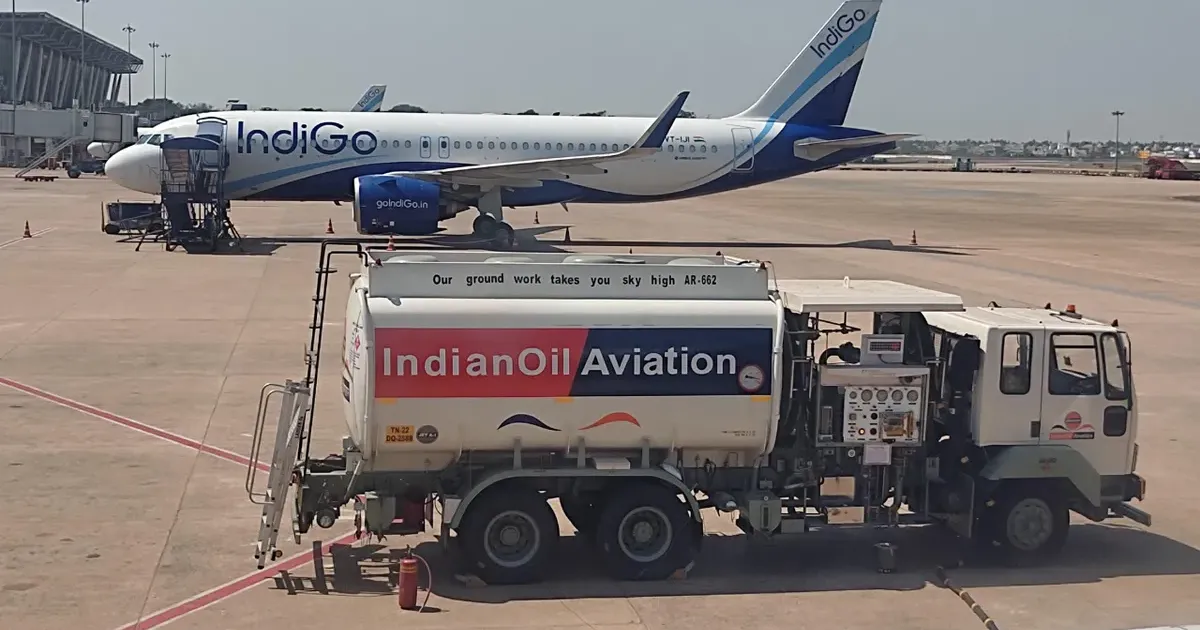
Indian and South Korean airlines raised ticket prices as the Iran war pushed aviation fuel costs sharply higher. On April 1, 2026, carriers added surcharges, reviewed summer schedules and warned that long-haul fares could keep climbing. The pressure is especially severe because jet fuel is priced in dollars while several Asian currencies are weakening.
Global energy markets reacted violently to the widening conflict involving Iran, causing Brent crude to sustain prices above $120 per barrel. Aviation turbine fuel, which constitutes roughly 40 percent of the operating expenses for biggest carriers, followed this upward trajectory with aggressive speed. Airlines typically hedge their fuel requirements months in advance, yet the scale of this spike overwhelmed existing financial protections.
Regional Fuel Price Dynamics in Asia
Seoul-based carriers, including Korean Air and Asiana Airlines, raised their fuel surcharges to level ten on a 16-tier government scale. Travel between Seoul and New York now carries a surcharge of 280,000 won per person. Domestic routes saw similar adjustments, with surcharges rising from 7,700 won to 9,900 won in a single 24-hour period.
Airlines in Seoul struggled with a won that weakened to its lowest level in two years against the greenback. Fuel surcharges in the South Korean market are traditionally calculated based on a moving average of Singapore Kerosene prices. The most recent data showed these prices surged past the 140-dollar mark per barrel on the Singapore exchange.
Operating in an environment where fuel costs double overnight is unsustainable for the low-cost carrier model, and we must pass these costs to the consumer to maintain safety standards.
Investors watched airline stocks tumble on the KOSPI as news of the surcharge hikes reached the trading floor. Korean Air shares dropped 4.2 percent while Jin Air fell 5.8 percent during morning trading. Market participants remained focused on the duration of the Iran conflict and its impact on refining margins in the North Pacific.
Iran War Disrupts Global Energy Supply
Conflict in the Persian Gulf has shuttered key refineries and blocked the transit of tankers through the Strait of Hormuz. Approximately 20 percent of the global petroleum supply passes through this waterway, making it a critical choke point for the aviation industry. Rising insurance premiums for cargo vessels also contributed to the inflated landed cost of fuel in Asian ports.
Refining capacity in Singapore, which acts as a hub for jet fuel pricing in the Eastern Hemisphere, faced constraints as crude supplies dwindled. Supply-chain managers at major airports reported that reserves fell to 10-day levels in late March. This scarcity pushed the crack spread, the difference between the price of crude and the price of refined jet fuel, to a five-year high.
Military operations in the region diverted enormous quantities of high-grade kerosene to support combat sorties and naval logistics. Commercial aviation, so, was forced to compete for a smaller pool of available product. Total global jet fuel production dropped by an estimated 1.2 million barrels per day according to data from the International Energy Agency.
Currency Volatility and Margin Compression
Market fluctuations in the forex market intensified the crisis for emerging market carriers. The Indian rupee and the South Korean won both faced selling pressure as investors fled to the safety of the US dollar. Because jet fuel is a dollar-denominated commodity, the real cost for these airlines rose by nearly 115 percent when currency depreciation was included.
Internal documents from a major Indian carrier showed that every one-rupee drop against the dollar adds 12 million dollars to its annual fuel bill. Hedge funds specializing in aviation commodities exited their long positions as the volatility became too unpredictable to model. The cost of protecting against further price increases through derivatives tripled in cost.
Regional carriers in Southeast Asia reported similar struggles with the Thai baht and the Indonesian rupiah. Philippine Airlines and Thai Airways initiated emergency board meetings to discuss capacity cuts for the summer travel season. Total debt levels for the top ten Asian airlines are projected to rise by $11 billion by the end of the second quarter.
Aviation Fallout
History suggests that energy dependencies are only addressed when they become existential threats, and the current paralysis of the aviation sector proves the point. The industry spent the last decade touting its commitment to carbon neutrality and sustainable fuels, yet it remains pathetically tethered to the geopolitical whims of the Persian Gulf. The crisis is not an unfortunate accident of war; it is the logical outcome of a sector that prioritized short-term expansion over energy security.
Airlines that failed to diversify their fuel sourcing or invest in long-range synthetic fuel technology are now begging for government bailouts. We should let them fail. The market must be allowed to purge the inefficient operators who viewed cheap oil as a permanent birthright. If a carrier cannot survive a standard geopolitical shock without doubling its fares, it does not have a viable business model for the 21st century.
Expect a large consolidation phase where state-backed giants swallow up smaller low-cost carriers. It will result in a global duopoly that dictates prices with even less accountability than today. The era of democratic, affordable flight is ending, and it is being replaced by a tiered system where mobility is a class privilege. Governments will likely intervene with subsidies, but these are merely band-aids on a severed artery of global trade. The sky is getting smaller.