China’s Teapot Refiners Face a Supply Shock
Beijing officials watched the crude oil ticker with calculated silence as Tehran's infrastructure burned in the early hours of the latest escalation. Financial markets reacted with predictable volatility, but the real crisis brewed far from the trading floors of New York and London. For China, the escalating conflict in the Middle East is not just a diplomatic headache but a direct threat to the unconventional supply chains that fuel its massive industrial base. Iranian crude has long served as a lifeline for a specific segment of the Chinese economy that operates outside the purview of state-owned giants. By March 13, 2026, Chinese independent refiners were facing a tighter market for discounted Iranian crude.
Iranian oil production accounts for a significant portion of the global market, yet its destination has become increasingly singular over the last decade. Estimates suggest that nearly 90 percent of Iran's sanctioned exports find their way into Chinese ports. These barrels do not typically flow into the massive refineries owned by Sinopec or PetroChina. Instead, they disappear into a murky network of independent processors known as teapot refineries.
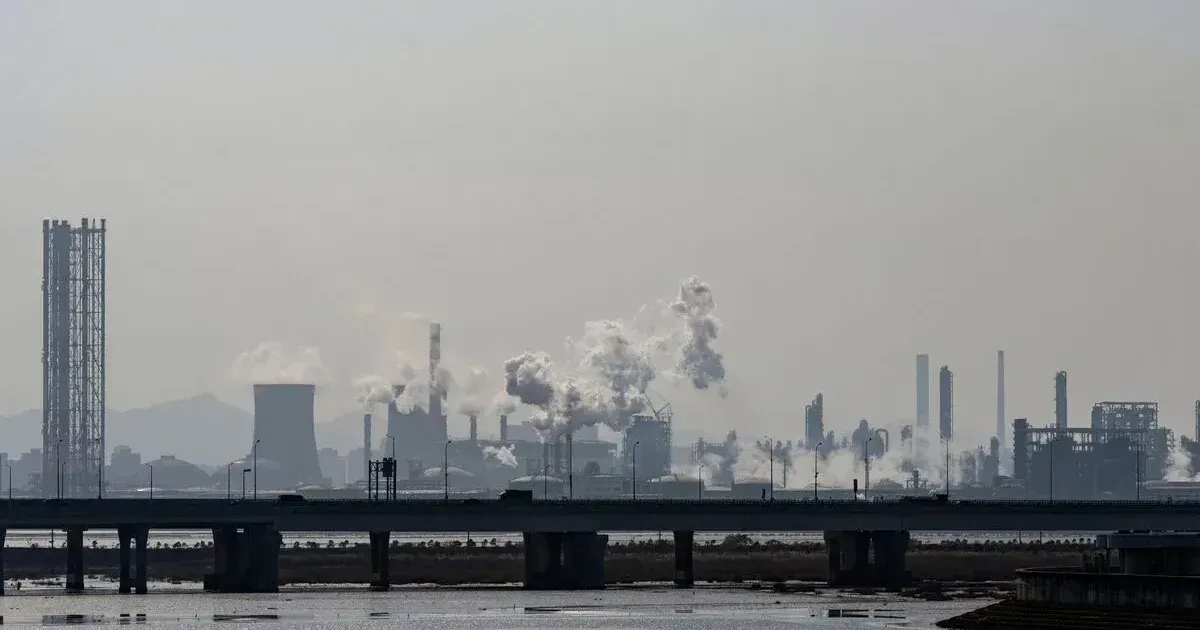
Iranian crude has long served as a lifeline for a specific segment of the Chinese economy.
Based primarily in Shandong province, these smaller entities lack the political clout of state firms and have built their business models on the deep discounts offered by sanctioned regimes. The Shandong oil trade is breaking. War in Iran has effectively paralyzed the so-called Ghost Fleet of tankers that utilize deceptive transshipments to bypass international monitors. Bloomberg Economics reports that these vessels now face physical destruction or prohibitive insurance premiums that even the most daring smugglers cannot justify. Without this steady stream of discounted Iranian Grade Heavy, teapot refineries face a brutal choice between purchasing expensive Brent crude at market rates or shutting down operations entirely. Many independent operators lack the credit lines to compete for non-sanctioned oil on the open market. Data from Bloomberg Economics indicates that China has spent years preparing for such a supply shock by aggressively building its Strategic Petroleum Reserve. Analysts estimate that Chinese stockpiles now exceed 900 million barrels, a figure that provides roughly 100 days of import cover.
Beijing began this accumulation long before the current hostilities, often buying heavily when prices dipped during global slowdowns. Such a massive buffer allows the central government to insulate state refineries from the immediate price spikes triggered by Middle Eastern instability. Yet, these reserves are tightly controlled by the state, and little evidence suggests the Politburo will release this precious resource to save small, independent teapots that it has long viewed as inefficient and environmentally problematic. Crude oil is becoming a legacy liability for the Politburo.
Iranian Barrels Become Harder to Source
Washington Post Business analysis highlights a counterintuitive possibility where China emerges from this energy shock in a stronger position than its Western rivals. While the United States remains tethered to the price of gasoline at the pump, China has executed a massive electrification of its domestic transport sector. Electric vehicle penetration in China has reached a saturation point that makes the American market look stagnant. In major cities like Shanghai and Shenzhen, the demand for petroleum is no longer the primary driver of economic mobility.
Beijing has spent hundreds of billions of dollars on a high-speed rail network and an EV charging infrastructure that runs increasingly on coal, nuclear, and renewables rather than imported hydrocarbons. Spiking oil prices may reveal how China has been more successful in electrifying its economy and reducing dependence on fossil fuels than the United States. Trump's global energy policies, which focused heavily on domestic drilling and deregulation, did little to address the fundamental vulnerability of a consumer base still reliant on internal combustion engines. If global oil prices remain above 120 dollars per barrel for a prolonged period, the inflationary pressure on the American consumer will be far more acute than the impact on a Chinese factory worker whose commute is powered by a lithium-ion battery.
The structural shift toward a post-oil economy provides Beijing with a form of geopolitical insurance that Washington has failed to replicate. But the transition is not yet complete. China remains the world's largest importer of crude, and its manufacturing sector still relies on petrochemicals for everything from plastics to high-tech polymers. If the Iranian conflict spreads to the Strait of Hormuz, the disruption will extend beyond the teapot refineries to the entire global supply chain. Freight rates for container ships are already climbing as vessels reroute around the Cape of Good Hope to avoid potential missile strikes. Higher shipping costs translate to higher prices for Chinese exports, potentially cooling the very economy that Beijing is trying to protect. Internal logistics within China show a divergent trend. State-owned enterprises have been ordered to maximize domestic coal production to ensure that the power grid remains stable while oil prices fluctuate.
This move highlights the pragmatic, if environmentally costly, approach Beijing takes toward energy security. Dependence on Middle Eastern oil is viewed as a strategic weakness that must be mitigated through any means necessary. The war in Iran has simply accelerated a decoupling process that was already underway in the Chinese energy ministry. Financial analysts at Bloomberg suggest that the disruption of Iranian oil could lead to a permanent restructuring of the global crude market.
Margins Tighten Across Shandong
If the teapots in Shandong collapse, the remaining demand will be consolidated into larger, state-controlled refineries that are easier for the government to manage. This centralization would grant Beijing even more control over its energy consumption and carbon footprint. It also removes a layer of the economy that was difficult to tax and regulate. Such a consolidation serves the broader goals of the Chinese Communist Party, even if it causes short-term economic pain in the refining heartland. The reaction of thousands of displaced workers in Shandong will depend heavily on the duration of the conflict and the resilience of the global tanker fleet.
If the war remains localized, China can likely weather the storm using its strategic reserves and its advanced electrification. However, a broader regional war involving other major producers like Saudi Arabia or the United Arab Emirates would test even the strongest stockpiles. Every barrel of oil that does not reach a Chinese port is a barrel that must be replaced by domestic energy production or a more expensive alternative.
The current crisis in the Middle East has laid bare the reality of a world where energy independence is the only true form of sovereignty. Independent refiners, often called teapots, rely on discounted barrels to protect margins in a competitive domestic market. Losing access to Iranian crude forces them to bid for more expensive alternatives. That pressure can move through Asia’s fuel market quickly. If Chinese refiners cut runs or pay more for replacement crude, regional diesel and gasoline balances tighten.