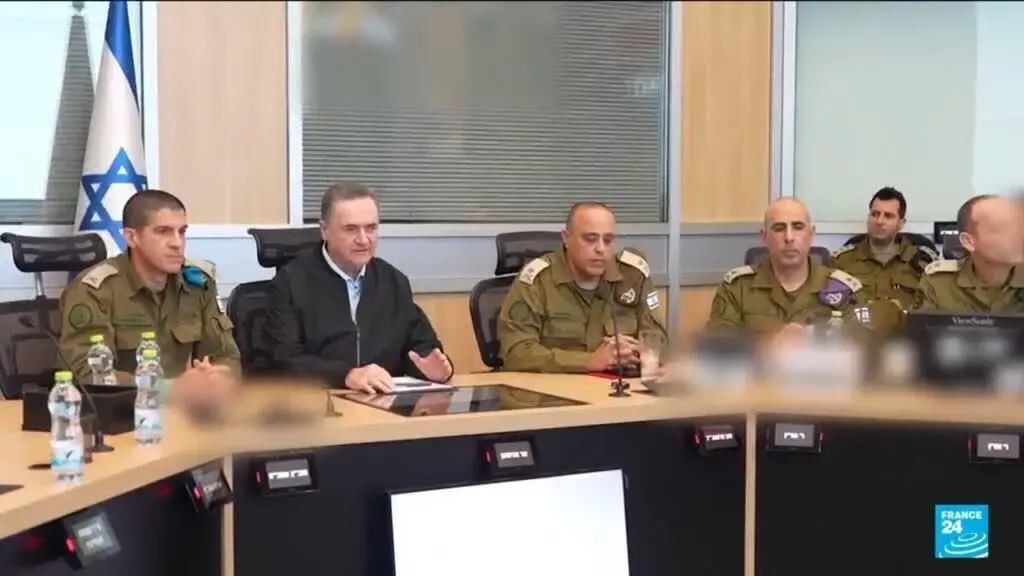
Israeli military officials confirmed that fighter jets launched a series of precise airstrikes against Syrian army camps in response to escalating violence targeting the Druze community. Syria immediately condemned the strikes on its weapons sites and government infrastructure, labeling the operation a violation of international norms. Jerusalem maintains that the military action was necessary to deter further aggression against Sweida, a southern province where the Druze population has faced mounting pressure from armed factions. Damascus officials called the strikes an outrageous assault on Syrian sovereignty, yet the Israel Defense Forces indicated that the mission focused on neutralizing immediate threats to civilian populations across the border. The strikes made the Druze question a more explicit part of Israeli security planning.
Druze Violence Pulls Israel Into Syria
Syria reported that the missiles targeted several locations near the capital and southern military outposts. Damage assessments provided by local activists suggest that the strikes decimated command centers and logistical hubs used by the Syrian Arab Army. But the primary focus of the Israeli campaign appears to be the protection of the Druze, a religious minority that has historically navigated a complex relationship with the central government in Damascus.
Israeli leaders have signaled that they will no longer tolerate the targeted harassment of this community, especially when such actions originate from territory controlled by Bashar al-Assad. Damascus witnessed heavy anti-aircraft fire during the overnight hours as Israeli munitions found their mark. Military analysts believe the targets included sophisticated radar systems and hardware storage facilities located in the vicinity of Damascus. These installations provide the logistical backbone for Syrian operations in the south.
Records from intelligence sources indicate that the infrastructure destroyed in these raids was valued at over $400 million. To that end, the Israeli air force utilized standoff munitions to minimize risks to its pilots while ensuring the destruction of the intended Syrian army camps. Separately, the Syrian Foreign Ministry issued a formal protest to the United Nations, claiming the strikes were unprovoked and meant to destabilize the region. Syrian state media insisted that the army was engaged in standard security operations within Sweida when the Israeli intervention began.
In fact, the official narrative from Damascus portrays the Israeli move as an act of state-sponsored terrorism. Still, the Israeli government insists that the strikes were a direct reaction to specific intelligence regarding planned incursions against Druze villages. Meanwhile, the Druze community in Israel has exerted significant political pressure on the cabinet to intervene. High-ranking Druze officers within the Israeli security establishment have argued that the safety of their kinsmen in Syria is a matter of national security.
Sweida Changes the Target Logic
Yet the decision to strike Syrian army camps marks a departure from the typical policy of targeting Iranian-linked assets only. Sweida was still a flashpoint for years, with local residents often clashing with state security forces over economic conditions and political autonomy. Local leaders in the province have reported a surge in kidnappings and arbitrary arrests by Syrian militias. These incidents reportedly triggered the recent wave of violence that Israel cited as the trigger for its airstrikes.
In particular, the escalation involved heavy weaponry being moved into civilian areas by the Syrian military. Israeli drones monitored these movements for weeks before the order to strike was given. By contrast, some regional observers suggest that the Druze in Sweida are being used as a pretext for a broader Israeli campaign against Syrian military capacity. Syria is still a key transit point for weapons moving toward Lebanon, and degrading Syrian camps serves multiple tactical purposes.
Even so, the immediate humanitarian concern remains the protection of the minority population in the south. Reports from the ground indicate that the Israeli strikes hit precise coordinates within the army camps, avoiding adjacent residential neighborhoods in Sweida. For one, the Druze have maintained a fragile neutrality throughout the Syrian conflict. They have refused to join the opposition en masse but have also resisted conscription into the national army.
This stance has left them vulnerable to retaliation from both the government and radical insurgent groups. Israeli officials claim they acted to prevent a humanitarian catastrophe that would have forced thousands of refugees toward the Golan Heights. Fighter jets returned to their bases without incident after the mission was completed. Israeli intelligence agencies are currently reviewing satellite imagery to confirm the extent of the damage to the Syrian military infrastructure.
To that end, the Israel Defense Forces released a brief statement confirming that all targets were successfully neutralized. Jerusalem is now waiting for the next move from Damascus, which has threatened retaliation but lacks the air superiority to challenge the Israeli air force directly. In turn, the focus shifts to the diplomatic arena where Syria seeks support from its traditional allies. According to France 24, the strikes were among the most significant in recent months due to their explicit link to internal Syrian sectarian issues.
Border Deterrence Moves Into Diplomacy
Jerusalem has finally admitted what many analysts have suspected for years: the security of the Druze in Syria is now a formal component of Israeli regional strategy. By striking Syrian army camps, the Israeli government has effectively declared a protectorate over the Sweida province, whether the international community likes it or not. Damascus can cry foul at the United Nations, but the reality on the ground is that the Syrian military is no longer the sole arbiter of what happens within its own borders. Israeli strikes after Druze attacks show how local violence can widen into state-level military pressure. Syria remains a theater where small triggers can invite larger signals.