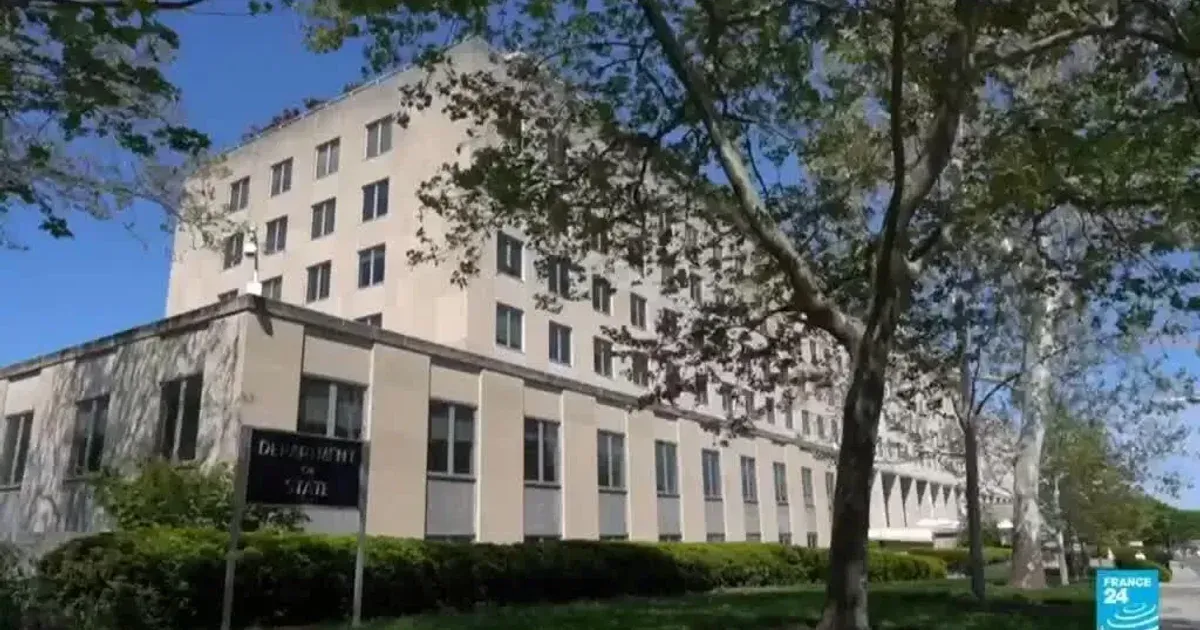
Secretary of State Marco Rubio convened Israeli and Lebanese negotiators in Washington to discuss a potential cessation of hostilities along the Blue Line. Diplomats entered the State Department with low expectations for an immediate breakthrough. The Washington summit opened on April 14, 2026. Israel has already signaled a refusal to accept a temporary cessation of violence. Officials in Jerusalem prioritize the total disarmament of Hezbollah over a diplomatic pause. They argue that any truce without structural changes to the border security arrangement allows Iran-backed militants to regroup. Military intelligence reports suggest thousands of rockets still sit in subterranean bunkers across southern Lebanon.
Negotiations scheduled for Tuesday serve as a test for the new administration's influence in the Levant. American mediators aim to bridge the gap between Lebanese sovereignty and Israeli security requirements. Success requires more than a simple ceasefire. It demands a verifiable mechanism to push armed groups north of the Litani River. Current estimates indicate that ten thousand militants maintain positions within striking distance of the Galilee. Israel demands their removal before any permanent peace can be discussed.
Israel Demands Hezbollah Disarmament as Precondition
Israeli representatives arrived in the American capital with a mandate to reject any proposal that mirrors past failures. They insist that Hezbollah must be stripped of its heavy weaponry. Prime Minister Benjamin Netanyahu's government views the presence of precision-guided munitions as an existential threat. Security Cabinet members have reportedly authorized continued air operations regardless of the talk's progress. Air raid sirens sounded in Haifa just hours before the opening session began. Two interceptors destroyed a projectile launched from the Bekaa Valley.
Beirut faces a different set of pressures. The Lebanese delegation, led by technically skilled civil servants, struggles to speak for a state that does not control its own military geography. They emphasize the civilian toll of the recent campaign. Over one million people have been displaced by the fighting. Infrastructure damage in the south exceeds four billion dollars. Lebanese officials want an immediate halt to the bombing to allow humanitarian aid to flow. National pride prevents them from openly discussing the removal of a domestic political and military force like Hezbollah.
Washington Mediation Faces Deepening Regional Deadlock
Iran remains the silent participant in every room where these talks occur. Support from Tehran provides the logistical and financial backbone for Hezbollah operations. Israeli intelligence believes that Iranian transport planes continue to deliver components for missile assembly through Syrian airspace. Combating this supply chain is a primary objective for the Israel Defense Forces. They view the Washington talks as a secondary front to the kinetic reality on the ground. Military planners believe only sustained pressure will force a change in the strategic calculation.
“The Israeli side has already dismissed the idea of a potential truce, saying the priority is to get Iran-backed Hezbollah disarmed.”
Tactical Realities Complicate State Department Objectives
Logistical hurdles for any potential agreement are meaningful. Monitoring a demilitarized zone requires advanced technology and a solid physical presence. Satellite imagery alone cannot detect the vast network of tunnels carved into the limestone hills. Israel has proposed the use of autonomous sensors and a joint monitoring committee. Lebanon views such proposals as a violation of its sovereignty. National identity often outweighs practical security considerations in these discussions.
Rubio has suggested a phased approach. The first stage would involve a localized cessation of fire in specific sectors. This would be followed by a gradual withdrawal of heavy weapons. International donors would then provide funds for reconstruction in the devastated border regions. However, the lack of trust between the belligerents makes even small steps difficult. Every concession is viewed as a sign of weakness. Hardliners on both sides prefer continued conflict to a perceived surrender. The delegation from Beirut includes three senior military advisers.
Diplomacy Without an Early Ceasefire
Diplomacy at the State Department is often a polite funeral for unattainable goals. The current summit in Washington is no exception. Expecting Hezbollah to voluntarily disarm is a fantasy that ignores the fundamental nature of the organization. It is more than a political party; it is the forward-operating base of the Iranian Revolutionary Guard Corps. Israel understands this reality even if American diplomats choose to ignore it for the sake of a press release.
Sovereignty in Lebanon is a legal fiction. A state that cannot monopolize the use of force is not a state. By negotiating with a Lebanese delegation that lacks authority over the combatants, the US is engaging in a theatrical exercise. Real power lies in the tunnels of the south and the command centers in Tehran. Marco Rubio may find that his debut on the world stage is defined by the limits of American persuasion in a region that only respects the logic of force. This summit will likely end in a stalemate. Diplomacy fails when the cost of peace exceeds the cost of war.