Israel is expanding the Lebanon campaign through ground pressure, airstrikes and systematic demolition. The tactical goal is a security buffer, but the immediate result is mass displacement and deeper state fragility.
Israeli military units expanded their ground invasion into southern Lebanon on April 6, 2026, targeting infrastructure in several border towns. South of the Litani River, mechanized divisions moved through dense brush to establish new firing positions overlooking Lebanese villages. Beirut remains under heavy aerial bombardment as casualties mount in the suburbs of the capital. Israel launched these maneuvers after declaring a wider security zone necessary to prevent cross-border rocket fire. Civilian centers across the southern district have been evacuated under direct orders from regional commanders.
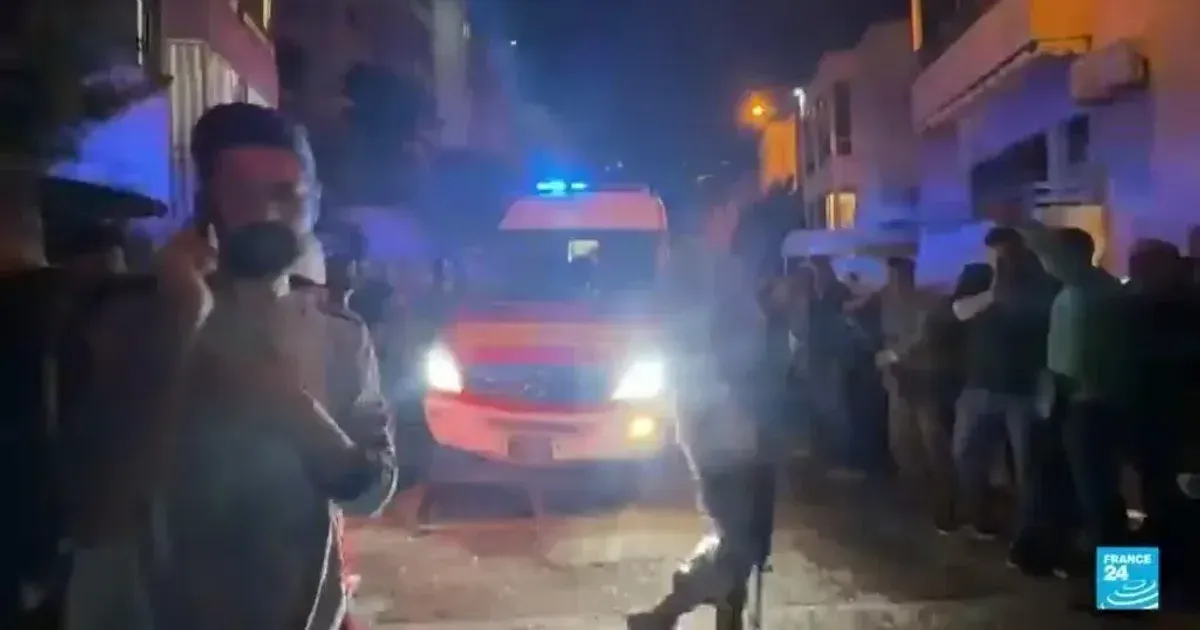
Casualties from a single strike in South Beirut reached 15 people dead and 39 wounded late Sunday. Rescue teams in the Dahieh district spent the overnight hours digging through pulverized concrete to locate survivors. Witnesses described a series of rapid explosions that leveled two residential apartment blocks within seconds. Smoke plumes from the impact site were visible from the city center for several hours. Medical facilities in the area report a critical shortage of trauma supplies and blood units.
Southern Lebanon Towns Face Systematic Destruction
Destruction in the border region follows a pattern of high-intensity clearance. Satellite imagery shows widespread flattening of structures within three miles of the Blue Line. Military officials claim these zones housed munitions depots and hidden launch sites for mobile artillery. Instead of selective strikes, the current campaign utilizes heavy ordnance to clear sightlines for advancing armor. This strategy effectively creates a scorched-earth buffer that prevents any immediate return of civilian life. Records from local municipalities suggest that over 60 percent of residential buildings in the immediate border zone are now beyond repair.
Evidence from ground observers suggests the pace of demolition has accelerated in the last three days. Armored bulldozers operate around the clock to widen supply routes for personnel and support staff involved in the logistics chain. Ground forces encountered resistance in the jagged hills of the Galilee panhandle, leading to increased reliance on heavy artillery. Israeli command centers state the objective is to neutralize every structure capable of housing an anti-tank guided missile team. The strike on a village school near Marjayoun destroyed three separate classrooms that the military alleged were being used for intelligence gathering.
Beirut Suburbs and Humanitarian Safety Zones
Residents of Beirut are fleeing the southern suburbs as the target list for airstrikes expands. Once-densely populated neighborhoods now sit empty, their streets littered with glass and abandoned vehicles. Israel frequently issues evacuation orders via social media minutes before munitions impact residential towers. These warnings often arrive too late for elderly residents or those without reliable internet access. Air raids have hit locations previously designated as safe zones, including areas near the international airport. Flights have been suspended as debris from nearby strikes occasionally reaches the primary runways.
Displaced families have sought refuge in public parks and squares in the heart of the city. Tensions are rising as the sheer number of homeless individuals exceeds the capacity of available shelters. Recent arrivals from the south describe harrowing journeys through roads targeted by drone strikes. Families often travel in convoys, only to find themselves blocked by craters in the main highway. Local NGOs struggle to provide basic food and sanitation to the thousands of people sleeping in the open air. The crisis has reached a point where urban infrastructure is beginning to buckle under the strain of the sudden population shift.
Displacement Statistics and Regional Stability
Displacement figures have surpassed 1.2 million people across the country, creating a demographic crisis. This movement represents nearly a quarter of the total national population. Internal migration on this scale has disrupted the labor market and shuttered hundreds of businesses. Lebanon already faced a severe economic depression before the current military campaign began. The sudden loss of agricultural output from the fertile southern fields is expected to trigger a food security crisis. Wheat and vegetable prices have tripled in the markets of Tripoli and Sidon since the start of April.
Across the region, the humanitarian impact is triggering secondary crises in neighboring states. Some refugees have attempted to cross the northern border into Syria, seeking safety in a country still recovering from its own civil war. International aid agencies are struggling to divert resources to the Levant as global focus remains divided between multiple conflicts. Funding gaps mean that only 20 percent of the required humanitarian aid for Lebanon is currently available. The United Nations has warned that without an immediate ceasefire, the state may face a total collapse of public services. Every day of continued fighting pushes the recovery timeline back by years.
Beirut hospitals are currently operating at double their intended capacity. Staff members at Rafik Hariri University Hospital reported that every emergency bed was occupied within minutes of the Sunday strike. Doctors have been forced to treat patients on hallway floors due to the volume of shrapnel injuries.
An Israeli strike on south Beirut killed at least 15 people and wounded 39 on Sunday, according to a report from France 24.
Al Jazeera reports indicate that entire blocks in towns like Khiam have been reduced to rubble. Israeli combat engineers use controlled detonations to clear what they describe as subterranean attack tunnels. These operations have rendered several ancient villages uninhabitable for the foreseeable future.
Buffer Zone Consequences
Historical precedent suggests that military buffer zones rarely provide the long-term security their architects promise. By methodically leveling southern Lebanese villages, the Israeli military is doing more than clearing a firing zone; it is manufacturing a permanent grievance that will fuel the next three decades of insurgency. This tactical focus on kinetic destruction ignores the strategic reality that a displaced population of 1.2 million is a potent catalyst for radicalization. The logic of a security zone is fundamentally flawed when it creates a humanitarian vacuum that can only be filled by non-state actors and extremist ideologies.
Can a nation truly bomb its way to peace? Conventional military wisdom in the West has long argued that hearts and minds are the primary theater of modern warfare, yet the current operation in Lebanon treats the human element as a secondary casualty of geography. When you turn a neighbor into a wasteland, you do not create a wall; you create a recruitment office. The collapse of the Lebanese state, accelerated by this invasion, will eventually leave Israel with a failed state on its doorstep, which is a far more unpredictable and dangerous neighbor than a weakened central government.