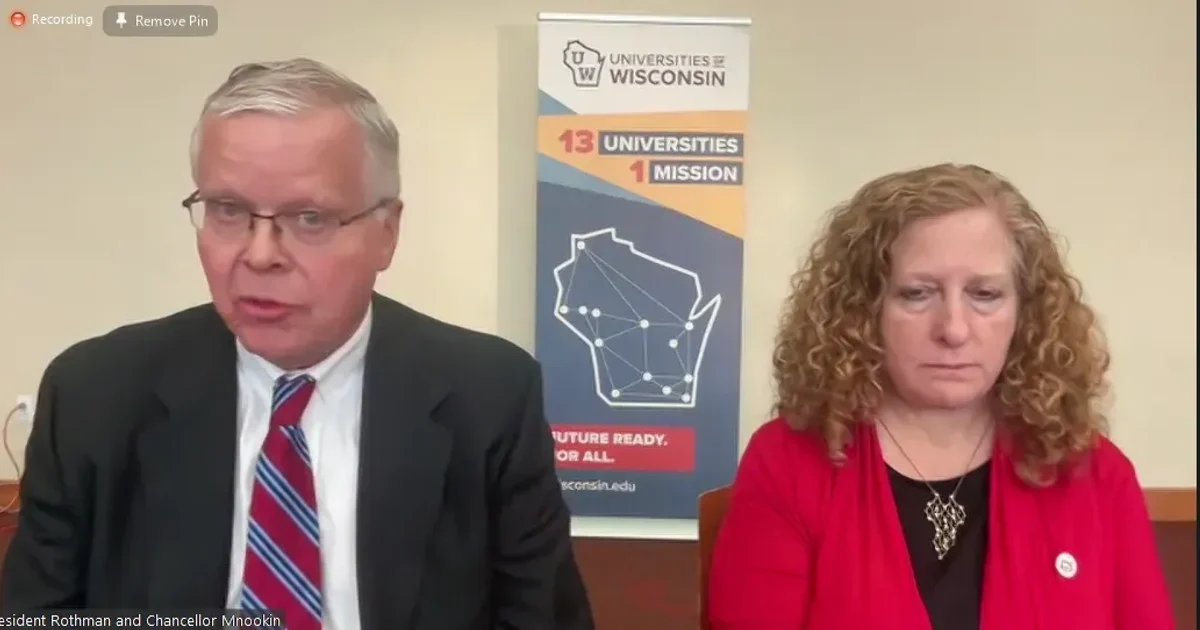
The Universities of Wisconsin Board of Regents' decision to fire Jay Rothman turned a resignation dispute into a public governance crisis. Rothman had refused to resign after saying he was not given clear reasons for the board's loss of confidence. The regents then voted to remove him, making the leadership fight impossible to separate from the system's deeper strains.
The firing was the visible event. The underlying problem is a university system squeezed by enrollment decline, branch campus closures, state political fights, fixed costs and public access promises that no longer match the money available. Removing one president changes the name at the top. It does not answer what kind of statewide university footprint Wisconsin is willing to fund.
Branch campuses carry the pressure
Wisconsin's two-year and branch campuses have been hit by declining enrollment and rising per-student costs. Several have already closed or moved away from traditional in-person instruction. For local communities, branch campuses are not abstract budget lines. They are access points for students who cannot easily move, commute long distances or pay for a residential four-year experience.
Closing or shrinking campuses may solve part of a budget problem, but it weakens the Wisconsin Idea if rural students are left with fewer realistic options. Those students are often older, working, caring for relatives or tied to local employers. Telling them to relocate can function like telling them the system no longer serves them.
Funding politics narrowed the choices
The system has been caught in state political fights over tuition, spending, diversity programs and the size of public higher education itself. Years of budget pressure made every decision tighter, while legislative conditions turned university management into a proxy battle over culture and public spending.
Rothman became the face of compromises satisfying almost no one. Faculty saw retreat. Republican lawmakers saw a university system still asking for more money. Students saw instability. The DEI battles made the budget problem more difficult to discuss plainly because every dollar and position became symbolic.
Regents created a transparency problem
A board can lose confidence in a president. It also has to understand what silence does to public trust. Rothman said he was not told the substantive reasons for the move. Board leaders said the action followed months of discussions, but the public explanation remained limited.
The lack of a public explanation is damaging. The Universities of Wisconsin is not a private company changing executives behind closed doors. It is a public system serving more than 160,000 students. When regents remove a president without a full public account, supporters and critics both fill the vacuum with politics. The political vacuum makes the next leader's job more difficult before the search even begins.
Students see dysfunction before strategy
Leadership fights often begin in boardrooms, but students feel them through program uncertainty, campus morale, advising gaps and doubts about whether their institution has a plan. Faculty and staff also read the signal. If no one can explain why the system president was removed, every campus starts asking which priority is safe and which promise will disappear next.
The timing compounds the problem. The system was already managing branch closures, state budget pressure and leadership changes elsewhere, including the Madison flagship. A firing at the top adds another layer of uncertainty to institutions that were already asking students and employees to absorb disruption.
Access promises require money
Public access cannot survive as a slogan. If Wisconsin wants local higher education in rural areas, it has to pay the costs of maintaining those sites or build credible alternatives that work for working students. Online programs are not a magic substitute when broadband, advising, labs, childcare and local support remain uneven.
The Rothman firing should force a more honest choice. Wisconsin can have a smaller university system or a broader access mission. It cannot pretend to have both without paying for both. The board has changed leadership. Now the state has to decide whether it is changing strategy or only changing the person blamed for the same impossible math.