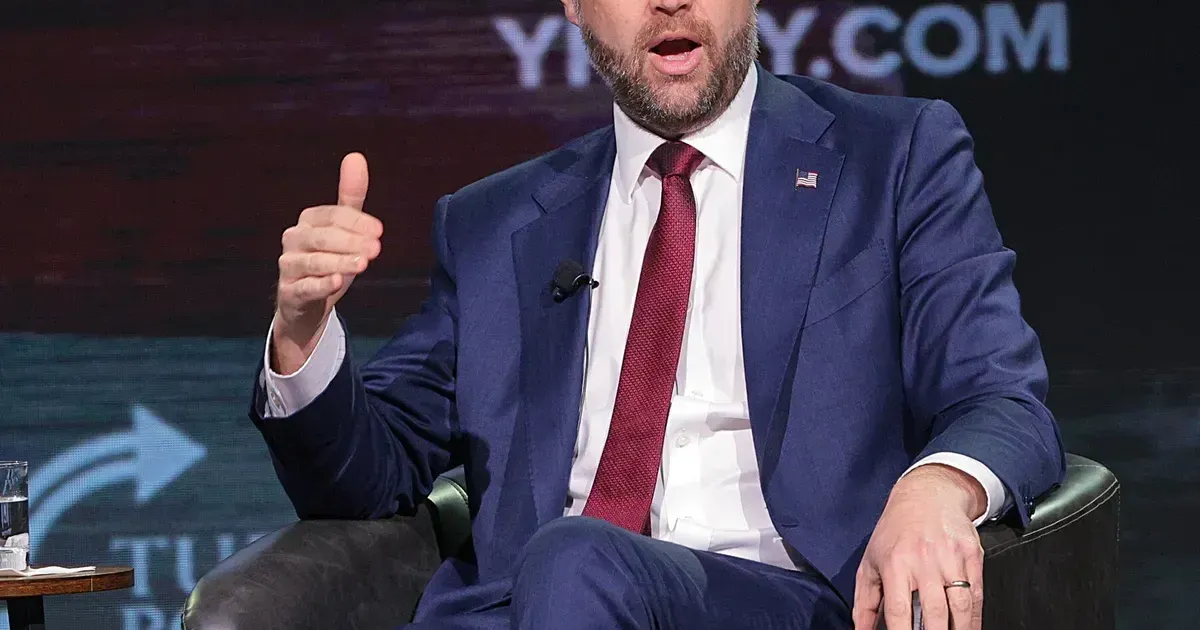
JD Vance faced sustained heckling from antiwar demonstrators as he defended the administration's Middle East stance at a conservative event. The protest forced the campaign-style program to pause and put foreign-policy dissent inside a friendly political room. The April 15, 2026, interruption in West Palm Beach showed how the Iran conflict has followed administration officials into domestic political spaces.
Vance's remarks were aimed at supporters, but the protest changed the atmosphere. Demonstrators challenged the policy from inside the venue, forcing a pause and drawing security personnel toward the front rows. The episode became a visual reminder that foreign policy dissent is no longer confined to campuses, marches, or congressional hearings.
The vice president continued after the interruption, framing the administration's position as necessary for deterrence and regional stability. Critics argue that the same policy risks deeper U.S. involvement in a conflict with uncertain limits.
Protest Interrupts Conservative Event
Political events are designed to project control. Heckling disrupts that image because it forces a speaker to respond in real time. Vance chose to wait out the removal of protesters and then return to his prepared argument, a common tactic when campaigns want to avoid giving demonstrators more attention.
The crowd's reaction also mattered. Supporters cheered security intervention, while protesters tried to keep the focus on civilian harm and the risk of escalation. That split reflects the wider debate inside the country: whether U.S. action is preventing a broader war or helping sustain one.
For Vance, the issue is personal as well as political. He has often presented himself as skeptical of open-ended foreign commitments. Defending a hard line in the Middle East therefore requires him to explain why this conflict is different from interventions he has criticized in the past.
Middle East Policy Shapes 2026 Politics
The confrontation comes at a time when the administration is trying to keep conservative support unified. Some voters favor an assertive posture toward Iran. Others are wary of military commitments that could drain attention from domestic priorities.
That tension creates openings for both antiwar activists and rival politicians. Demonstrators can argue that the administration has abandoned restraint. Supporters can argue that protest inside a private political event proves the need for firmness. Each side uses the same moment to tell a different story.
Security teams will likely treat similar events with more caution. The presence of protesters inside a hall raises questions about screening, credentialing, and how quickly a disruption should be handled without escalating the scene.
The larger significance is that the Middle East conflict has become a domestic campaign issue. Vance can still command friendly rooms, but he cannot assume the subject will stay outside the venue. As long as the war continues, officials who defend it should expect the argument to meet them at home.
The episode also shows why campaign security and political messaging are now connected. Removing protesters may restore order inside the room, but video of the interruption can travel farther than the speech itself. Vance's team therefore has to manage two audiences at once: the supporters who want confidence from the stage and the broader public that sees the protest as evidence of unresolved anger over the war. That dual audience will follow every major foreign-policy speech this year.
For Republicans, the episode also tests how much room exists for dissent inside the party's coalition. Some younger conservatives have become skeptical of foreign intervention, while others remain strongly supportive of military pressure on Iran. Vance has to speak to both groups without appearing inconsistent. Protesters are trying to exploit that tension by forcing the question into public view. The administration can remove hecklers from a hall, but it cannot remove the underlying argument from the campaign. If casualties, costs, or troop commitments rise, the same questions will become harder to treat as isolated interruptions. Democrats and antiwar Republicans will both study the moment for openings. If Vance appears too dismissive, critics can argue that the administration refuses to hear public concern. If he appears too defensive, allies may worry that the protest agenda is controlling the conversation. The most effective response for the vice president is likely to be specific: explain the policy, define the limits, and show what outcome would allow the conflict to de-escalate. That explanation matters because voters can tolerate risk more easily when they understand the objective. If the administration cannot define the end state, interruptions like this will keep turning speeches into arguments over whether the policy has limits. Vance is now one of the officials expected to provide that answer. Without that clarity, every disruption will look like a symptom of a larger unresolved debate. The foreign-policy argument has moved fully into the campaign environment. The protest made clear that officials will be pressed in public as well as in policy briefings to describe a credible exit strategy as clearly as they describe the threat.