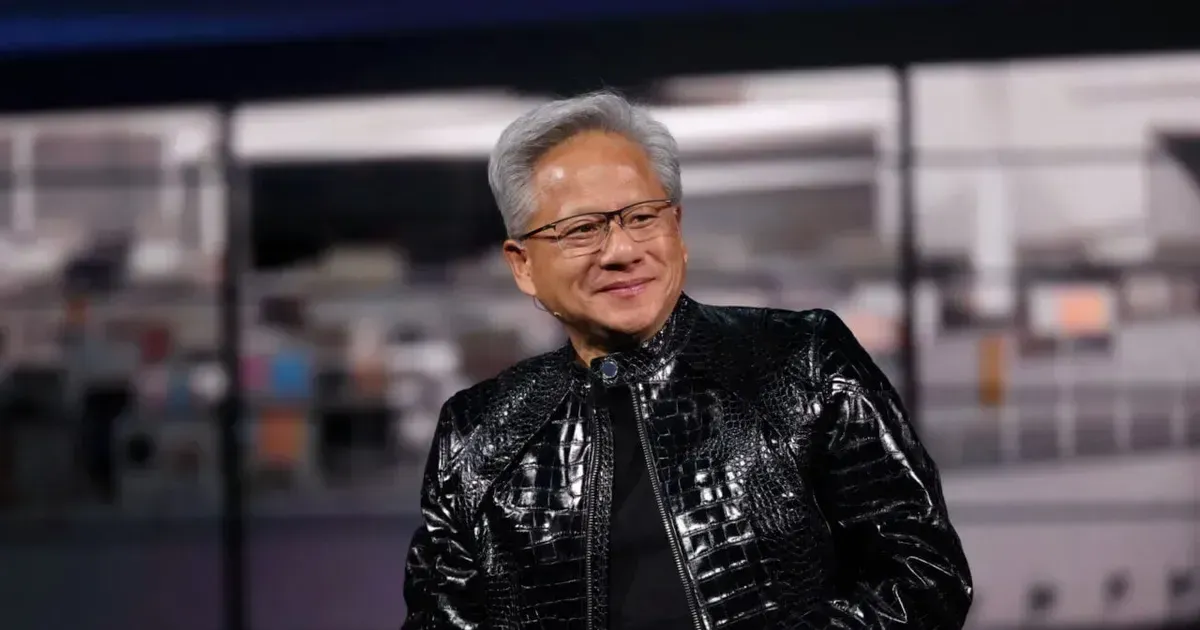
Jensen Huang's $1 trillion agentic AI target is designed to move the conversation beyond chatbots and into autonomous software. Nvidia wants investors to imagine AI systems that act, plan and coordinate work across companies. That framing matters because the market is looking for the next durable growth layer after the first wave of data-center demand. Agentic AI could increase demand for chips if companies run more complex workflows, connect models to business systems and keep agents active throughout the workday. That would benefit Nvidia across GPUs, networking, software libraries and enterprise partnerships.
The company's argument is that autonomy does not reduce compute demand; it multiplies it. The hard part is not the slogan. It is deployment. Enterprises still need security controls, audit trails, error handling and proof that autonomous systems create value without creating compliance risk. That means the revenue path may be uneven.
A Bigger AI Story Than Chatbots
Some companies will move quickly; others will test narrow internal workflows for years before trusting agents with customer-facing decisions. The agentic AI pitch also shifts attention from model novelty to business process. Companies will not pay trillion-dollar sums for demos; they will pay if systems can reduce manual work, improve decisions or run tasks that were previously too expensive to automate. Enterprise trust is the limiting factor. Agents that can act across email, code, finance or customer systems need permissions, audit logs and clear failure boundaries.
Nvidia's advantage is that heavier use usually means heavier compute. If agentic systems need constant inference, memory and networking, the company can sell into a market that keeps expanding after initial training. Competitors will push back through custom chips, cloud discounts and smaller models that promise lower cost. The trillion-dollar path therefore depends on whether agentic workloads stay compute-hungry at scale. Huang is making a market-shaping argument as much as a forecast.
If investors accept that agents are the next operating layer, Nvidia's valuation story gains another leg. If adoption slows, the number becomes a target critics will repeat back at the company. The enterprise market will also ask a blunt cost question. If agentic AI requires expensive infrastructure but produces uneven savings, finance teams will slow adoption no matter how compelling the demos look. Nvidia is betting that the opposite happens: companies discover more use cases as agents improve, and each new workflow increases the need for accelerated computing.
The target also shows how aggressively Nvidia wants to define the next phase of artificial intelligence spending. Agentic systems require chips, networking, memory and software support that can run repeated tasks without constant human prompting, making the infrastructure bill far larger than a single model launch.
Huang is effectively arguing that AI revenue will move from experimentation to operations. The harder question is whether customers can prove productivity gains quickly enough to justify another wave of capital spending after already absorbing the cost of generative AI buildouts.
Where the Revenue Could Come From
That is why Huang's target matters. It is not just about selling more chips; it is about persuading the market that autonomous software will become a normal business layer. The next phase will also test whether customers want agents as standalone products or as invisible features inside software they already use. That distinction matters for Nvidia because invisible adoption can still be compute-intensive. A trillion-dollar market may not arrive as a single product category; it may arrive as thousands of workflows that quietly require more acceleration.
It refers to AI systems that can plan, take actions and complete multi-step tasks with less direct human prompting. More autonomous AI systems could require larger compute clusters, stronger networking and more specialized chips. Huang's number is less a forecast than a claim about where computing is going. Nvidia wants to be the default infrastructure layer for AI that does more than answer questions. The strategic risk is expectation.
If agentic AI becomes another expensive pilot category, the trillion-dollar narrative will look inflated. If it becomes operating software for companies, Nvidia's current hardware lead becomes even harder to challenge.
The danger for Nvidia is that a trillion-dollar story creates trillion-dollar expectations. Huang is trying to define the next market before customers have fully proved the last one. If agents become a real operating layer, Nvidia owns the toll road. If they remain expensive pilots with polished demos, the number becomes a weapon for skeptics.