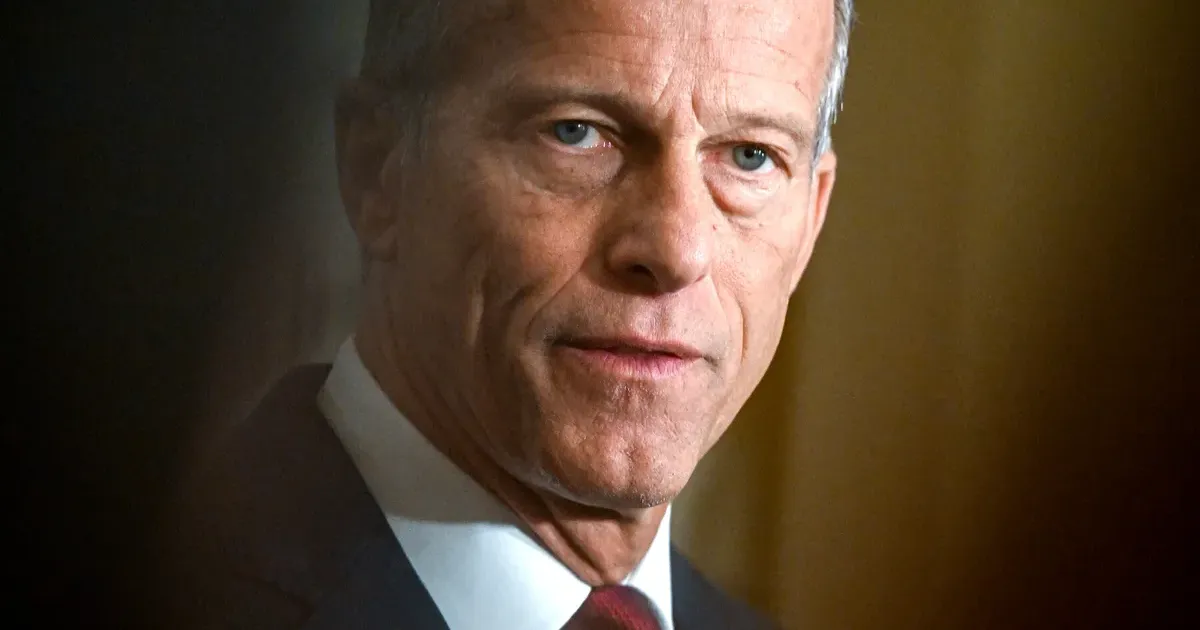
John Thune's search for votes on the SAVE America Act has brought another test of Republican leadership discipline to the Senate floor. The vote count hardened on March 11, 2026.
Thune Runs Into the Filibuster Wall
Capitol Hill corridors felt the pressure of a deepening Republican schism Tuesday morning. Senate Majority Leader John Thune, only months into his tenure as the successor to Mitch McConnell, finds his leadership under a microscope. Donald Trump and the populist wing of the Republican Party are demanding an immediate floor vote on the Safeguard American Voter Eligibility (SAVE) America Act. Thune, a South Dakotan known for his institutionalist leanings, spent the afternoon admitting to reporters that the path forward is murky. Senate Republicans lack the sixty votes required to overcome a Democratic filibuster, and several moderates within the caucus have expressed private reservations about the timing of the push. Pressure from Mar-a-Lago has transformed what was once a standard legislative disagreement into a test of Thune's survival. Donald Trump has signaled through various channels that he expects a total war on the Senate floor to pass the bill, which would require voters to provide documentary proof of citizenship when registering for federal elections. Proponents of the measure argue it is necessary to restore public faith in the electoral process. Critics, including Senate Majority Leader Chuck Schumer, dismiss the effort as a solution in search of a problem, pointing to federal laws that already prohibit non-citizens from voting. Thune's inability to promise a win has invited a barrage of criticism from the far right.
The standoff leaves Thune trapped between Senate rules and Trump's public demands, with no easy way to satisfy both institutional math and movement politics.
John Thune spoke plainly during a brief press availability on Tuesday afternoon. "I can't guarantee an outcome," Thune told CBS News, his voice reflecting the strain of coordinating a caucus with a razor-thin majority. Such admissions are rare for a majority leader, who typically projects total confidence before bringing a bill to the floor. Republican leaders usually prefer to keep their internal whip counts private, but Thune's public acknowledgment suggests he is trapped between the reality of the math and the fury of his base. He needs every single Republican to stay in line just to reach 53 or 54 votes, which still leaves him well short of the sixty-vote threshold.
Trump Turns the Bill Into a Loyalty Test
Senator Mike Lee of Utah and Senator Ted Cruz of Texas have been the most vocal in demanding that Thune force the issue. They want a public vote to put Democrats on the record before the midterm cycle. This strategy relies on the hope that vulnerable Democrats in purple states will fear voting against a bill marketed as election security. Thune remains skeptical. He understands that a failed vote could make his caucus look weak and disorganized.
But the pressure from the conservative media ecosystem is relentless. Democrats remain unified in their opposition. They view the SAVE America Act as a partisan attempt to purge voter rolls and create unnecessary hurdles for legitimate citizens, especially students and the elderly. Chuck Schumer has already signaled that he will not grant any time-sharing agreements for a floor debate, meaning Thune must burn precious legislative days on a procedural motion that is almost certainly doomed. Senate rules require 60 votes to move to a final vote.
With a Republican majority of only 53 seats, the math simply does not add up without significant Democratic defections. No such defections appear on the horizon. Internal GOP polling suggests that while the base loves the idea of the SAVE America Act, independent voters are more focused on the economy. Thune is trying to balance these competing interests while keeping his job. Rumors of a leadership challenge have already begun to circulate in conservative circles.
The Base Wants Combat, Not Math
If Thune cannot deliver a victory on this front, figures like Rick Scott or JD Vance could be positioned by the MAGA wing as more aggressive alternatives. Thune's traditional approach to legislating is being tested by a movement that values public combat over quiet consensus. The South Dakota senator has often tried to bridge the gap between the establishment and the populist movement. Yet the gap is widening into a chasm. While Bloomberg suggests some Republicans might be open to a compromised version of the bill that includes funding for election technology, Reuters' sources claim the hardline wing of the GOP will accept nothing less than the full, unadulterated text of the SAVE America Act.
Compromise is currently a dirty word in the Republican cloakroom. Legislative history shows that voting rights bills are rarely passed without broad bipartisan support. The 2026 political environment is too polarized for such cooperation. Democrats see the SAVE America Act as a direct attack on their base. Republicans see it as a necessary defense of the republic.
Between these two irreconcilable views sits John Thune, holding a gavel but lacking the power to command his own chamber.
Trump's Influence and the Path to the Midterms
Donald Trump continues to exert a gravitational pull on Senate business. His daily posts on social media often dictate the talking points for junior senators, who then bring those demands to Thune's office.
Why Symbol Bills Are Eating the Senate
Political survival rarely looks as pathetic as John Thune's current posture. He is a man attempting to play a game of chess while his opponent, and even his own teammates, are busy flipping the table and setting the room on fire. This stalemate reflects a deeper rot in the American legislative process where the symbol of a bill is more valuable than its substance. Thune understands that the SAVE America Act is a legislative ghost, a haunting presence that cannot be touched or passed in the current Senate environment. Still, he goes through the motions because he is terrified of the orange shadow looming over Mar-a-Lago.
Thune knows the SAVE America Act is a legislative ghost, a haunting presence that cannot be touched or passed in the current Senate environment.
Such a move is not leadership. It is a slow-motion surrender to the loudest voices in the room. If Thune cannot find the spine to tell his caucus the truth about the 60-vote threshold, he deserves to be replaced by someone who will. The American public is tired of watching theatrical floor fights that yield zero results. We are entering an era where the Senate Majority Leader is nothing more than a glorified traffic cop for populist outrage.
If Thune wants to be a real leader, he should stop apologizing for the math and start challenging the people who sent him to a gunfight with a butter knife.