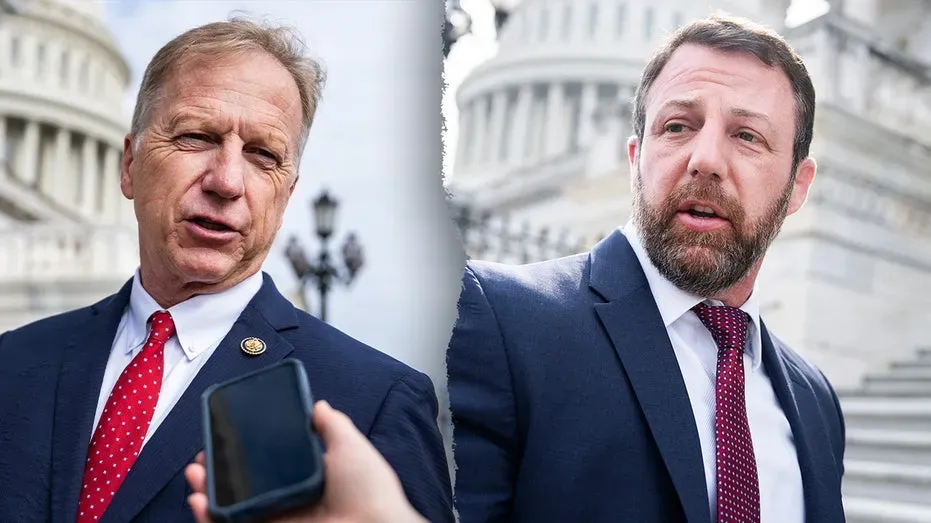
Kevin Hern's Senate bid has tied Oklahoma's Republican calculations to the personnel reshuffling of the Trump era. The campaign began on March 11, 2026.
Hern Moves First in Oklahoma
Oklahoma Representative Kevin Hern chose a high-stakes moment on Wednesday to declare his candidacy for the United States Senate. His decision to enter the race follows the recent selection of Senator Markwayne Mullin to lead the Department of Homeland Security. President Donald Trump tapped Mullin for the cabinet role last week to stabilize the agency after the dismissal of Kristi Noem. Hern currently serves as the chairman of the House GOP Policy Committee and represents Oklahoma's first district. He is the first major Republican to formally announce a bid for the seat Mullin will vacate once confirmed by the upper chamber. Mullin, a former mixed martial arts fighter and plumbing company owner, has been a reliable fixture in the Senate since his election in 2022. His expected departure creates a sudden vacuum in the Oklahoma Republican delegation. House leadership members rally behind Mullin for his new role at Homeland Security because they believe his focus on border enforcement aligns with the administration's primary goals. This strategy seeks to box out potential rivals by securing early endorsements from four sitting U.S. Senators.
Hern tried to turn a sudden vacancy into an early loyalty contest, using speed and endorsements to define the race before rivals could organize.
Hern intends to use his position in House leadership to project an image of continuity and unwavering loyalty to the executive branch. Hern grew up in poverty and spent his early years living in a home without indoor plumbing. He later achieved significant financial success as a McDonald's franchisee, amassing a fortune that allows him to self-fund a competitive statewide campaign.
Wealth and Loyalty Shape the Pitch
Wealthy businessmen have historically fared well in Oklahoma Republican primaries where television advertising costs can drain smaller war chests quickly. Hern emphasized his background in a campaign debut video, portraying himself as a self-made leader who understands the economic struggles of everyday Americans. He used the platform to distance himself from what he calls "RINO Republicans" who have allegedly failed to support the current administration. Policy priorities for the Hern campaign include aggressive deportation of illegal immigrants and a complete overhaul of federal spending. He explicitly frames his candidacy as an effort to ensure the president has a loyal ally in the Senate.
Loyalists are becoming a premium commodity as the administration prepares for a series of confirmation battles and legislative maneuvers in the 2026 cycle. Hern remains adamant that his voting record proves he is the only candidate capable of defending the MAGA platform against institutionalist pushback. His early entry into the race signals an attempt to clear the field before other ambitious Oklahoma politicians can organize. The math doesn't add up for those seeking a moderate alternative. Governor J.
Kevin Stitt faces a unique legal requirement when appointing a temporary replacement for Mullin. State law dictates that any individual appointed to fill a Senate vacancy must sign an affidavit swearing they will not run in the subsequent special election. This legal hurdle prevents the governor from giving a potential ally the power of incumbency during the November contest.
State Law Blocks an Incumbency Gift
Voters will decide who serves the remainder of Mullin's term, which originally extended into the late 2020s. Stitt has not yet announced his pick for the interim role, but the appointee will likely serve as a placeholder rather than a long-term political force. Republicans in the state capital expect a crowded field despite Hern's early start. Potential candidates often wait for the official resignation before filing paperwork, yet the House Policy Chairman felt urgency to move first. He faces the challenge of maintaining his duties in Washington while campaigning across seventy-seven counties.
Some colleagues in the House GOP believe his departure from leadership would trigger a messy internal struggle for the chairmanship of the Policy Committee. That position is a key platform for shaping the party's official stance on taxes and trade. Senate vacancies in deep-red states rarely stay quiet for long. Trump's decision to move Mullin to the cabinet was calculated to bring a more combative tone to the border agency. Mullin faces a confirmation hearing later this month where he will likely encounter stiff resistance from Senate Democrats.
Despite the partisan divide, Republicans hold a sufficient majority to ensure his path to the cabinet is relatively smooth. House members signed a joint letter supporting the transition, calling it a necessary step for national security.
Why Senate Seats Became Loyalty Prizes
Power in the MAGA era is less about policy and more about the speed of one's genuflection. Kevin Hern's rapid jump into the Senate race is not a quest for legislative achievement but a frantic sprint to secure the crown of the most loyal servant. By framing his candidacy around the protection of a single man rather than the interests of a sovereign state, Hern reveals the hollow core of modern Republican politics. The Oklahoman businessman wants us to believe his McDonald's millions make him a man of the people, yet his first instinct is to join an upper chamber that has become a retirement home for those who value proximity to the White House over the independence of the legislative branch.
Markwayne Mullin's move to Homeland Security is being cast as a border fix, while Hern's move to the Senate looks like an attempt to fix a loyalty gap. We should be skeptical of any leader who treats a Senate seat as a reward for past obedience rather than a responsibility to future generations. The special election in Oklahoma will serve as a grim experiment in whether voters still value constitutional checks or if they have finally succumbed to the allure of the personal bodyguard model of governance. Hern is betting his fortune on the latter, and in the current political climate, that is a depressingly safe bet.
If Markwayne Mullin's move to Homeland Security was intended to fix a broken border, Hern's move to the Senate is intended to fix a loyalty gap.