Kim Jong Un’s weapons-plant visit with his daughter has again turned military spectacle into succession theater. The weapons visit drew attention on March 12, 2026
A Weapons Visit Becomes Succession Theater
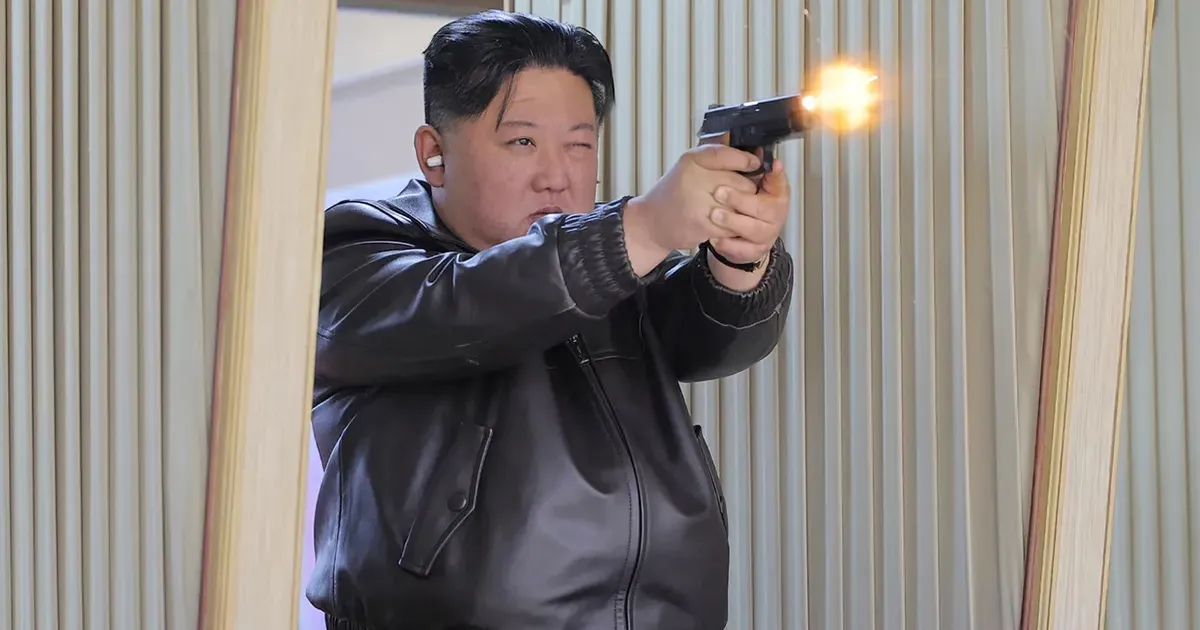
Black leather jackets and high-caliber pistols defined the latest public appearance of North Korea's ruling family on Wednesday. Kim Jong-un, accompanied by his teenage daughter Ju-ae, visited a major munitions factory in Pyongyang to inspect production lines and test new small arms. State media released images of the pair standing side-by-side at a shooting range, both handling firearms with a level of familiarity that suggests intensive training. This visit occurred one day after the North Korean leader supervised a series of cruise missile launches from a newly commissioned destroyer, highlighting a dual-track effort to modernize both conventional and strategic arsenals. Images provided by the Korean Central News Agency (KCNA) show Ju-ae, believed to be around 13 years old, wearing a black leather coat identical in style to her father's signature outerwear. She appeared alongside high-ranking military officials while participating in target practice. Her presence at a manufacturing hub for lethal weaponry is a clear message about her status within the regime. Since her first public appearance in late 2022, Ju-ae has moved from attending ceremonial parades to participating in active military drills and industrial inspections. South Korean intelligence officials recently updated their assessment of the girl, suggesting she is now the most likely successor to lead the nuclear-armed nation. The math of the succession remains complicated. Kim Jong-un used the inspection to demand a massive leap in manufacturing efficiency. He told factory managers that their facility plays a key role in increasing the combat effectiveness of the Korean People's Army.
The Daughter's Role Keeps Expanding
During the tour, Kim emphasized that production must expand in a visionary manner to meet the demands of modern warfare. He examined various small arms, including pistols and rifles, and checked the precision of the manufacturing machinery. Reports from Pyongyang indicate that the leader was satisfied with the current technological progress but urged workers to maintain a high tempo of production. Pyongyang's focus on small arms and conventional munitions is a strategic shift toward strengthening the frontline infantry, as Pyongyang again placed family succession beside military production. While the world often focuses on North Korea's intercontinental ballistic missiles, Kim is currently prioritizing the hardware used in localized conflicts. Small arms production remains a cornerstone of North Korean industrial policy because it supports both domestic defense and lucrative export markets. Analysts in Seoul noted that Kim's rhetoric regarding visionary expansion suggests the regime may be preparing for long-term military readiness or increased shipments to foreign partners. Tuesday's naval exercises provided a backdrop for the factory visit.
Kim stood on the deck of a new destroyer to watch cruise missiles streak across the horizon, demonstrating the regime's improved maritime strike capabilities. By moving from a high-tech naval launch on Tuesday to a gritty munitions factory on Wednesday, Kim is projecting a balanced image of military power. He wants to show that his military can fight at every level, from long-range precision strikes to close-quarters urban combat. The juxtaposition of a teenage girl firing a pistol and a warship launching missiles reinforces the idea that the entire Kim family is deeply involved in the machinery of war.
Munitions Output Sends a Signal
Ju-ae's involvement has reached a level of frequency that cannot be dismissed as mere propaganda. She is no longer just a daughter brought to a park, but a trainee in the art of command. South Korea's National Intelligence Service noted last month that her public profile is being meticulously crafted to build her authority among the military elite. When she stands among generals while holding a weapon, the regime is signaling that the next generation will be just as militaristic as the current one.
Succession in North Korea is rarely a straight line. Observers of the regime point out that Kim Jong-un himself was hidden from public view for years before his sudden ascent. By contrast, Ju-ae is being introduced to the public and the military early and often. This strategy might be intended to avoid the instability that occurred when Kim Jong-il died suddenly in 2011.
By the time Ju-ae reaches adulthood, she will have a decade of documented presence at missile silos, airbases, and now, munitions factories. Such exposure builds a resume that is difficult for rival factions within the Workers' Party to challenge. Expansion of the Pyongyang munitions plant comes at a time of heightened global demand for standardized weaponry. While the KCNA report focused on the domestic combat efficiency of the army, the global arms market remains a likely target for North Korean industrial output.
Pyongyang Blends Family and Firepower
The factory visited by Kim is known for producing high volumes of ammunition and small arms that are compatible with Soviet-era and modern Russian specifications. By demanding more production, Kim is ensuring that North Korea remains a relevant player in the global defense supply chain. Technical modernization at the factory includes the adoption of automated assembly lines and improved quality control measures. Kim's visit included a detailed briefing on how these new technologies are being integrated into the manufacturing of pistols and automatic rifles.
He reportedly praised the workers for their loyalty and innovation, though he also warned that the current pace of modernization must not slacken. The leader's focus on conventional weapons suggests he is filling gaps in his military's readiness that were previously overshadowed by the nuclear program. Pyongyang has consistently utilized these photo opportunities to distract from internal economic pressures. Reports of food shortages and industrial stagnation continue to emerge from the provinces, yet the capital's munitions sector appears to be thriving.
The contrast between the sleek leather jackets of the Kim family and the lives of ordinary citizens remains a stark reality that the regime's photographers carefully crop out of the frame. Kim Jong-un continues to bet that military strength is the only currency that matters for his survival.
The Dynasty Is Being Armed in Public
Kim Jong-un appeared with his daughter at a Pyongyang munitions plant. The visit reinforced both weapons production messaging and succession speculation. North Korea uses staged military imagery to link family legitimacy with deterrence. The daughter's public role continues to expand in sensitive state settings.
His daughter's repeated appearances near strategic assets can signal succession planning and elite acceptance. The plant visit emphasizes weapons production, readiness and dynastic continuity.
The image is the message. Showing the daughter around weapons production turns succession into a military spectacle and teaches domestic audiences where legitimacy comes from. Pyongyang is not presenting a civilian heir; it is presenting continuity through firepower.