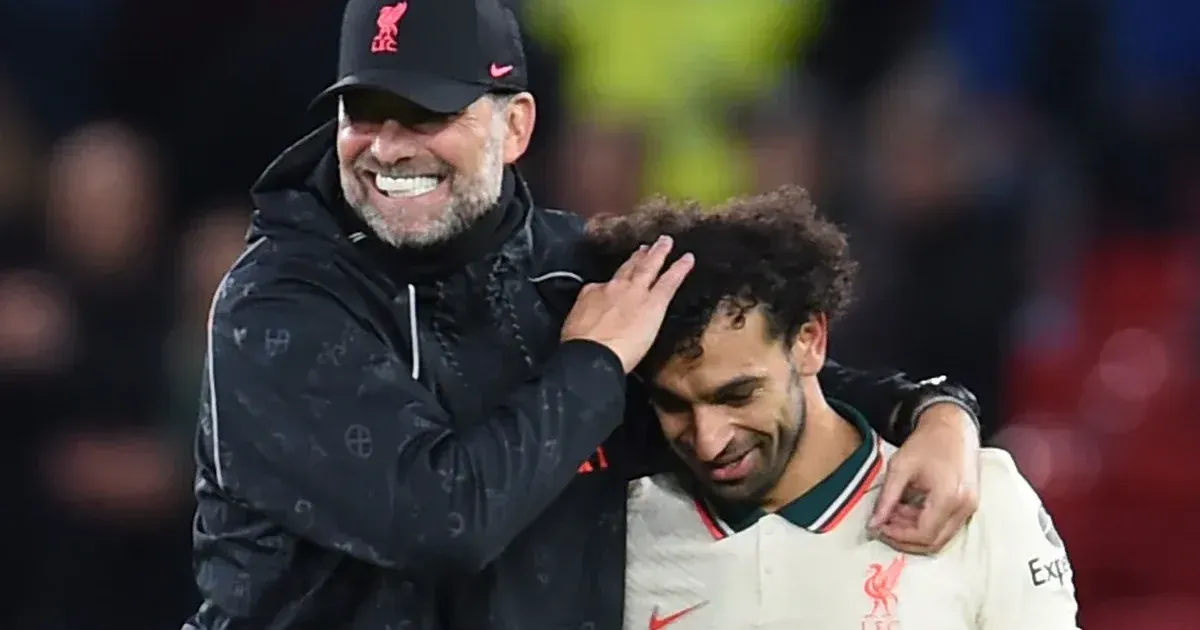
Jurgen Klopp says Mohamed Salah has the conditioning to keep playing elite soccer well beyond his Liverpool exit. The prediction matters because Salah remains a reference point for Liverpool, Egypt and aging elite forwards. His March 27, 2026 comments came as the club prepared for the forward's departure at the end of the 2025-2026 season.
Liverpool supporters now face the reality of a squad without its most prolific modern goalscorer. Replacing Salah's annual output will likely require more than one signing because his value sits across goals, assists, availability and defensive attention. Klopp remains convinced that the Egyptian forward can keep performing at a high level wherever he plays next.
Salah Physical Condition and Longevity Projections
Klopp highlighted Salah's physical discipline, availability and professional habits rather than treating longevity as a medical certainty. Those traits matter because wide forwards often decline when pace fades. Salah has limited that risk by staying fit, refining his movement and preserving the burst needed for decisive moments.
Longevity in modern football requires genetic fortune, discipline and tactical adaptation. Klopp emphasized that Salah has shown no interest in easing toward retirement. A move to a less physically demanding league could extend his scoring window, but his next destination will also test how much of his output was tied to Liverpool's system.
Anfield legends often see their powers wane in their final months, but Salah has bucked this historical trend. Performances in the current season show a player who has adapted his game to rely more on positioning and elite finishing rather than pure raw pace. By evolving his tactical role, he has reduced the natural effects of aging that typically hamper wide players. Intelligence on the pitch allows him to conserve energy for high-leverage moments in the final third. Liverpool officials have noted that his presence in the locker room is a blueprint for the next generation of talent.
Historical Impact on Liverpool Scoring Records
Salah's Liverpool tenure is already defined by record-breaking production. Klopp argued that the volume and consistency of his goals since 2017 will be extremely difficult for one future player to repeat. The decision to move beyond him has therefore sparked a real debate about Liverpool's squad-building strategy.
"Salah could carry on playing until the age of 40 after the forward leaves Liverpool at the end of the season," Klopp stated during an interview regarding the player's enduring quality.
Future generations will read Salah's statistics with disbelief because they came while he was the focus of every defensive plan. His ability to find space in crowded areas is a skill that can age better than pure speed. That is why Klopp's praise is not only sentimental; it is rooted in the way Salah has already adapted his game.
Salah Longevity Question
Rarely does a sporting institution allow its most valuable asset to walk away while his output remains in the elite bracket of global performance. Liverpool's decision to permit Mohamed Salah's departure is a gamble of enormous proportions that risks destabilizing a decade of hard-won progress. While the romanticism of Klopp's praise for Salah's longevity is touching, it masks the cold reality that the club is losing a goal-scoring machine that they cannot afford to replace. The obsession with a planned transition often blinds management to the fact that some players are truly irreplaceable.
If Salah indeed plays until age 40, he will likely be scoring goals for a direct rival in the Champions League or a state-backed project in the desert, leaving Anfield to wonder why they didn't do more to keep him. Predictably, the narrative focuses on legacy and records, but the real story is about the vacuum he leaves behind. A player who manages his body with the precision of a Swiss watch is a rare commodity in a sport that grinds talent into the dirt.
Letting him go now is not an act of strategic foresight but a surrender to the inevitable decline of an era that the board was too timid to extend.