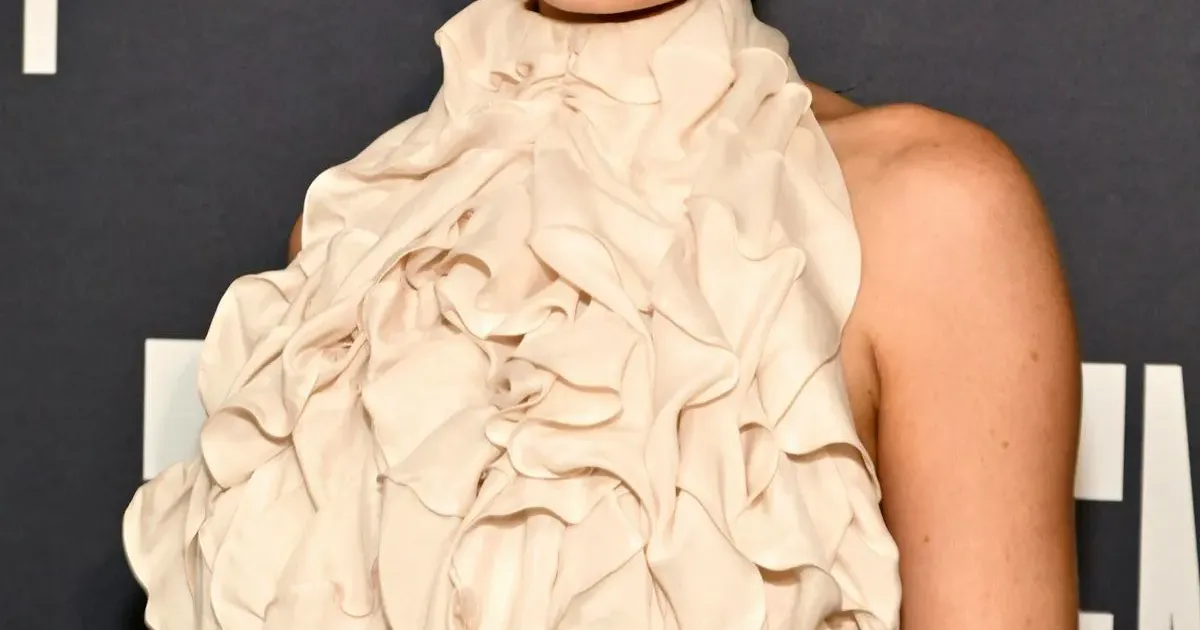
Kylie Jenner’s bleached-brow Vanity Fair cover reads less like a beauty experiment than a controlled image reset. The cover landed on March 12, 2026, as Jenner used one stark beauty choice to pull the image away from routine glamour.
A Cover Built for Repositioning
Beverly Hills remains the epicenter of the cultural zeitgeist this week as Vanity Fair prepares for its most scrutinized night of the year. Kylie Jenner has claimed the center stage ahead of the 2026 Oscar Party by appearing on the magazine's Spring cover with a look that challenges her established public image. Mert Alas captured the reality icon in a series of photographs that strip away the traditional high-glitz veneer associated with the Kardashian-Jenner clan. Gone are the heavy contouring and signature dark arches that defined a decade of beauty trends.
Instead, Jenner stares out from the newsstands with bleached eyebrows and a minimalist silken black bra featuring tiny scallop trim. Critics often label Jenner as a style chameleon, yet this latest iteration feels more like a calculated departure than a simple costume change. She paired the daring lingerie-forward top with Hermes khaki pants and a Balenciaga belt featuring the prominent B buckle. This visual choice aligns her with the equestrian ethos recently popularized by her sister Kendall.
Inky knee-high riding boots from Hermes and a vintage Cartier watch rounded out the ensemble, grounding the avant-garde makeup in a sense of old-money luxury. David Webb statement earrings provided the only nod to her typical maximalist tendencies. The images represent a total shift in her brand's visual vocabulary. Makeup artist Ariel Tejada used Kylie Cosmetics to achieve the blurred matte lip and saturated blush that complemented the bleached brow look.
Beauty Branding Under the Look
Such a move is direct advertisement for her products, showing their versatility beyond the "Instagram face" aesthetic. Jenner has previously experimented with high-fashion risks, including the lion head Schiaparelli gown that dominated headlines in Paris. But the Vanity Fair spread feels more intimate and intentionally raw. One photograph inside the issue shows Jenner mid-strut wearing only a black Chanel cape tied with a long ribbon.
White pointed-toe pumps and a Chanel brooch were the only additions to this revealing presentation. Vanity Fair is not just reinventing its cover stars but also the way audiences consume its most famous event. Organizers confirmed that the 2026 Oscar Party red-carpet livestream will be hosted by a trio of internet personalities: Quenlin Blackwell, Jake Shane, and Brittany Broski. These names may not carry the traditional weight of network news anchors, but their digital footprints are massive.
Hiring Blackwell and Shane reflects a desire to capture a younger, more cynical demographic that values personality over prepared teleprompter scripts. Broski, known for her sharp wit and deep knowledge of internet lore, brings a layer of self-aware commentary that traditional Hollywood reporting often lacks. Mainstream media outlets have struggled to maintain relevance during live awards coverage as TikTok and Instagram reels become the primary source for viral clips.
The Image Change Was the Message
Has anyone actually looked at a movie poster lately? The Vanity Fair cover and its 2026 Oscar party livestream point to the same uncomfortable shift: Hollywood is increasingly built around the Jenner-creator industrial complex rather than cinema itself. Putting Kylie Jenner on a Spring cover with bleached brows is a tired attempt to borrow the subculture's cool to mask a lack of original editorial vision. It is the visual equivalent of a clickbait headline.
The 2026 Vanity Fair cover and its upcoming Oscar party livestream confirm that Hollywood is no longer in the business of cinema; it is in the business of maintaining the Jenner-creator industrial complex.
We see a woman famous for her artifice pretending to be raw while draped in Chanel and Hermes. It is a performance of authenticity that is as manufactured as the bleached hair on her face. Hiring Quenlin Blackwell and Brittany Broski to host the red carpet is a similarly desperate move. It is a white flag raised by Conde Nast, admitting that their own editors can no longer hold the public's attention without the help of people who got famous making faces at a front-facing camera.
The institution is trading its prestige for a momentary spike in the algorithm. While the digital numbers will undoubtedly be high, the cultural value is at an all-time low. It is not journalism or fashion commentary. It is a frantic scramble for relevance in an era where the party is more famous than the films it supposedly celebrates.