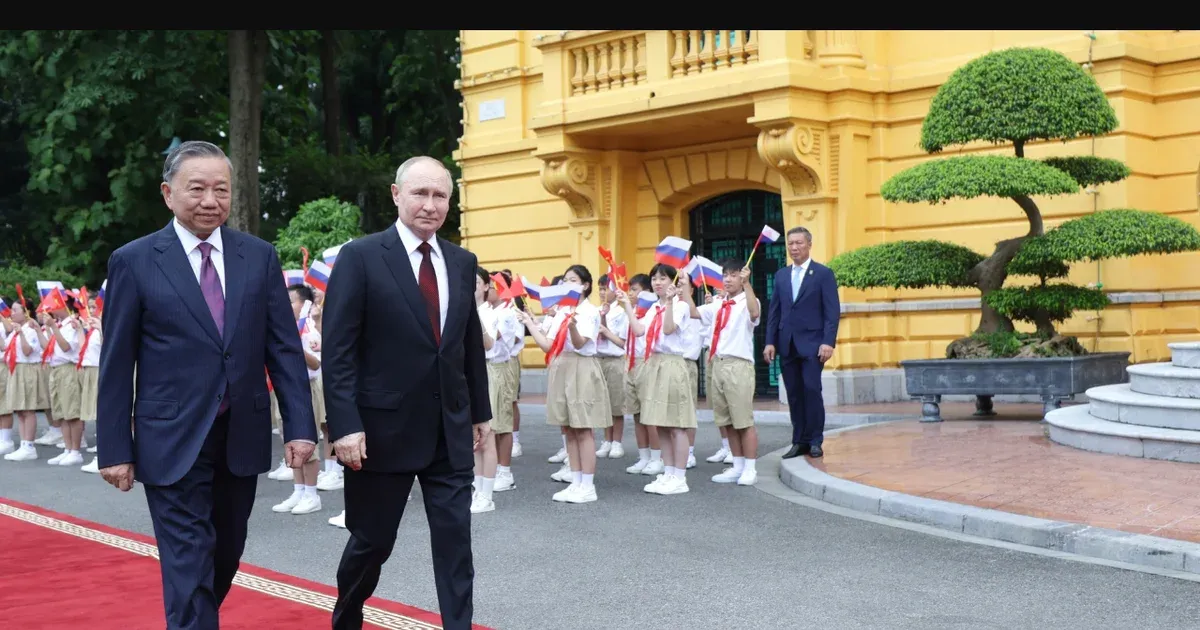
To Lam's consolidation of power is reshaping Vietnam's leadership structure after a period of elite churn. The move gives Hanoi a clearer command center, but it also concentrates responsibility for economic policy, anti-corruption enforcement and foreign balancing.
The personnel signal is important for domestic elites. It is also important for foreign governments tracking Vietnam's strategic balance. The latest phase became clear on April 7, 2026, as the presidency, party leadership and security apparatus appeared increasingly aligned around Lam. For investors and regional governments, the question is whether that alignment produces stability or narrows the space for internal correction.
Parliamentary Approval and Power Transition
Parliamentary proceedings on April 7, 2026, functioned as a formal verification of decisions made within the Politburo weeks prior. To Lam walked into the assembly hall with the full backing of the military and security apparatus, having spent years as the minister of public security. His rise to the presidency follows a period of intense internal discipline known as the Blazing Furnace campaign. Many high-level officials lost their positions or faced prosecution during that anti-corruption drive, clearing a path for a leaner, more centralized executive branch. The National Assembly members expressed no reservations about the consolidation of power during the public portion of the vote.
Political analysts observing the region note that To Lam has effectively neutralized potential rivals within the Communist Party of Vietnam. The transition removes the possibility of friction between the party's general secretary and the state president, a conflict that has historically hampered the execution of long-term economic plans. Because the 14th Congress already established the five-year plan for the country, the presidency provides To Lam with the formal state-level tools to enforce those policies. The vote tally reached 100 percent approval among the delegates present in the chamber.
Alignment With China's Political Model
Vietnam now mirrors the governance structure of its neighbor to the north, where Xi Jinping holds all primary levers of power. Beijing has long advocated for a strong, centralized party-state model to ensure social stability during periods of economic transition. While Vietnam previously prided itself on a more consultative leadership style, the current environment has favored the efficiency of the Chinese approach. The Communist Party of Vietnam seems to have concluded that the risks of internal factionalism outweigh the benefits of distributed power. To Lam is the first leader since Ho Chi Minh to wield this level of authority over both the party and the administrative state.
Security cooperation between Hanoi and Beijing likely finds a more streamlined path under this new arrangement. To Lam possesses deep ties to the regional security community, which may enable smoother negotiations regarding maritime boundaries and trade corridors. International observers emphasize that the moves toward a single-leader model reduce the number of stakeholders required to sign off on major treaties. The 14th Congress focused heavily on national security, and the election of the president reflects those priorities. Centralization has become the standard for Marxist-Leninist states seeking to survive in a competitive global market.
At the party's 14th congress in January, he was re-elected general secretary of the Central Committee for a term from 2026 to 2031, providing the mandate for his current dual-role leadership.
Bureaucratic efficiency often increases when the head of the party is also the face of the state. To Lam now holds the authority to appoint key ministers and oversee the judicial branch with minimal interference from secondary power centers. His background in internal security suggests a presidency focused on domestic order and the suppression of dissent. Under his guidance, the National Assembly is expected to pass more stringent regulations regarding internet usage and social media discussion. These changes aim to preserve the ruling party's monopoly on political narratives as the country navigates a complex economic climate.
Enforcement of the anti-corruption mandate remains a foundation of the To Lam administration. Thousands of officials have been investigated over the last decade, and the concentration of power allows the president to accelerate these purges without fear of institutional blowback. The Communist Party of Vietnam views these measures as essential for maintaining public trust at a time of growing wealth inequality. Success in this area depends on the ability of the president to apply the law consistently across all levels of government. Records show that high-ranking members of the business community are also under increased scrutiny.
Foreign investors generally favor political stability, and the election of To Lam provides a clear hierarchy for multinational corporations. The National Assembly has recently streamlined investment laws to attract capital from the United States and Europe. To Lam must now balance the need for Western technology with the political necessity of maintaining close ties to China. This strategy, often called Bamboo Diplomacy, requires a leader who can speak for both the party and the government with a single voice. Economic projections for the 2026-2031 period suggest that Vietnam will continue its trajectory as a primary manufacturing alternative to China.
Centralization Speeds Decisions and Risk
Centralized leadership can move faster than a divided collective system. It can approve projects, discipline rivals and send clearer signals to foreign partners. The risk is that speed comes with fewer brakes. If policy errors or factional disputes emerge, Vietnam may have fewer visible mechanisms for absorbing them without turning every problem into a test of Lam's authority.