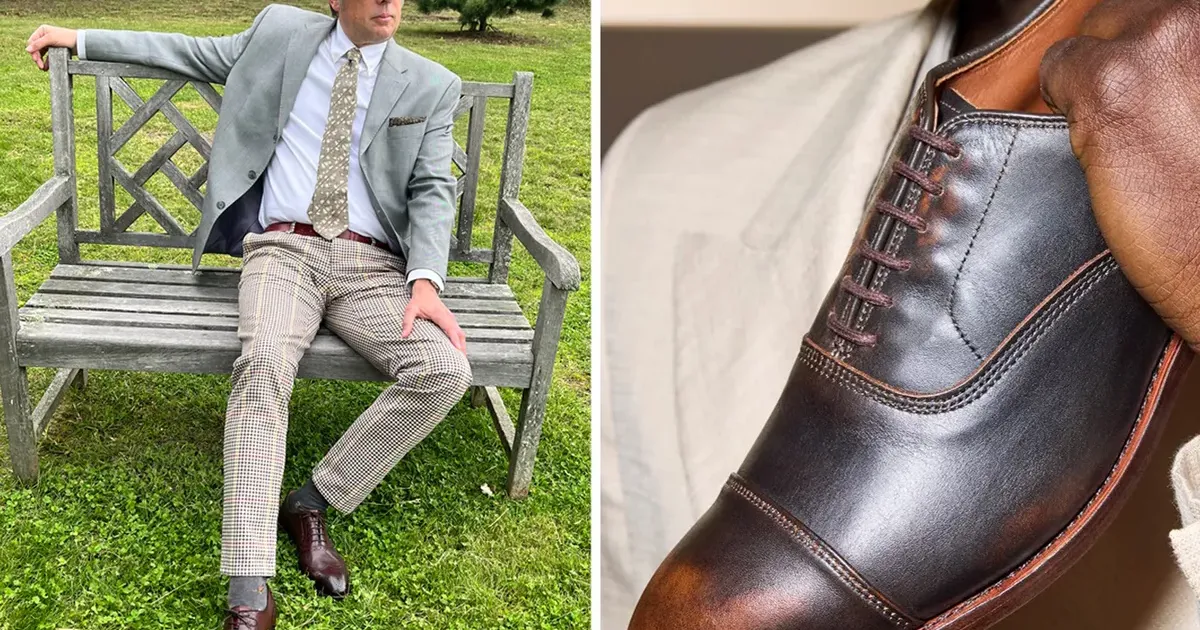
Allen Edmonds and Ace Marks redefined executive fashion that week by prioritizing traditional craftsmanship over rapid production cycles. Consumers now demand more than aesthetics from their footwear. High-quality leather and resoleable construction dictate market value in the current economic climate. By April 4, 2026, the retail cycle had put craftsmanship and durability back at the center of footwear demand, a shift visible in how premium buyers compared craftsmanship, resale value and durability. Investment pieces replace disposable fashion as durability becomes the primary metric for luxury purchases. Craftsmanship remains a non-negotiable standard for the modern professional. Ace Marks leads the premium segment with its Wholecut Oxford. Hand-dyed calfskin leather gives these shoes a distinct profile that goes beyond simple office wear. Blake stitching allows for multiple resoling cycles, significantly extending the lifespan of the product. Every pair originates from Italian workshops where artisans maintain historical techniques.
Allen Edmonds continues to hold its position with the Park Avenue Oxford. A commitment to 360-degree Goodyear welt construction differentiates this American-made staple from international competitors. While the price reflects its heritage, the longevity of the shoe justifies the initial capital outlay for many buyers. Reliability defines the brand reputation among those who value domestic manufacturing.
Construction Standards and Market Longevity
Materials dictate the performance of a dress shoe. Full-grain leather provides breathability and develops a patina that synthetic alternatives cannot replicate. Brands like Beckett-Simonon use these premium hides to create the Yates Oxford, a brogue wingtip that balances formality with texture. Leather linings and stacked heels provide structural integrity during extended wear.
Resoleability separates professional footwear from seasonal accessories. A Blake-stitched shoe offers more flexibility and a slimmer profile, which suits the Italian aesthetic of Ace Marks. Goodyear welts provide superior water resistance and a more solid feel underfoot. Choosing between these construction methods depends on the specific needs of the wearer.
Footwear enthusiasts recognize that a shoe is only as good as its foundation. Cork midsoles used by brands like Allen Edmonds mold to the foot over time, creating a custom fit. This anatomical adaptation reduces fatigue during long workdays. High-density rubber or leather outsoles provide the necessary friction for urban environments.
Quality control remains a critical factor in maintaining consumer trust. Each hide undergoes rigorous inspection to ensure no scars or blemishes mar the final product. Luxury brands often discard a significant percentage of raw materials to maintain these standards. Superior hide selection results in a product that maintains its shape for decades.
Casual Market Demands Versatile Loafer Styles
Loafers transitioned from weekend leisure wear to acceptable office attire. Vince leads this shift with the Hann Loafer, a Venetian style that emphasizes a clean, minimalist silhouette. Soft pebbled leather allows for immediate comfort without the traditional break-in period associated with stiff dress shoes.
G. H. Bass maintains its cultural relevance through the Larson Weejun. Penny loafers originated as a practical option but now serve as a foundation of the preppy aesthetic in both the US and UK. Their simple construction and distinct toe stitching make them recognizable across different social strata.
A Business Insider market review described a wholecut Oxford as one of the dressiest shoe options because of its closed lacing system, refined profile and sleek style.
Grant Stone competes in the mid-range luxury market with horsebit loafers. These shoes feature a metal bar across the vamp, an element that adds a semi-formal touch to a slip-on design. Using high-quality components ensures these loafers compete with much more expensive European imports.
Durable Footwear Becomes the Luxury Argument
The luxury footwear race is increasingly about durability that shoppers can see and feel. Brands that combine recognizable design with longer wear have an advantage as buyers become less patient with fragile premium goods.