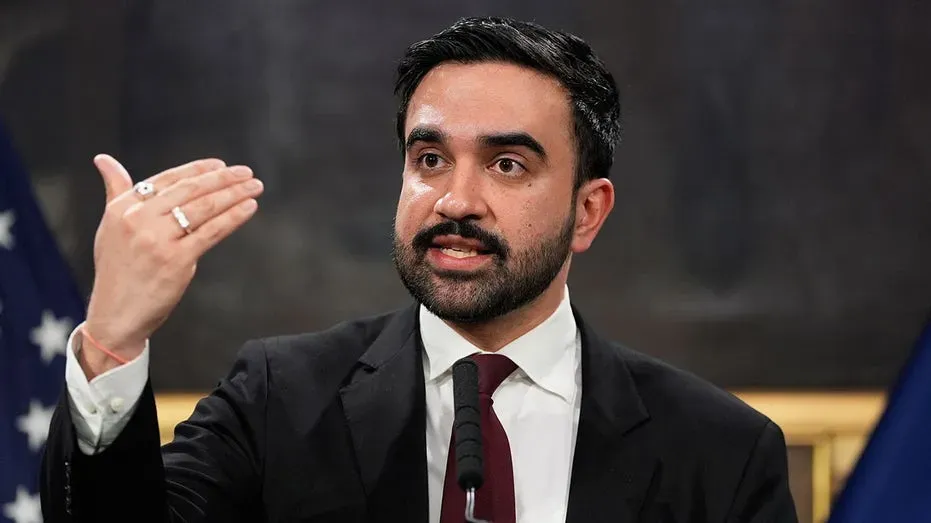
Zohran Mamdani used a street-safety event to turn directly toward the fight over federal immigration power. The accusation matters because ICE has become a shorthand for wider arguments over executive power. On March 27, 2026, his endorsement of the No Kings NYC demonstration came with a sharper attack on ICE and the Trump administration's urban enforcement posture.
Mamdani Targets ICE Enforcement Tactics
Mamdani's critique of ICE centers on transparency, local trust and the effect of enforcement fear on routine city life. He argues that New Yorkers avoid services and check-ins when they believe contact with government could lead to detention. Federal officials reject that framing and say enforcement is necessary for public safety and immigration law.
Mamdani said he told the president, privately and publicly, that he believes ICE has become a rogue agency.
No Kings Protests Gain National Momentum
National organizers for the No Kings movement see New York as a major battleground for their broader argument against executive overreach. Similar rallies in other cities are meant to frame the dispute as constitutional rather than purely partisan. The crown imagery used by protesters is blunt, but it gives the movement a visual shorthand for concentrated executive power.
Coverage of the movement has split along predictable lines. Supporters describe the protests as democratic pressure against executive overreach, while critics say the demonstrations distract from local crime, migration and public-order concerns. Mamdani's endorsement therefore strengthens the movement while also making him a larger target for opponents.
Manhattan Rally Logistics and Public Safety
Saturday's event is expected to begin at Foley Square before moving toward federal buildings in the area. Organizers say they have sought the necessary permits, while city officials are preparing for crowd management, possible counter-protests and business disruption near the route.
Immigration and Customs Enforcement officials maintain that their operations are necessary to maintain national security and uphold federal mandates. They argue that sanctuary policies in cities like New York create dangerous loopholes for criminal activity. In turn, the federal government has threatened to withhold funding from municipalities that refuse to cooperate with deportation efforts. Legal experts suggest this jurisdictional battle could eventually reach the Supreme Court. The city's legal department is currently reviewing its options to limit federal access to municipal data. Mamdani stated that no one in his city is above the law, implying that federal agents themselves must adhere to local standards of conduct.
Trump Administration Response to Urban Unrest
White House officials have dismissed the No Kings movement as politically motivated activism. Separately, the Department of Homeland Security has defended its agents in New York and other sanctuary cities, arguing that federal enforcement focuses on individuals who pose public-safety threats. The dispute is now both operational and symbolic.
Mamdani plans to address the crowd personally and repeat his demand that ICE be removed from New York. He also has to manage a city divided over immigration enforcement, crime and federal power. Every move by his administration is being judged locally and nationally, which makes Manhattan a stage for a fight that extends far beyond the borough.
Protest Politics
Does the American Republic survive when its largest city declares open war on federal law enforcement? Mayor Zohran Mamdani is not merely protesting; he is attempting to nullify federal authority through rhetorical arson. By labeling a federal agency as rogue, Mamdani indicates a breakdown in the constitutional hierarchy that has sustained this nation for two centuries. This is the dangerous logical conclusion of the sanctuary city movement where local politicians focus on ideological purity over the basic mechanics of intergovernmental cooperation.
The No Kings movement relies on a simplistic, cartoonish depiction of executive power that ignores the genuine security crises facing urban centers. If the mayor believes ICE delivers nothing for public safety, he is willfully ignoring the complexities of human trafficking and international smuggling. He chooses instead to court the radical base, using the tragic death of a veteran as a pivot point for a political stunt. The picture emerging is the slow disintegration of federalism in real time as municipal leaders treat the White House like a foreign power rather than the head of their own government.
If every city decides which federal laws it will follow, the United States ceases to be a singular nation and becomes a fractured collection of city-states. Mamdani is playing a high-stakes game where the ultimate losers are the New Yorkers caught between his ambition and federal reality.