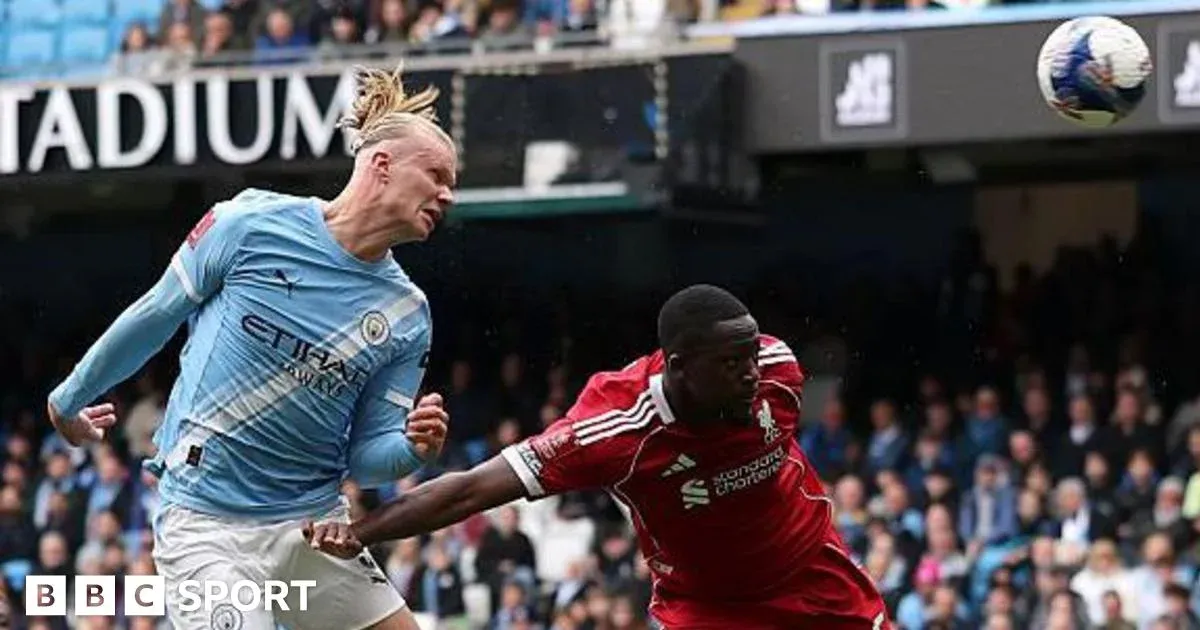
On April 4, 2026, Manchester City dismantled Liverpool, forcing Arne Slot into a defensive posture regarding his tactical approach and the squad's crumbling psychological resolve. Erling Haaland secured a clinical hat-trick during the 4-0 rout, a result that effectively ended Liverpool's domestic cup ambitions and exposed a widening chasm between the two perennial rivals. While Manchester City advanced to an eighth successive FA Cup semi-final, the visiting side retreated to Merseyside facing a crisis of identity that few predicted a year ago. Supporters who celebrated a league title just twelve months prior now find themselves questioning whether the current coaching staff possesses the authority to lead a necessary rebuild.
Manchester City Hat Trick and Defensive Collapse
Erling Haaland exploited every structural weakness in the Liverpool backline, scoring three times to remind the footballing world of his physical dominance. His first goal arrived via a precise delivery that bypassed a static central defense, leaving Alisson Becker with no viable angle for a save. City already had psychological momentum after beating Arsenal in their previous fixture, and this latest display further solidified their status as favorites for the treble. Haaland has now set a new benchmark for FA Cup scoring records, surpassing milestones that had stood for decades. Success for Pep Guardiola depends on this relentless efficiency, which stood in direct contrast to the wasteful efforts of the opposition.
Defensive lapses occurred with alarming frequency throughout the ninety minutes. Liverpool appeared unable to track runners from midfield, a failure that allowed City to dictate the tempo without much resistance. By the time the third goal hit the back of the net, the tactical discipline that once defined the Anfield side had vanished. Statistics from the match showed that Liverpool allowed more shots on target in a single half than they did during the entire month of February. Individual errors by senior players suggested a lack of focus that has become a recurring theme under the current management. Kevin De Bruyne orchestrated the final phase of the attack with a simplicity that mocked the defensive structure Slot attempted to implement.
Former Liverpool midfielder Danny Murphy provided a blunt assessment of the technical failures witnessed at the Etihad Stadium. He characterized the second-half performance as really damaging, noting that the players looked disinterested once the scoreline widened. Murphy observed that the gap in quality was not just technical but also physical, as City players won nearly every 50-50 challenge in the middle of the pitch. This inability to compete for second balls prevented any dangerous counterattacks from developing. Analysis of the heat maps confirmed that Liverpool remained pinned in their own defensive third for sixty-eight percent of the match. Such a disparity in territory usually results in the heavy defeat seen on the scoreboard.
Arne Slot Critiques Player Mentality and Spirit
Arne Slot did not hold back during his post-match media obligations, choosing to focus on the psychological deficiencies of his roster. The head coach said the mentality was absent and expressed bewilderment at the lack of competitive fire shown by his squad. He argued that the missing fighting spirit was the main cause of the collapse rather than any specific tactical error. Slot suggested that certain players failed to meet the basic requirements of a high-stakes knockout match. His public criticism marks a shift in his management style, moving away from the protective stance he adopted earlier in the season. Dressing room dynamics often suffer when a manager shifts blame so overtly toward the athletes.
"The amount of goals we score is far too low, and the missing fighting spirit in the second half was something I did not expect from this group," Arne Slot said during the post-match press conference.
Goalscoring metrics support the manager's frustration with the attacking unit. Liverpool failed to register a single shot on target during the final sixty minutes of play, a statistic that highlights the impotence of their forward line. Mohamed Salah and Darwin Nunez struggled to find space between the compact City lines, often dropping too deep to be effective. Slot emphasized that the technical quality of the final ball has regressed sharply over the last six matches. Without a functional attacking threat, the pressure on the defense becomes unsustainable. The squad has managed only three goals in its last five outings across all competitions.
Rumors regarding player dissatisfaction have begun to circulate after these public comments. Senior members of the squad reportedly feel that the tactical instructions provided are too rigid, stifling the creative freedom they enjoyed under previous regimes. While Slot demands high-intensity pressing, the physical data suggests the team is covering less ground than they did in 2025. This disconnect between the manager's expectations and the players' output creates a feedback loop of poor results and low morale. Many analysts believe the relationship between the dugout and the pitch has reached a point of no return. Training sessions in the coming days will likely be tense as the staff attempts to address these internal rifts.
The Champions League fixture now matters because it offers Liverpool a fast way to change the conversation. Another passive performance would deepen the pressure on Slot before the season is over.
City Rout Leaves Slot Under Pressure
Slot's pressure comes from the manner of the defeat, not only the result. A rout by Manchester City makes tactical doubts louder and leaves Liverpool needing an immediate response.