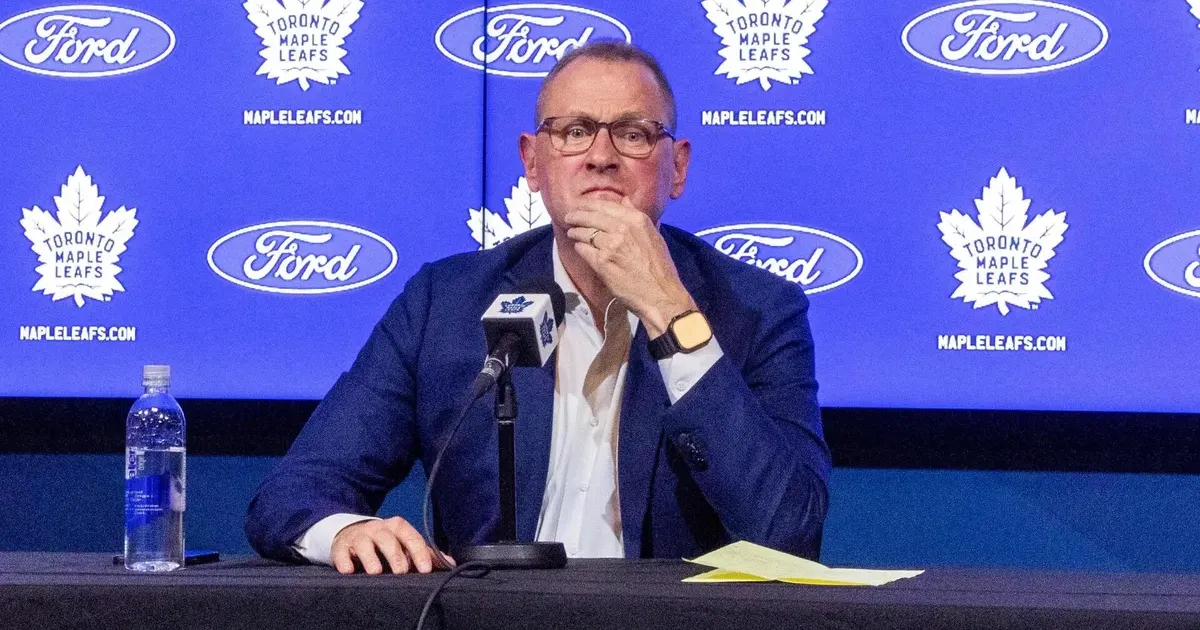
Brad Treliving was dismissed as general manager of the Toronto Maple Leafs following a season where the team failed to secure a postseason berth for the first time in nearly a decade. Results on the ice dictated the move after a collapse in the final weeks of the regular season left the franchise outside the playoff picture. Management acted swiftly on Monday to terminate the executive who had been tasked with pushing the team past its recurring first-round hurdles. The Maple Leafs Fire Brad Treliving After Playoff Collapse report carried a March 31, 2026 time marker for readers following the latest account.
Brendan Shanahan, president of hockey operations, now faces the task of identifying a successor who can manage a roster currently anchored by high-priced superstars. Records show the club had not missed the playoffs since the 2016-17 campaign, making this failure a notable regression for a group that historically dominates regular-season standings. Monday's announcement ended months of speculation regarding Treliving's job security as the team struggled with defensive inconsistency and goaltending depth.
Toronto Front Office Reorganization Analysis
Failure to qualify for the NHL postseason triggered immediate changes within the executive suite at Scotiabank Arena. Ownership at Maple Leaf Sports & Entertainment reportedly signaled that missing the playoffs was unacceptable given the team's top-tier payroll. Previous efforts to stabilize the blue line through trade deadline acquisitions failed to yield the necessary points in March. Analysts at ESPN noted that the dismissal occurs just as the franchise enters a critical window for its core players.
Leadership changes often follow such dramatic departures from expectations in the Toronto market. Treliving arrived with a mandate to add physical edge and veteran presence, yet the roster often looked disjointed during essential divisional matchups. Critics point to the inability to move clear salary cap hits as a primary reason for the lack of roster flexibility. Scouts had expressed concerns about the lack of development among younger defensive prospects within the system.
Treliving Tenure and Postseason Failures
Tenure for the outgoing general manager lasted less than three years, a period marked by high-stakes contract negotiations and a revolving door of depth forwards. While the regular season point totals remained high during his first two years, the lack of a deep playoff run was still a constant criticism from the local media. Statistics from the current season show a sharp decline in penalty kill efficiency and home-ice dominance. Toronto lost several key games against lower-seeded opponents during the final month of play.
Media outlets including CBS Sports highlighted the unstable nature of the front office structure leading into this dismissal. Treliving had attempted to reshape the team's identity by signing several gritty veterans to short-term deals. Those moves failed to provide the veteran leadership required to stabilize the locker room during a late-season losing streak. Internal evaluations suggested that the team's underlying metrics had been trending downward since the beginning of the calendar year.
Toronto shakes up front office with critical offseason ahead.
A spokesperson for MLSE confirmed the departure in a brief statement released late Monday evening. Organizations of this scale rarely tolerate such a public fall from grace, especially with a fan base that pays some of the highest ticket prices in professional sports. Empty seats during the final home games were a visual indicator of the growing disconnect between the team and its supporters. The search for a new general manager will begin immediately with several high-profile names already circulating in hockey circles.
Matthews Contract and Roster Uncertainty
Auston Matthews remains the central figure in any discussion regarding the future of the Maple Leafs. Speculation about how a new general manager will interact with the league's premier goal-scorer has already begun to dominate sports talk radio. Matthews is entering a phase of his career where championship contention is the only notable metric of success. CBS Sports questioned how this front office upheaval would impact the long-term commitment of the star center.
Mitch Marner and William Nylander also face uncertain futures as the club evaluates its salary cap distribution. Most analysts agree that the current roster construction consumes too much cap space on too few players. This imbalance prevented Treliving from addressing the persistent need for a true number-one defenseman or a consistent starting goaltender. Trade rumors involving members of the core four are expected to intensify as the draft approaches in June.
The next general manager must decide quickly whether the Maple Leafs are one move away or trapped in a more expensive cycle of disappointment. That judgment will shape trade talks before the draft.
Players in the dressing room also face a new kind of pressure. A front-office firing signals that ownership no longer accepts regular-season success as evidence of progress.
Front Office Reset remains one useful lens for the next phase.
Toronto now has to show that the dismissal leads to a clearer roster plan rather than another cycle of regular-season optimism and playoff frustration. The next hire will inherit pressure from fans who want postseason proof, not only a new message.