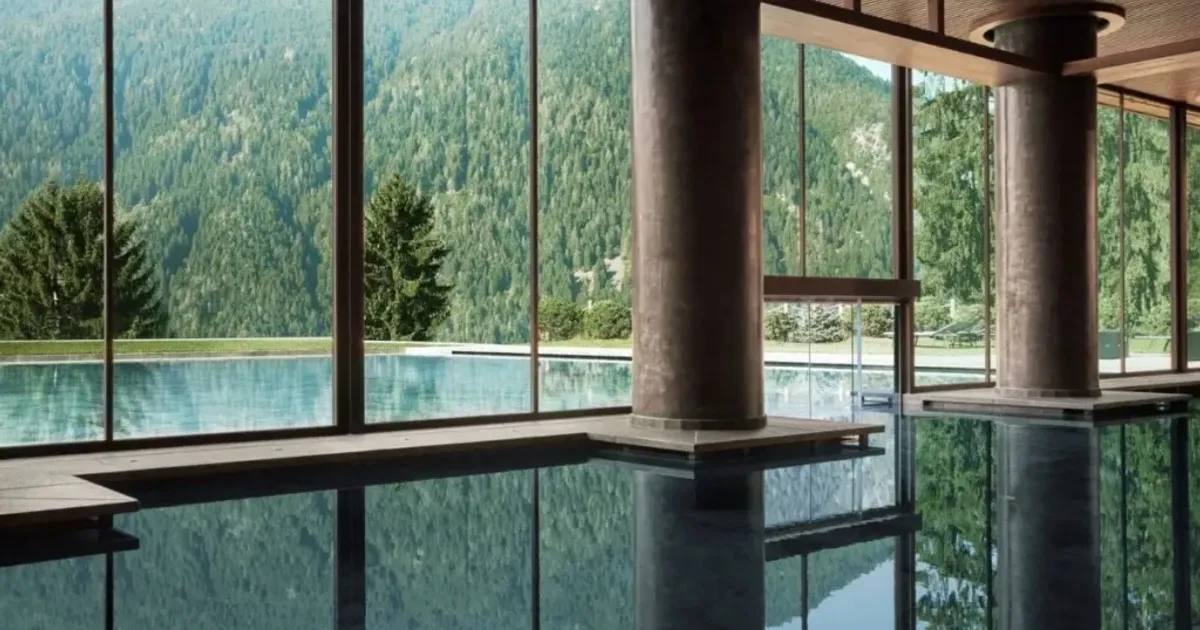
Lefay Resorts and Residences now are the foundation for a wellness-centric vertical that emphasizes medical-grade health programs and sustainable luxury. Executives in Bethesda moved to capture a larger share of the $1.5 trillion global wellness market through this strategic alignment. On March 31, 2026, the issue moved from background concern into immediate scrutiny. Both original Lefay properties in Italy are included in the initial launch phase.
Hospitality developers face increasing pressure to provide specialized experiences that command higher average daily rates than traditional luxury hotels. Marriott International aims to prove that wellness is a primary driver of revenue rather than a secondary amenity. Analysts suggest that the Lefay brand creates a template for future developments where clinical spa facilities serve as the main anchor for the property. Financial models for these resorts typically project serious premiums in room pricing compared to standard five-star competitors in the same geography.
Italian Luxury Market Expansion through Lefay Integration
Europe remains a critical theater for luxury growth, and Italy provides a fragmented yet lucrative environment for global operators. Local families traditionally owned many of the most prestigious villas and coastal retreats in the country. Lefay, founded by the Leali family, established a reputation for high-concept spa architecture and rigorous health protocols. Integrating these assets allows a major American corporation to leverage existing local brand equity without building from zero. Market data indicates that US and UK travelers increasingly seek the specific combination of Italian hospitality and structured wellness retreats.
Lago di Garda and the Dolomites serve as the two primary locations for these assets. Lefay Resort & SPA Lago di Garda focuses on a synthesis of classical Chinese medicine and Western scientific research. High-net-worth individuals often spend several weeks at such properties undergoing detoxification and stress management cycles. This type of extended-stay luxury guest provides a more stable revenue stream than the transient weekend traveler. Occupancy rates at these properties historically outperform local averages during shoulder seasons.
Strategic Pivot toward High Margin Wellness Assets
Wellness tourism grows at a rate nearly double that of general tourism, according to industry benchmarks. Marriott wants to harness this momentum by offering a brand that specifically targets the longevity and biohacking demographic. Traditional brands like Ritz-Carlton or St. Regis offer spas, but the core identity of Lefay is health. Every aspect of the guest experience, from circadian lighting to specific dietary menus, revolves around biological optimization. It is a shift away from passive relaxation toward active medical wellness. Frequent travelers can utilize Marriott Bonvoy points to book stays at these new wellness-focused retreats.
"Our partnership with Marriott reflects a shared vision for the evolution of luxury wellness hospitality," said a representative for Lefay Resorts and Residences during the integration briefing.
Operational complexity increases when a hotel must function as both a resort and a clinic. Staffing requirements for a wellness-first brand include nutritionists, physiotherapists, and specialized spa technicians. These labor costs are meaningful. Marriott intends to use its global distribution system to fill rooms and offset these higher operating expenses. Access to the Bonvoy loyalty program, which boasts over 200 million members, provides a large funnel for new bookings at the Italian sites.
Performance Metrics and Premium Rate Justification
Investors look for specific metrics to justify the creation of a 39th brand in an already crowded portfolio. The Lefay Resort & SPA Dolomiti, for example, maintains a carbon-neutral footprint while offering one of the largest spa facilities in the Alpine region. Sustainability features combined with health specialized services allow for a price point that often exceeds 1,000 euros per night. Real estate developers prioritize these high-margin models when planning new builds in restricted environmental zones. Environmental certifications often enable the permitting process in sensitive areas like the Dolomites.
Global travelers are spending more on health-related services than on material luxury goods. Consumer behavior shifts toward experiences that offer perceived long-term benefits to physical well-being. Marriott tracks these spending patterns across its entire ecosystem to identify gaps in its current offerings. Lefay fills a specific void between the lifestyle-oriented W Hotels and the formal luxury of the Edition brand. It targets a client who values privacy and health over social scene and nightlife.
Distribution now becomes the central constraint. If Marriott pushes Lefay too broadly, it risks flattening the local character that made the brand attractive in the first place. If it moves carefully, the deal can give loyal guests a more specialized reason to stay within the system. Readers comparing wellness resorts now look for evidence that the promise is operational, not just decorative.
That discipline will decide whether the expansion feels premium or merely larger.
Wellness Portfolio Test remains one useful lens for the next phase.
The Lefay deal leaves Marriott with a clearer position in wellness travel, where guests judge the stay by recovery, privacy and clinical credibility as much as room design.
The business case is also practical. Wellness resorts can fill rooms outside peak leisure windows because treatments, rest programs and longer stays are less tied to school calendars.
Marriott now has to protect Lefay from becoming just another badge in a large portfolio. The brand will work only if the guest experience keeps its Italian identity and health focus intact.