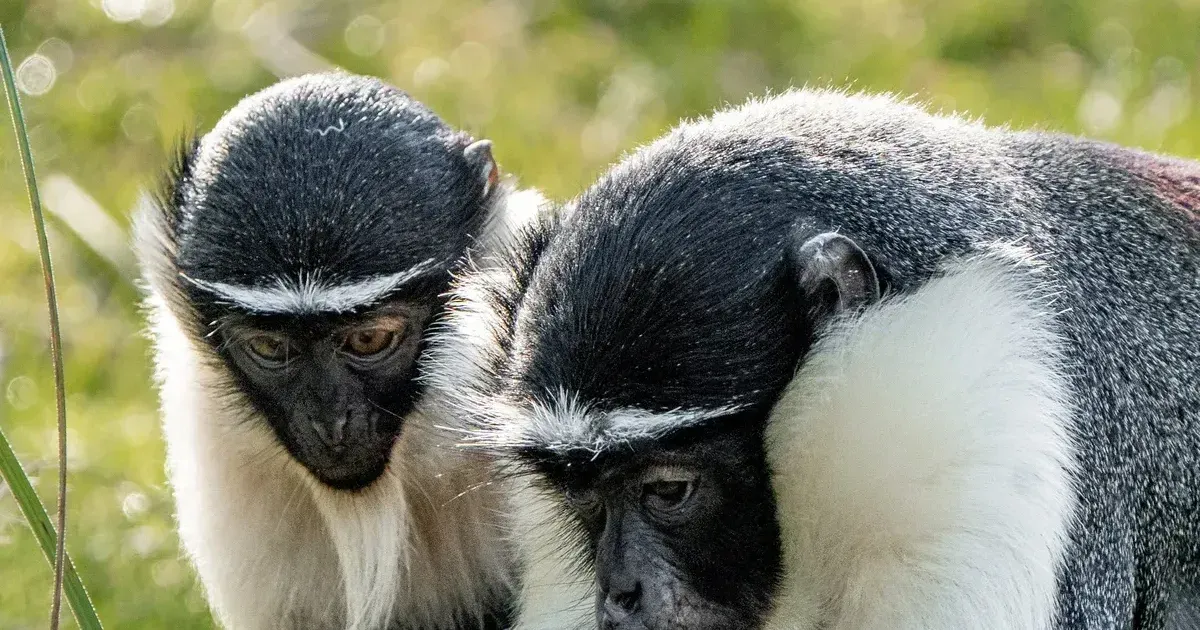
Masaya gave birth this week after a recovery that conservation staff once considered unlikely. On March 20, 2026, the 15-year-old drill monkey was being monitored as both a new mother and a patient still returning from major foot surgery. The delivery matters because drills remain one of the world's most threatened primates. A healthy infant from a breeding female is not only a welcome event for one facility, but a small gain for a species managed through careful genetic planning. Masaya underwent surgery five months earlier after a severe foot infection and fracture put her mobility at risk.
Veterinarians feared that a lasting injury would make infant care impossible, since mother drills need balance, strength and confidence to carry young through daily social routines. The operation repaired damaged bone and gave the foot enough stability for gradual rehabilitation. Staff limited movement at first, then watched how Masaya placed weight, climbed and responded to the troop around her. The key outcome was not speed, but function. By the time the infant arrived, keepers had enough evidence that Masaya could nurse, move and protect the newborn without unusual intervention.
Why Masaya's Recovery Matters
Drill monkeys do not have the public profile of gorillas or chimpanzees, yet their conservation position is fragile. Habitat loss and hunting pressure have left breeding programs with little room for avoidable losses. That is why Masaya's case drew attention beyond the veterinary team. Losing a mature female would have narrowed future breeding options, while a successful birth keeps a valuable line active. The infant will now be watched for feeding, weight gain and early social contact.
Those measures will decide whether the birth becomes a stable addition rather than a short-term success story. The surgery also shows how wildlife medicine is becoming more technically ambitious. Teams increasingly borrow imaging, orthopedic hardware and rehabilitation practices from human and companion-animal care, then adapt them to species with very different movement patterns. That does not make every case a candidate for aggressive intervention. It does, however, widen the choices available when an animal has both medical risk and clear conservation value.
Keepers will now watch the pair through the most delicate period of the infant's development. Weight gain, grip strength and nursing frequency matter more than any public celebration around the birth. The case also changes how conservation teams think about older breeding females. A serious injury no longer has to mean the automatic end of reproductive value when surgical repair and careful enclosure design can preserve normal movement. There is still a cost question.
The Conservation Value of One Birth
Advanced care for one animal can look difficult to justify when wild habitat remains under pressure. Yet a breeding program loses credibility if it cannot protect the individuals on which its genetic planning depends. Masaya's recovery therefore lands in a practical middle ground. It is not a substitute for protecting forests, but it keeps one threatened line alive while that larger fight continues. The strategic lesson is straightforward: modern conservation is no longer only about habitat and breeding charts.
It increasingly depends on whether veterinary teams can preserve the health of individual animals whose survival carries population-level weight. For readers outside conservation work, the story can look like a sentimental animal update. Inside breeding programs, it is closer to a management case study about how far teams should go to preserve a valuable animal without compromising welfare. That distinction matters because successful care is measured after the headline moment. Masaya still has to move normally, feed properly and maintain social stability while the infant develops.
The useful measure now is consistency: if Masaya can raise the infant without repeated intervention, the surgery becomes more than a technical success. It becomes a model for when expensive individual care can serve a wider conservation plan. For a small population, that kind of repeatable judgment can matter as much as one dramatic operation.
What One Drill Birth Says About Conservation
The uncomfortable truth is that conservation often depends on unglamorous, expensive decisions made far from the public imagination. Saving a species is not only about slogans, habitat maps or emotional fundraising clips. Sometimes it is about whether one injured female can stand, carry an infant and remain socially stable long enough to keep a breeding line alive.
That does not make surgery a substitute for protecting forests. It makes the failure to protect forests even more obvious. When wild populations are pushed so low that one birth becomes strategically meaningful, every medical success also indicts the wider system that made the population fragile. Masaya’s recovery is a win, but it is a narrow one. Conservation should celebrate it without pretending that a repaired foot can compensate for a disappearing world.