Matthieu Blazy's Chanel debut has done what luxury houses pay fortunes to achieve: it made a familiar brand feel unstable again.
By March 10, 2026, the Rue Cambon flagship had become a visible pressure point for collectors, stylists and sourcing professionals trying to secure early pieces from the new era. The crowds were not only responding to a logo. They were responding to the possibility that Chanel might finally be changing shape. The early demand also reflects how hungry luxury shoppers are for a new narrative at Chanel after years of familiar codes.
That is the opportunity and the risk. Even a subtle change in proportion, material or attitude can feel dramatic when the house has been treated as almost untouchable. The collection will also be judged against a luxury market that is more selective after years of price increases.
Rue Cambon Becomes the First Test
The first commercial reaction has been intense. Bags, shoes and accessories tied to Blazy's opening direction moved quickly into client wish lists and secondary-market conversations. Blazy's advantage is that he can speak to craft without sounding nostalgic. High-end shoppers still spend, but they are less patient with products that feel expensive without feeling newly considered. The early frenzy will mean little if the clothes and accessories do not survive ordinary client scrutiny after the first wave of attention.
Matthieu Blazy's Chanel debut matters because his reputation is built on material intelligence rather than spectacle alone. Customers want to see whether that discipline can live inside a house famous for codes that can easily become costume. That gives Chanel a way to modernize without pretending its past is a burden. That makes design credibility more important than boutique noise. Luxury customers may chase scarcity, but they return for quality, fit and the feeling that a house understands its own codes.
Scarcity is doing some of the marketing. Limited access creates urgency, but it also creates resentment when loyal clients feel they are being managed rather than served. The danger is that the market reduces the debut to a few hard-to-get accessories and misses the larger design argument. A new accessory can drive attention, yet long-term clients will look for tailoring, leather quality, styling range and seasonal depth. That is where Blazy can separate a reset from a stunt. The house also has to manage expectations across clients who want continuity and fashion observers who want rupture.
Grand Palais Signals Reconstruction
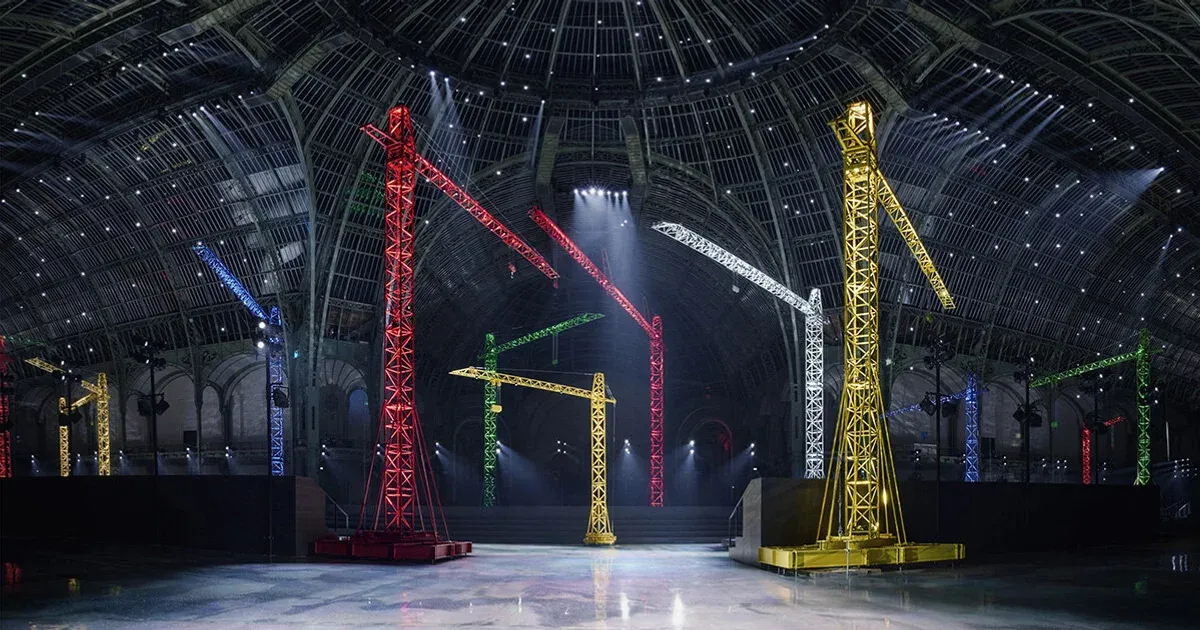
The runway staging at the Grand Palais used industrial forms, reflective surfaces and a sense of controlled disruption. The message was not subtle: Chanel is being rebuilt in public. A house of Chanel scale cannot live on scarcity theater alone. Blazy has the technical reputation to make that case. He does not need to reject Chanel history; he needs to edit it with enough conviction that familiar pieces feel newly necessary. That tension is not a flaw in the debut; it is the job Blazy accepted.
That visual language gave Blazy room to respect the house without embalming it. Tweed, quilting, cap-toe references and structured accessories can still appear, but they need new tension if they are to feel alive. Retail staff will be the first to feel that tension as they manage loyal clients, new buyers, tourists and resellers. Chanel has the global machinery to amplify it. The commercial verdict will arrive in boutiques, not only on runway feeds. That is the difference between a launch that sells out quickly and a creative shift that still matters after the first waitlists clear.
Chanel retail scarcity is powerful only if the product justifies the chase. If scarcity becomes the whole experience, the brand risks turning excitement into customer fatigue. If the experience becomes too closed, desire can start to feel punitive. The risk is that machinery flattens a designer into a marketing moment if the product cycle moves too quickly. If the products hold up there, the debut can become durable momentum instead of one season of noise.
The Commercial Test Comes Next
The luxury market has rewarded brands that turn creative change into repeatable desire. A viral debut can open the door, but it cannot carry multiple seasons without product depth. If it becomes too accessible, the house loses part of the aura that supports its pricing. The better path is patience: let the codes evolve and let demand build around more than access. That test starts now in stores, where excitement has to become repeatable client trust beyond initial demand and runway applause.
Blazy's challenge is to make Chanel feel newly desirable without alienating clients who buy the house for continuity. That is a narrow path, and the early boutique frenzy proves only that attention has returned. The real commercial craft is balancing those pressures without making the customer feel manipulated.
The sharp conclusion is that Chanel needed a jolt, and Blazy has delivered one. Now comes the harder work: turning architectural drama and scarcity into a coherent wardrobe that still feels worth the price after the first rush fades. Blazy has earned attention; now he has to build trust across more than one season.