Chanel's new era arrived less like a quiet handover than a public stress test of luxury appetite.
Shoppers crowded Rue Cambon for the first major commercial wave tied to Matthieu Blazy's Chanel debut. On March 10, 2026, security staff managed lines of collectors, editors and influencers as customers competed for early access to leather goods, cap-toe pumps and oversized bags already circulating across social media.
Blazy came to Chanel with a reputation for material intelligence. The first retail reaction suggests that reputation has become a market force of its own.
Rue Cambon Becomes a Pressure Point
Demand has outpaced ordinary boutique rhythm. Sourcing professionals described unusually low inventory and a surge of requests from clients who had not been active Chanel buyers in previous seasons.
Reports of strict appointment control, security scares and disappointed loyalists show how quickly excitement can turn into resentment when scarcity becomes the main experience of the brand.
Luxury Scarcity Readout
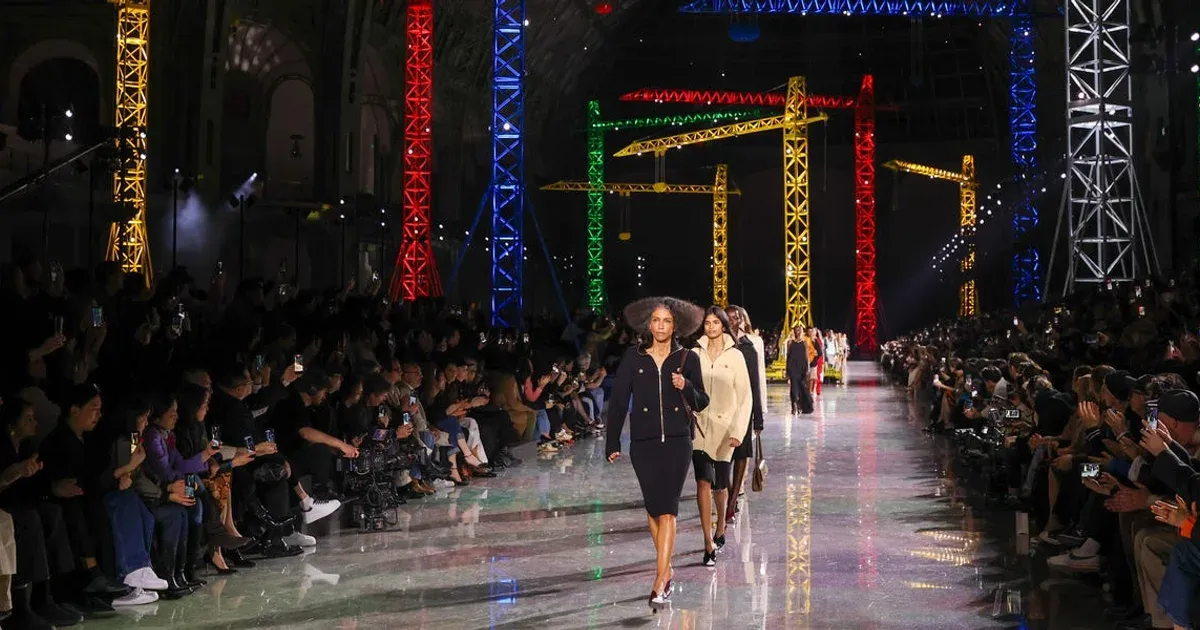
The Grand Palais staging reinforced the message by presenting Chanel as a house under construction, with industrial forms cutting through couture delicacy. Grand Palais construction staging gave the debut a visual language for renewal without pretending the transition was gentle.
A heritage house survives by making desire feel inevitable, not frantic. If scarcity becomes the product, Chanel risks training customers to remember the chase more than the design.
The commercial risk is that launch-week heat can distort the work itself. Viral accessories can ignite a season, but a heritage house cannot live forever on queues, sourcing agents and secondary-market markups. Chanel needs customers to remember the cut, texture and proportion, not only the difficulty of getting inside the boutique.
Blazy's advantage is that the clothes have a material argument behind the frenzy. His reputation was built on craft intelligence, not spectacle alone. If Chanel lets that strength lead after the noise fades, the debut can become a new language rather than a shopping stampede.
The warning is simple: luxury clients tolerate difficulty when they believe it protects craft. They react differently when difficulty feels engineered for social-media heat. That distinction is where brand loyalty is either strengthened or spent. That is the balance Blazy now has to protect. The debut can be theatrical, even difficult, but the product has to feel more substantial than the access ritual around it. If the new Chanel era becomes a game of appointments, resellers and queue management, the house will look powerful in the short term and insecure in the long term. Luxury should create distance through excellence, not through artificial frustration. The house also has to manage loyal clients who do not want to feel displaced by launch-week spectacle. Those customers sustain luxury brands after the viral crowd leaves. If they experience the new era as exclusion rather than elevation, Chanel will have traded durable loyalty for temporary heat. Blazy has the craft vocabulary to avoid that outcome, but the retail machine around him has to let the work breathe. The Grand Palais can announce a rebuild; boutiques have to prove it is not just theater. The sourcing frenzy also changes the tone of criticism. When a bag is unavailable, desire can rise; when everything feels unavailable, the brand begins to look more interested in gatekeeping than design. Chanel has always used scarcity, but Blazy's first season arrives in a market already tired of artificial difficulty. That means the house has less room for arrogance than the crowds suggest. The better signal would be disciplined distribution, clear client treatment and enough product confidence to let the work speak after the queue disappears. The early crowds prove attention. They do not yet prove renewal. That distinction matters because fashion history is full of loud debuts that failed to become durable direction. The danger is over-reading one hot debut. The stronger conclusion is narrower: Chanel has attention, but attention is not yet proof that the new era has discipline. The next season will show whether that restraint exists, or whether the launch was louder than the design system behind it.