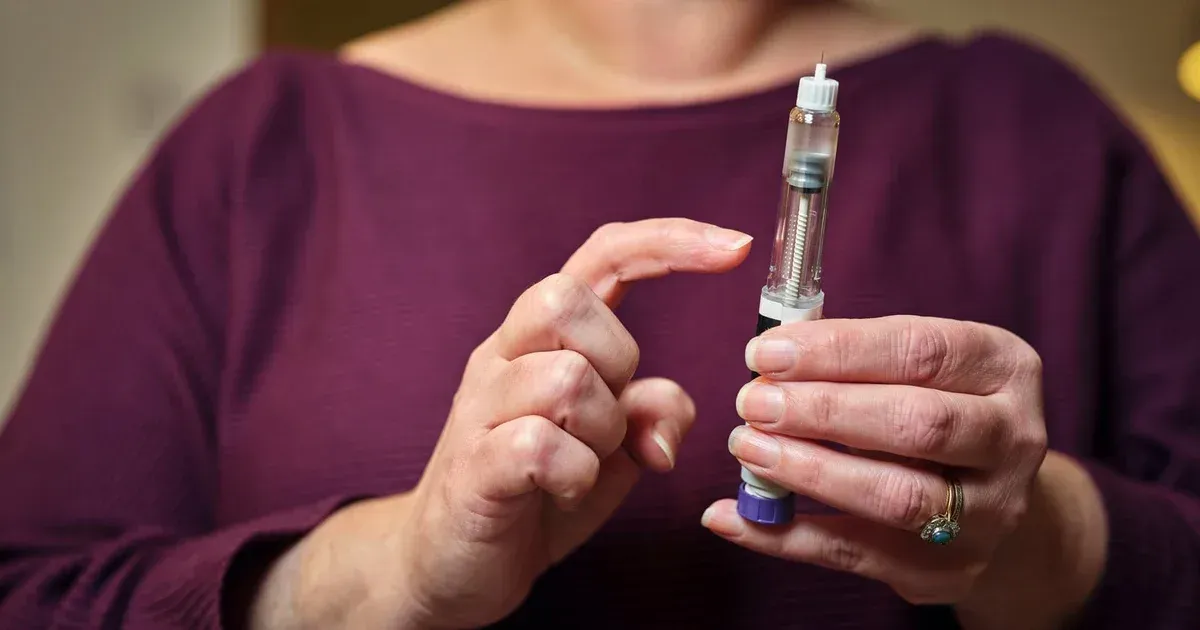
A Guardian letter from an Aberdeen doctor argued that weight-loss medicines work best inside structured programmes supporting diet, physical activity, sleep and muscle preservation. That position now resembles NHS England's pathway for tirzepatide, but the clinical evidence needs one important qualification.
Tirzepatide is a dual GIP/GLP-1 receptor agonist, not a stand-in for every medicine commonly grouped under the GLP-1 label. NHS England says its use for weight management in primary care requires both clinical oversight and behavioural support.
Support is part of safe care, but existing evidence does not show that lifestyle changes replace continued pharmacotherapy or determine who keeps the weight off. A major randomized withdrawal trial points in the opposite direction: participants who stopped tirzepatide regained substantially more weight even though lifestyle counselling continued.
England Has Defined Wraparound Care
NHS England's January 2026 guidance separates wraparound care into two components. Clinical support covers eligibility, prescribing, dose titration, treatment response, side effects, drug interactions, comorbidities and referrals. Behavioural support addresses sustainable nutrition, physical activity, health literacy and non-stigmatising engagement.
The nationally procured behavioural service runs for nine consecutive months and may be delivered digitally, remotely or face to face. Primary-care prescribing includes initial assessment followed by monthly titration and monitoring appointments, with additional appointments or referrals when needed.
The guidance also draws a boundary: behavioural services do not give individual medical advice or manage medication. Prescribers remain responsible for safety and clinical decisions, including whether treatment should continue after review of response at the maximum tolerated dose.
SURMOUNT-4 Tested Continued Treatment
The SURMOUNT-4 trial enrolled adults with obesity, or overweight plus a weight-related complication, without diabetes. After a 36-week open-label tirzepatide phase, 670 participants who reached a maximum tolerated dose of 10 or 15 mg were randomized either to continue the medicine or switch to placebo for 52 weeks.
All participants received counselling throughout the study encouraging a daily 500-calorie deficit and at least 150 minutes of physical activity per week. That design matters because the comparison was not medicine versus lifestyle support. Both groups received lifestyle counselling; the randomized difference was continued tirzepatide versus withdrawal.
Participants lost an average 20.9% of body weight during the initial 36 weeks. From randomization to week 88, the continued-treatment group lost another 5.5% on average, while the placebo group regained 14.0%. At week 88, 89.5% of those continuing tirzepatide maintained at least 80% of the initial loss, compared with 16.6% after switching to placebo.
The Trial Does Not Prove a Lifestyle Formula
The randomized result supports continued treatment among people who tolerated the trial regimen. It does not show that patients who build particular habits can safely stop, or that counselling is ineffective. The investigators explicitly listed the absence of an intensive-behavioural-therapy comparison as a limitation.
Generalisation also has limits. Randomized participants had already tolerated high-dose tirzepatide during the lead-in period. The trial excluded diabetes, and 80.1% of randomized participants were White. Its results should not be converted into a universal forecast for every patient, dose or related medicine.
Adverse events were common during the open-label phase, especially gastrointestinal symptoms. Individual decisions about starting, adjusting or stopping treatment therefore belong with a qualified prescriber who can consider contraindications, other medicines, pregnancy and a patient's wider clinical situation.
Care and Drug Effect Must Not Be Confused
The NHS model is defensible because medicine management, nutrition, movement and monitoring address different parts of treatment. It also avoids the false choice between biological treatment and personal responsibility. Obesity is described in the NHS guidance as a chronic, relapsing condition shaped by biology, environment and psychology.
The hard conclusion is that wraparound care is a required safety and support structure, not evidence that willpower makes the drug's effect durable. If services promise that coaching will preserve medication-induced loss after withdrawal, they outrun the trial. If they dispense medicine without monitoring and behavioural support, they fall short of the care standard. Both errors turn a chronic-care pathway into a slogan.