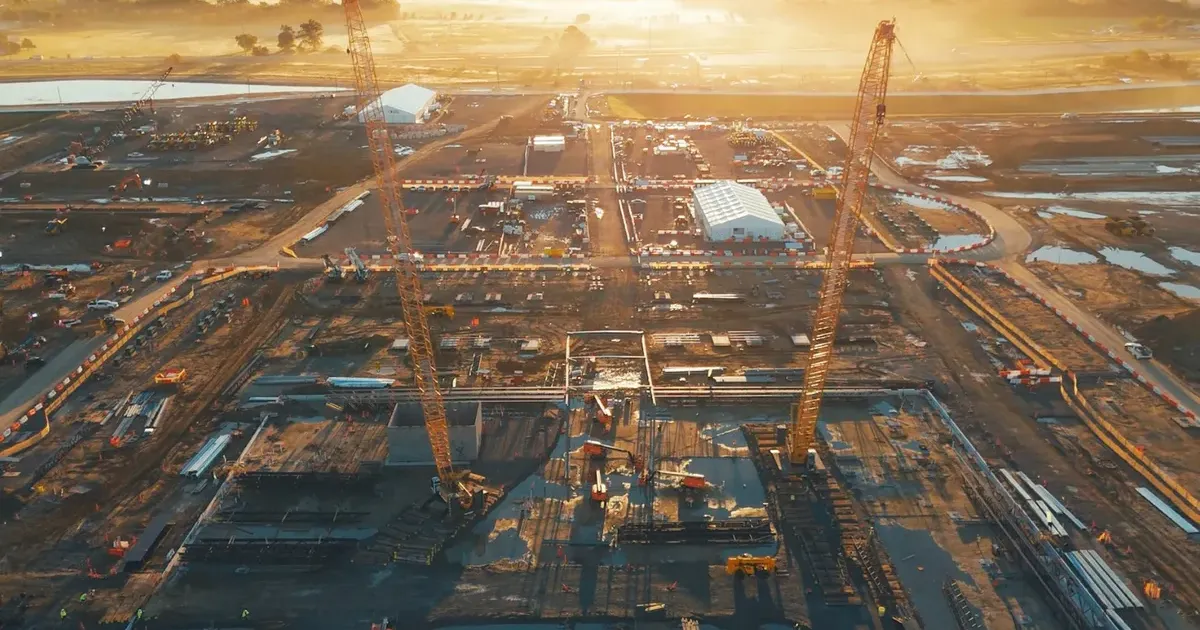
Meta's Louisiana AI expansion has turned power supply into a legal, environmental and political test for the company. The Hyperion data center plan ties artificial intelligence growth directly to local energy demand, utility approvals and public trust. Rachel Peterson said Meta would finance gas-fired power generation to support the campus, while separate lawsuits and privacy complaints continue to challenge the company's broader data practices.
The project is large enough to make electricity the central issue. Meta and its partners have described Hyperion as a multi-phase AI infrastructure buildout with a multibillion-dollar price tag, major land needs and a demand profile that could reshape the local grid. Louisiana regulators still have to evaluate how new generation, transmission and rate structures would affect the public interest.
That regulatory question does not exist in a vacuum. Meta is asking communities and utility officials to accommodate a vast physical expansion at the same time the company is facing criticism over privacy, smart glasses data handling and algorithmic harm. The result is a credibility problem. A company that wants extraordinary infrastructure support has to prove it can handle extraordinary responsibility.
Hyperion Infrastructure and Louisiana Grid Impact
Meta's Hyperion plans point to the physical scale of the AI race. Large language models and related systems require enormous computing clusters, cooling systems and reliable power. Renewable energy and battery storage can reduce part of the footprint, but gas-fired generation remains attractive when a company needs firm capacity on a predictable schedule. That is the tension at the center of the Louisiana project.
Local officials see potential jobs, investment and industrial activity. Residents and ratepayers have a different set of questions: who pays for grid upgrades, how water demand will be managed, what emissions will follow, and whether a single corporate customer should command so much planning attention from a public utility system. Those are not anti-technology questions. They are basic governance questions.
Entergy and state regulators will have to show that the project does not leave ordinary customers subsidizing a private AI boom. If Meta finances generation directly, that may reduce one concern, but it does not settle land use, transmission, water, emissions or long-term dependency. Once a region builds around one massive data center load, the public inherits part of the risk.
Privacy Claims Around AI Training Pipelines
Privacy concerns add pressure to the physical expansion story. Reporting and litigation around Ray-Ban Meta smart glasses has raised questions about how user-captured footage may be reviewed, labeled or used in AI training workflows when users opt into data sharing. The most serious claims involve sensitive footage allegedly seen by human reviewers. Those allegations require careful attribution because they concern private moments and real workers.
"In some videos you can see someone going to the toilet, or getting undressed. I don't think they know, because if they knew they wouldn't be recording," a contractor for the Meta training pipeline said.
Meta has said its products include privacy controls and that data sharing choices are disclosed to users. The dispute is whether those disclosures are meaningful enough for a device that can record from a person's face in ordinary life. A phone camera is visible when raised. Smart glasses blur that social signal. That makes consent harder, especially for bystanders who never agreed to participate in a training pipeline.
The issue is not only whether a policy exists. It is whether the average user understands that footage may move through systems involving storage, review, labeling and model improvement. AI training converts ordinary human scenes into corporate input. When the scene is private, intimate or accidental, the trust problem becomes much larger than a checkbox.
Algorithm Liability Adds Legal Pressure
Meta also faces a wider legal environment around youth safety, recommendation systems and addictive design claims. Courts and regulators are increasingly willing to ask whether infinite scroll, algorithmic ranking and engagement-based design can create foreseeable harm, especially for minors. The legal theory is still developing, but the direction is clear: platforms are being pushed to defend product architecture, not just content moderation decisions.
That matters for Meta's AI ambitions because the company is not only building data centers. It is building systems that shape attention, behavior and social interaction. If courts treat design choices as potential sources of negligence, Meta's risk profile changes. The same company asking Louisiana to approve massive AI infrastructure may also have to redesign parts of its consumer platforms to reduce harm.
Parental controls and safety settings are no longer enough if plaintiffs can show that core engagement mechanics create predictable damage. The pressure will not be limited to Meta. YouTube, TikTok, Snap and other platforms face versions of the same debate. But Meta's scale makes it a central target, and its AI buildout makes the contrast sharper.
The company now faces scrutiny on two fronts at once. In Louisiana, regulators are examining the physical burden of AI: power, land, water and emissions. In courtrooms and privacy debates, critics are examining the human burden: data exposure, consent, psychological harm and platform design. Those fronts are connected because both ask whether Meta can be trusted to internalize the costs of its own growth.
The Cost of Meta's AI Appetite
Why should Louisiana hand grid-shaping influence to a company still fighting over the boundaries of privacy and algorithmic responsibility? The audacity of the Hyperion project is not only its energy appetite. It is the demand for public accommodation from a company whose consumer products keep generating trust failures. Meta wants communities to believe it can responsibly manage an AI complex of historic scale while critics are still arguing that its devices and platforms expose users to harms they do not fully understand.
The Louisiana Public Service Commission should think carefully before letting one corporation bend energy planning around its private AI race. The privacy allegations around smart glasses and the legal pressure over engagement design show that Silicon Valley's externalities are no longer abstract. For years, major platforms treated mental health, consent and data exposure as manageable side effects of growth. Now the bill is arriving. If Meta cannot convincingly manage the safety of its existing platforms, it has no business demanding extraordinary public trust for a massive AI hub. The Hyperion price tag risks becoming a monument to corporate ego, built on fossil fuel dependence and a public asked to absorb costs it did not choose.