The latest investigation marks a day of deep disillusionment for the United Farm Workers as the historical reputation of its most famous founder collapsed under the weight of detailed abuse allegations. Investigative findings made public this morning documented a pattern of physical and psychological violence directed at women by Cesar Chavez, a man previously considered the moral compass of the Chicano movement. These reports contradicted decades of carefully curated hagiography that depicted Chavez as a saintly figure of non-violent resistance. By March 31, 2026, the allegations had forced schools and community institutions to revisit a familiar civic story. Evidence emerged through archival letters, internal union memos, and fresh testimonies from former organizers who lived at the union headquarters in La Paz, California.
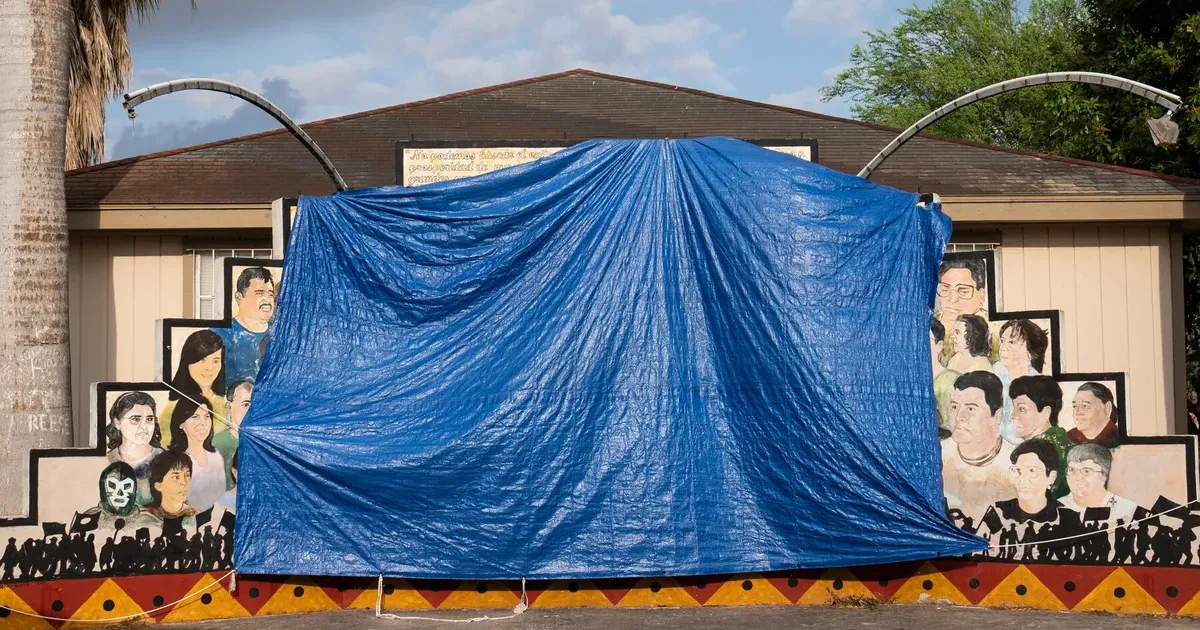
Families across the Central Valley expressed a sense of personal betrayal upon learning that their childhood hero maintained a private life of cruelty. For many Mexican Americans, Chavez was a symbol of dignity despite systemic agricultural exploitation. His image adorned murals, stamps, and primary school hallways across the Southwest. Recent discoveries, however, suggested that the discipline Chavez demanded of his followers through fasting and prayer did not extend to his own treatment of female colleagues and family members.
Organizers within the United Farm Workers during the 1970s described an environment where dissent was met with public shaming or physical threats. This atmosphere intensified as Chavez became increasingly influenced by the Synanon cult and its confrontational therapy techniques known as The Game. While the public saw a humble man in a flannel shirt, women inside the movement reported a leader who used his religious and political authority to silence victims of his outbursts. Records showed that multiple women attempted to raise these concerns internally, only to face immediate expulsion from the La Paz compound.
Delano Grape Strike and the Non-Violent Mask
Labor history traditionally frames the 1965 Delano grape strike as a triumph of the human spirit over corporate greed. Cesar Chavez gained national prominence by leading a five-year struggle that eventually forced California growers to sign the first union contracts for farm laborers. He modeled his tactics on the philosophy of Mahatma Gandhi, emphasizing the power of suffering over the use of force. This public adherence to ahimsa, or non-violence, won him the support of the Kennedy family and millions of American consumers who joined the national grape boycott.
Internal documents from that period now indicate that the non-violence was strictly a tactical requirement for the rank and file. While farmworkers faced violence from strike-breakers and local police, Chavez allegedly cultivated a culture of intimidation within the union hierarchy. Female staffers recounted instances where the leader used his power to isolate those he deemed disloyal. One former secretary described a 1972 incident where Chavez berated her for hours in a locked room until she signed a confession of political deviance.
Public fasts were the primary tool for maintaining Chavez’s moral authority. During his 25-day fast in 1968, he reportedly became a living martyr, drawing thousands of supporters to the Forty Acres site in Delano. Survivors of that era now state that these displays of self-sacrifice were often used to guilt-trip subordinates into working eighty-hour weeks without pay. Women, who performed the majority of the administrative and logistics work for the boycott, were frequently the targets of his most severe rebukes if they prioritized their own health or family needs.
Testimonies Reveal Decades of Internal Abuse
Documented evidence from the Times investigation highlighted specific cases of physical assault that had been suppressed for over fifty years. One woman, an early volunteer for the United Farm Workers, provided a sworn statement regarding an encounter at the union’s headquarters. She detailed a 1976 altercation where Chavez struck her during a dispute over the distribution of union literature. No police report was filed at the time because the victim feared that exposing the leader would destroy the labor movement they had worked so hard to build.
"The extensive evidence of his abuse of women proves that the man the world saw was a carefully constructed mask," stated a summary in the investigative report.
Scholars who previously defended Chavez are now forced to confront the letters he wrote during the late 1970s. These writings revealed a man obsessed with purging enemies and maintaining absolute control over the personal lives of his staff. He frequently ordered women to leave their husbands or move their children to different communal housing units as a test of their devotion to the cause. Failure to comply resulted in a public trial during union meetings where Chavez would lead the group in shouting insults at the accused for hours.
Financial records also showed that union funds were sometimes diverted to monitor the activities of female organizers suspected of planning a walkout. Security teams at La Paz, known as the Forefront, were tasked with intercepting mail and eavesdropping on telephone calls. This surveillance focused heavily on young women who entered the movement through the United Farm Workers legal department or volunteer programs. Many of these women left the movement with psychological trauma that persisted for decades.
Educational Institutions Reassess Chavez Curriculums
School districts across California and Arizona began an immediate review of their instructional materials following the release of the investigation. Cesar Chavez is currently a mandatory subject in many social studies frameworks, often presented as a peer to Martin Luther King Jr. and Rosa Parks. Educators now struggle with how to present a man whose labor achievements are inseparable from his personal misconduct. Several universities in the California State system have already removed his name from student union buildings and scholarships.
Parents voiced concerns during an emergency board meeting in San Francisco, arguing that the myth of the labor leader has become a liability. They noted that teaching a sanitized version of history does a disservice to the actual farmworkers who suffered under his leadership. One high school history teacher pointed out that the 1966 march to Sacramento was a collective effort of thousands, yet Chavez absorbed all the credit while privately demeaning the women who organized the march logistics. The district decided to suspend all Chavez-related assemblies until a new curriculum could be developed.
Publishing houses have similarly signaled that upcoming textbooks will include chapters on the internal purges and the abuse of women within the movement. The shift marks a meaningful departure from the celebratory narratives found in books published during the 1990s and early 2000s. Historians are now looking closer at the role of Dolores Huerta, who co-founded the union but often stood in the shadow of Chavez’s ego. Some advocates suggest that shifting the focus to Huerta and the anonymous workers would provide a more accurate and less problematic history of the movement.
Curriculum Reckoning for Schools
The education question is not whether Chavez disappears from classrooms. It is whether students are allowed to study a labor leader as a political actor with power, contradictions and documented harm.
A better curriculum can hold two truths at once: farmworker organizing changed American labor history, and public memory can become dishonest when institutions protect a hero from evidence.