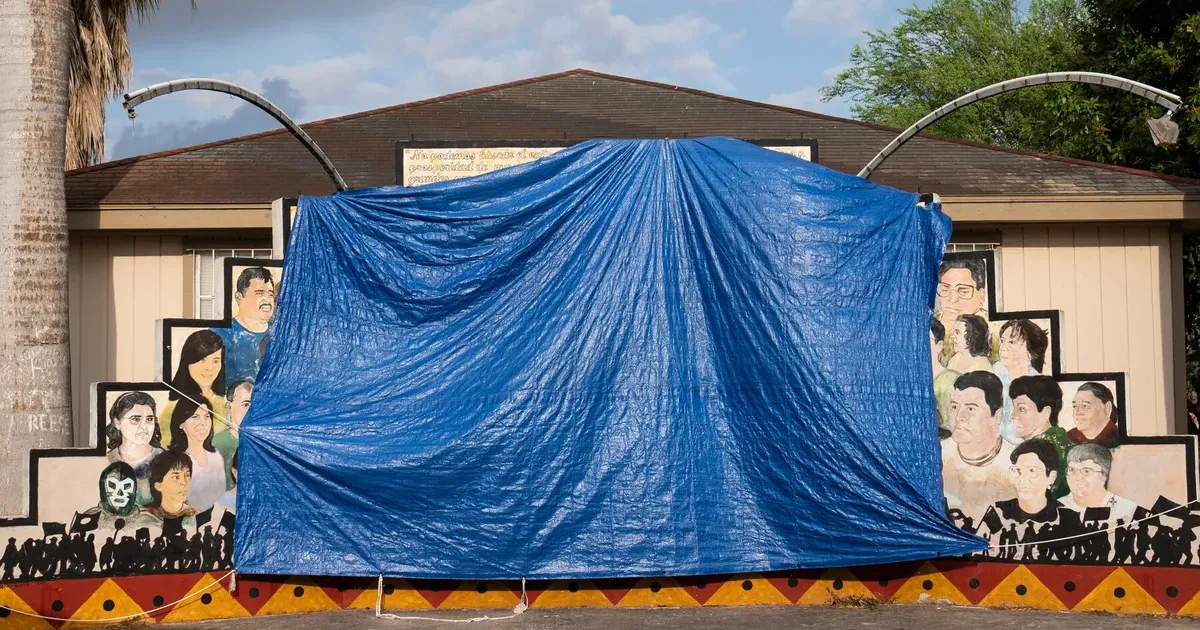
Mexican American communities are reassessing Cesar Chavez because the allegations against him reached beyond biography. They struck a public symbol that many families, schools, unions, murals and civic ceremonies had used to tell a story of dignity after generations of farmworker exploitation.
The reaction cannot be reduced to cancellation or defense. Chavez was never just a name on a holiday calendar. For many people, he represented parents and grandparents who bent over fields, organized at personal risk and demanded to be seen as workers with rights. The abuse allegations do not erase that history. They do make the old hero version impossible to keep intact.
The Symbol Carried More Than One Man
Chavez became a shorthand for a much larger struggle. The shorthand helped public institutions teach farmworker history quickly, but it also hid the number of people who built the movement: Filipino organizers, Mexican American farmworkers, women organizers, clergy, students, local families and rank-and-file workers who never became nationally famous.
Now that concentration of memory has become a liability. If the movement is treated as one man's moral property, then allegations against him threaten the whole legacy. If the movement is taught as collective power, the workers remain visible even when the icon falls.
Dolores Huerta Changes the Frame
Dolores Huerta's public account matters because she was not an outsider attacking the movement. She was one of its architects. Her allegations, alongside reporting on women and girls who say Chavez abused them, force communities to confront the possibility that loyalty to the cause helped keep harm unspoken.
The reassessment is painful, but it is also clarifying. A movement built to expose exploitation cannot protect its own myths by making women disappear. The standard cannot be justice in the fields and silence inside the organization.
Murals and Street Names Become Questions
Public memory is physical. It sits on school signs, union halls, city proclamations, murals, parks and street names. When allegations change the record, communities have to decide what the public honors now say.
Removing a name can feel like erasure to people who saw Chavez as proof that Mexican American labor mattered. Keeping a name unchanged can feel like erasure to survivors and to families who believe the old tribute now hides abuse. The better debate starts by admitting that both kinds of erasure are possible.
The Workers Do Not Need a False Saint
The farmworker movement is strong enough to survive a more honest story. The Delano grape strike, boycott discipline, union organizing and public pressure changed American labor history because thousands of people acted together. The collective achievement does not require Chavez to remain morally untouched.
A better public history can name Chavez's role while refusing to make him the whole frame. It can give more space to Huerta, Larry Itliong, Filipino farmworkers, women in the fields and the families who sustained strikes with food, childcare, risk and patience.
The Legacy Has to Grow Past the Poster
The Chavez reckoning hurts because it asks communities to revise childhood assemblies, civic pride and family memory. But grief cannot become denial. If the public record changed, public memory has to change with it.
The choice is not between protecting Mexican American history and believing women who came forward. The stronger path is to protect the history by making it less dependent on one revered man. Keep the farmworkers. Keep the organizing. Keep the dignity of the families who fought for rights. Lose the myth that justice movements are only as honest as their most famous face.