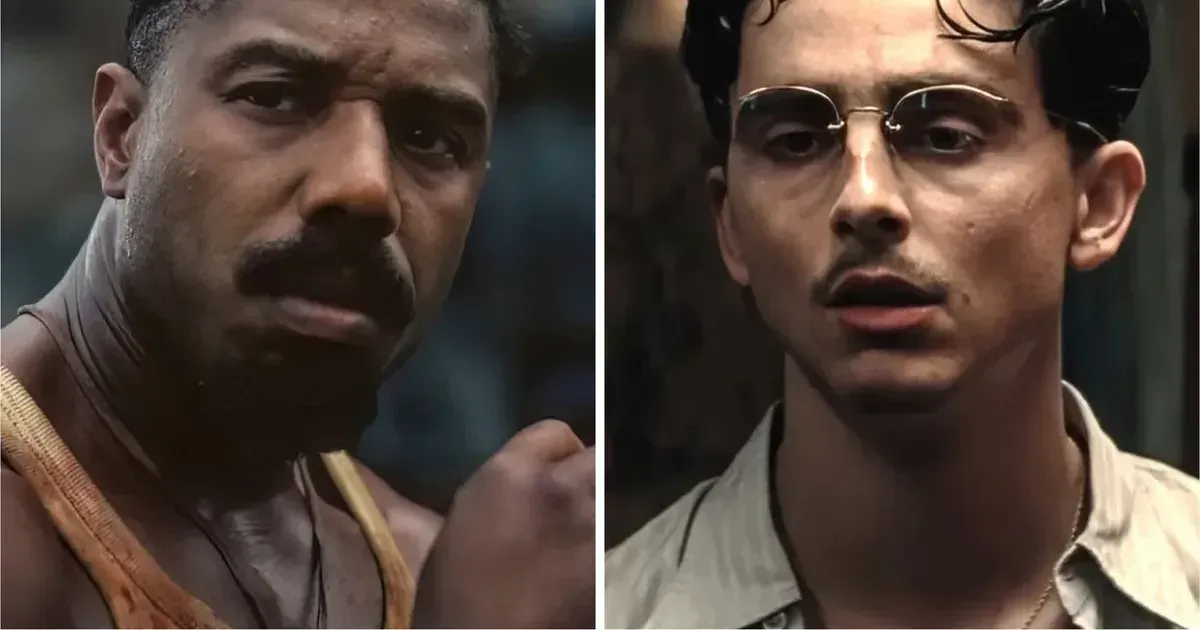
Los Angeles has become the epicenter of a financialized culture war where betting slips carry as much weight as screeners. Prediction platforms have turned the 98th Academy Awards into a high-stakes trading floor. Digital contracts for best actor and best picture are moving with the speed of tech stocks during an earnings call. Betting volume on platforms like Kalshi and Polymarket has surged past $100 million this cycle. Traders are no longer just guessing; they are reacting to every public gaffe and guild award in real time. Timothee Chalamet held a commanding lead for months based on his performance in a sweeping biographical drama. That dominance vanished in a single February evening. The shift began when Michael B. Jordan secured the Screen Actors Guild trophy for best actor, upending the established narrative of the race.
Jordan Builds Oscar Momentum
Price fluctuations on Kalshi provide a cold, numerical look at how sentiment shifts. Chalamet once held a 68-cent contract, implying a high probability of victory. After the SAG ceremony, that price plummeted to 51 cents. Investors moved their capital toward Jordan, who now carries the momentum of a late-season surge. These markets often predict outcomes more accurately than traditional pundits by aggregating the collective intelligence of thousands of financial stakeholders. The financial risk involved forces a level of objective analysis that anonymous voter polls sometimes lack. Jordan capitalized on the momentum. Public perception of Chalamet took a second hit following a series of controversial remarks. The actor appeared to dismiss the cultural relevance of ballet and opera during a press circuit interview. These comments alienated a significant portion of the Academy's older, more traditional membership. While Chalamet remains a narrow favorite in some circles, the betting data suggests a dead heat that few predicted at the start of the year. Markets are now pricing in the high likelihood of a split vote among the younger demographic.
Awards Campaigns Reward Timing
Voters often look for a narrative arc that extends beyond the screen. Jordan has built a reputation for consistency and industry leadership, traits that the SAG win reinforced. Many members of the actors' branch see him as overdue for the industry's highest honor. Chalamet, by contrast, is dealing with the baggage of a frontrunner who has stayed in the spotlight too long. The fatigue factor is a well-documented phenomenon in Hollywood, often leading to upsets in the final weeks of voting.
Timothee Chalamet was the overwhelming favorite to win the best actor Oscar until about two weeks ago, when Michael B. Jordan won SAG's Actor Award.
In fact, the gap between the two performers has narrowed to within the margin of error in most internal tracking polls.
Marketing the telecast itself has required a shift in strategy. Conan O'Brien, the host for this year's ceremony, has abandoned traditional television promos in favor of a massive podcast blitz. He was an early adopter of the video podcast format, and he is now leveraging those audiences to build hype for the broadcast. This aggressive media blitz targets a younger demographic that has largely abandoned linear television. O'Brien has appeared on over a dozen high-profile shows in the last month alone.
Podcasts offer a level of intimacy that a 30-second trailer cannot match. O'Brien uses these long-form conversations to discuss the history of the Oscars and his own approach to comedy. He aims to make the ceremony feel like a cultural event rather than a corporate obligation. Meanwhile, the Academy is desperate to reverse the trend of declining viewership. By utilizing O'Brien's existing digital footprint, the producers hope to capture the attention of cord-cutters and international viewers. The success of this strategy will be measured by the live ratings on Sunday night. Projections from veteran analysts point toward a dominant night for a single film. Scott Feinberg of the Hollywood Reporter expects One Battle After Another to lead the pack with six wins. This war epic has captured the attention of both the technical branches and the top-tier creative guilds. It is favored to win Best Picture, Director, and several craft categories. The film's scale and emotional resonance have made it a nearly unbeatable force in the current climate.
But the competition for runner-up remains fierce. The neo-noir thriller Sinners is expected to take home four awards, while the genre-bending Frankenstein is projected for three. Even smaller productions like KPop Demon Hunters are in the mix for at least two wins. The distribution suggests a year where technical excellence is spread across a variety of genres. Feinberg's data-driven approach mirrors the shift seen in the betting markets, focusing on guild trends and historical patterns. The era of the sweep may be returning after several years of split ballots.
Oscar Heat Needs More Than Buzz
Wealth and algorithmic certainty now dictate the winner of a gold-plated statue more than the creative whims of five thousand aging actors. We are seeing the final transformation of the Academy Awards into a commodified asset class. When a $100 million betting pool moves based on a comment about ballet, the art has already been buried under the data. The shift from Chalamet to Jordan is not proof of the power of performance, but a reflection of how effectively a campaign can weaponize a momentary social media lapse. It is the new reality of the Oscars where the red carpet is just a runway for high-frequency traders. We should stop pretending this is about the magic of cinema. It is a derivative market where the underlying asset is fame, and the speculators have more skin in the game than the artists. If Jordan wins, it will be because he was the safer hedge in a volatile market. If Chalamet loses, it will be because his brand suffered a devaluation in the eyes of the digital gallery.
The winner will hold the Oscar, but the house always wins the rake. Art has become a lagging indicator of a gambling habit.