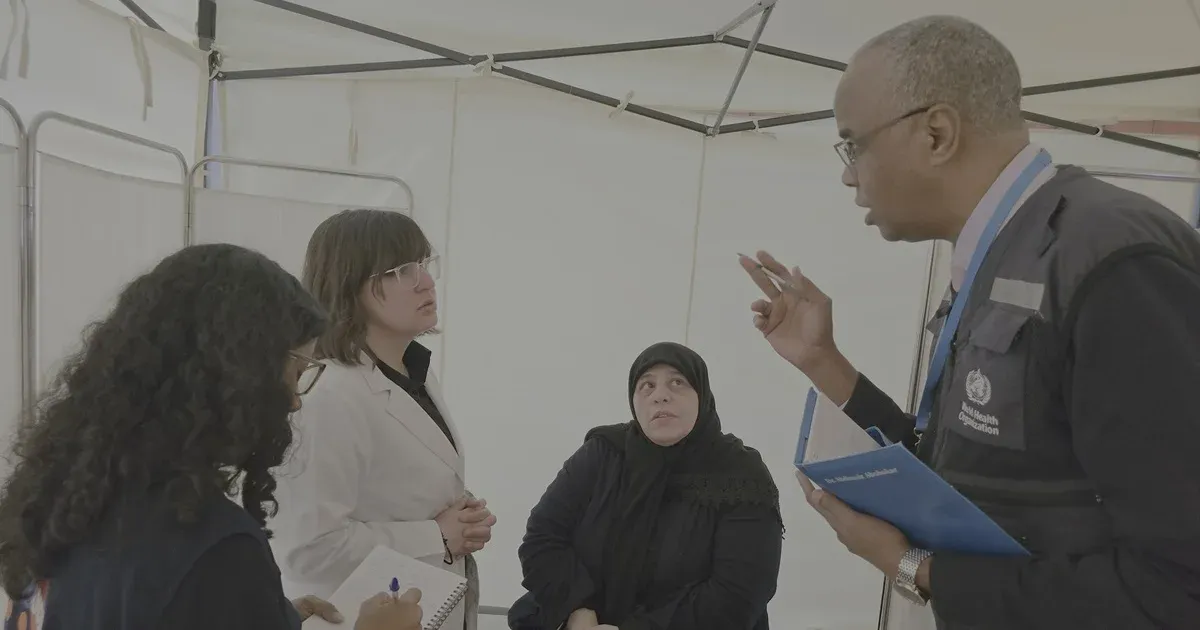
More than ten days into a new Middle East military escalation, the World Health Organization reported deaths, injuries, attacks on health care, displacement and widening barriers to essential services. The documented danger is a health system losing staff, facilities, supplies and access while needs rise.
WHO's March 11, 2026 release did not report a Marburg virus outbreak in Iran, Lebanon, Israel, the occupied Palestinian territory or elsewhere in the region. A Marburg laboratory study published the same day answered a separate question about how a viral protein enters cells. Joining the two stories into one outbreak scenario would create a connection the sources do not contain.
National authorities cited by WHO reported more than 1,300 deaths and 9,000 injuries in Iran, at least 570 deaths and more than 1,400 injuries in Lebanon, and 15 deaths and 2,142 injuries in Israel. Those figures were a dated situation report during an active conflict and may change; they should not be presented as a final toll.
Attacks on Health Care Remove Capacity During a Surge
From February 28 through March 11, WHO verified 18 attacks on health care in Iran, with eight health-worker deaths. It verified 25 attacks in Lebanon, resulting in 16 deaths and 29 injuries. The agency said health workers, patients and facilities must be protected under international humanitarian law.
The damage extends beyond the people killed or injured in an attack. A closed clinic cannot treat trauma, manage pregnancy, refill medicines or detect communicable disease. WHO reported that 49 primary health-care centers and five hospitals in Lebanon had closed following evacuation orders issued by Israel's military.
That is the immediate public-health mechanism: fewer safe places and fewer workers available to provide care. It requires no speculative pathogen to make it severe. Protection of health services, predictable humanitarian access and the ability to move patients are measurable needs in their own right.
Displacement Raises Needs, Not Blame
WHO estimated that more than 100,000 people in Iran had relocated within the country because of insecurity and that as many as 700,000 people had been internally displaced in Lebanon. Many were staying in crowded collective shelters with deteriorating conditions and limited access to safe water, sanitation and hygiene.
Those conditions increase the risk of respiratory infections, diarrhoeal disease and other communicable illnesses, especially among vulnerable groups. The risk comes from damaged infrastructure, crowding, interrupted prevention and reduced access to care. Displaced people are exposed to those failures; they are not a biological threat to be described as carrying catastrophe across borders.
WHO also reported petroleum fires and smoke from damaged infrastructure in Iran. Nearby communities could face breathing problems, eye or skin irritation and possible contamination of food or water. The release did not establish individual exposure levels or predict decades of disease, so long-term health effects will require environmental measurement and follow-up.
Access and Supply Disruption Cross Borders
In the West Bank, WHO said movement restrictions and checkpoint closures were delaying ambulances and mobile clinics in several governorates. In Gaza, medical evacuations had remained suspended since February 28 while hospitals rationed fuel and faced shortages of medicines and supplies. Emergency and trauma care, maternal and newborn services, and communicable-disease management were among the priorities competing for limited resources.
Temporary airspace restrictions also disrupted movement from WHO's logistics hub in Dubai. More than 50 emergency supply requests intended to benefit over 1.5 million people across 25 countries were affected. That backlog included planned support for Gaza, Lebanon and Afghanistan as well as cholera-response supplies for Mozambique.
The agency said 115 million people across its Eastern Mediterranean Region already required humanitarian assistance and that health-emergency appeals were 70% underfunded. These regional figures show how a conflict can disrupt assistance far beyond the sites of direct attack. They do not prove that one particular disease is spreading.
The Marburg Study Does Not Predict an Outbreak
The separate Nature paper compared glycoproteins used by Marburgviruses and Ebola virus to enter cells. Researchers used retroviral pseudoviruses carrying those entry proteins, then normalized protein expression to make laboratory comparisons across three human cell types. Marburgvirus glycoproteins mediated entry more efficiently under those experimental conditions.
Cryo-electron microscopy showed how the Marburgvirus glycoprotein engaged the NPC1 receptor. The team also identified a nanobody that blocked receptor binding and neutralized pseudovirus entry in laboratory assays. These are structural and preclinical findings. They do not measure person-to-person transmission, outbreak speed, shelter conditions or clinical effectiveness of a treatment.
The Nature authors disclosed an assay limitation: they could not exclude differences in the proportion of functional and misfolded glycoprotein incorporated into pseudovirus particles. No experiment took place in a Middle East conflict zone, and the paper made no claim about refugees, displaced populations or the WHO situation report.
The real security warning is already visible without inventing a Marburg scenario. Attacks on health care, blocked movement, unsafe shelter conditions and delayed supplies weaken prevention and treatment for many diseases at once. Public-health reporting should document those failures precisely. Turning people displaced by war into imagined pathogen carriers does the opposite: it replaces evidence with stigma and distracts from the systems that need protection.