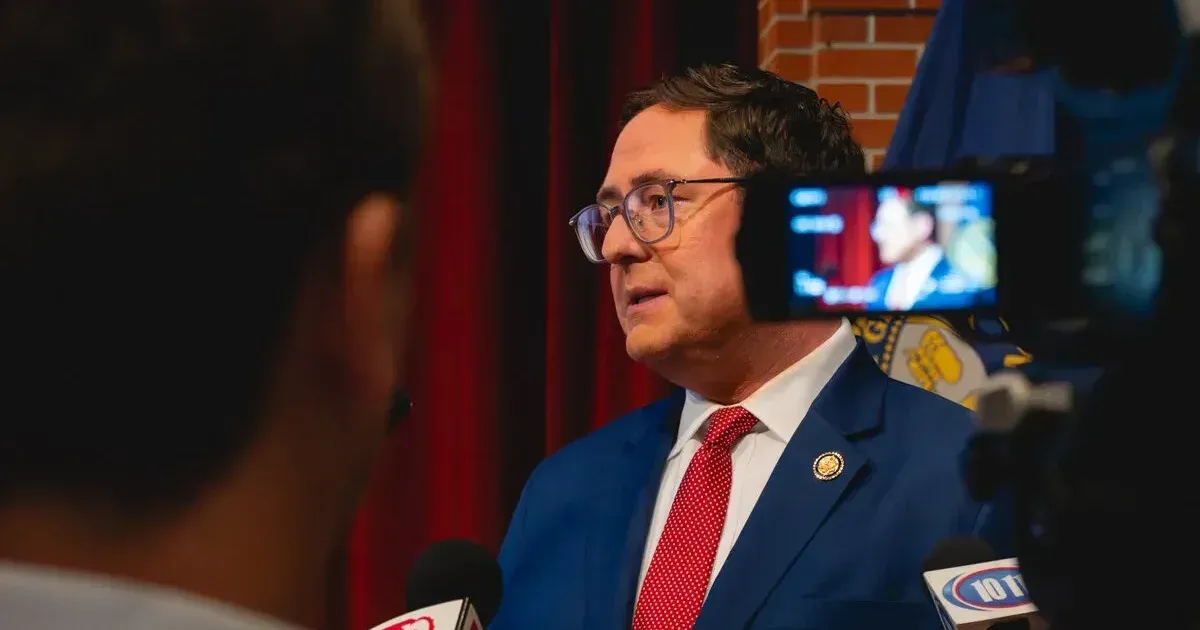
Representative Mike Flood continues to meet with constituents directly across eastern Nebraska, maintaining a public schedule that many of his colleagues in the House Republican conference have abandoned. The town hall strain shows how even reliable Republican districts can become uncomfortable when voters demand direct answers. Flood is now balancing party loyalty against local pressure over costs, farm policy and government performance. The Republican lawmaker appeared at a series of community events on May 27, 2026, marking a departure from the national trend of avoiding unvetted public forums. While many members of his party cite security concerns or the risk of viral confrontations as reasons to limit public access, Flood has opted to maintain regular face-to-face interactions in Nebraska's 1st District.
Local political conditions in Lincoln and the surrounding rural counties present a specific set of challenges for any incumbent. The district includes a mix of academic, urban, and agricultural interests that often pull in different political directions. Flood, who previously was the Speaker of the Nebraska Legislature, has leaned on his experience in state government to navigate these competing priorities. He often conducts these meetings in neutral settings, such as local diners or community centers, to lower the temperature of partisan debate.
National GOP strategists have observed a sharp decline in traditional town hall meetings since the 2022 midterm elections. Lawmakers increasingly prefer controlled tele-town halls or private meetings with vetted donor groups. These formats allow representatives to avoid the hostile questioning that often accompanies periods of legislative gridlock or internal party friction. Flood has resisted this shift, arguing that physical presence in the district helps de-escalate the tensions felt in Washington.
The Public Engagement Strategy in a Polarized Environment
Constituents in Lancaster County often bring concerns ranging from federal agricultural subsidies to the stability of House leadership. Flood has navigated these discussions by focusing on localized economic impacts. His background as a media executive gives him a particular perspective on how information spreads within his district. By showing up in person, he attempts to provide a direct counter-narrative to the national political friction that frequently dominates cable news and social media feeds.
Security protocols for members of Congress have tightened sharply following several high-profile incidents involving federal lawmakers. Many Republican offices now prioritize invitation-only events to ensure a manageable environment. Flood’s decision to keep his schedule accessible suggests a calculation that the benefits of visibility outweigh the risks of a disrupted meeting. His office coordinates closely with local law enforcement to maintain order without creating a barrier between the representative and the public.
Maintaining a direct line of communication with the people of the First District is the primary responsibility of this office regardless of the political climate in Washington.
Voter sentiment in Nebraska has shifted as the state deals with fluctuating commodity prices and the effects of federal trade policies. Farmers and small business owners in the district’s rural corridors often use these meetings to press for specific legislative action on the Farm Bill. These interactions provide Flood with anecdotal evidence that he later cites during committee hearings in the House of Representatives.
Managing Local Priorities in the 1st District
The 2022 special election that brought Flood to Congress followed the resignation of Jeff Fortenberry, creating a unique set of expectations for the new incumbent. Flood had to quickly establish his own identity within a district that had seen the same representation for nearly two decades. His consistent presence at local events was a tool for building trust with a constituency that was initially wary of the sudden leadership changes.
Data from recent primary cycles shows that incumbents who maintain high visibility often perform better in competitive general elections. Although Nebraska’s 1st District leans Republican, the city of Lincoln remains a competitive pocket where independent voters can influence the margin of victory. Flood’s strategy of meeting with all voters, not just partisan supporters, aims to shore up his standing in these key urban areas. He often addresses complex policy questions with a focus on procedural reality rather than rhetorical flourishes.
The current House majority faces internal divisions that frequently stall major legislation. These fractures make public meetings particularly difficult for Republicans who must answer for the lack of progress on high-profile floor votes. Flood handles these inquiries by explaining the internal mechanics of the House, often pointing to the narrow margins that define the current session. He avoids making expansive promises about national outcomes, focusing instead on his individual voting record.
Accountability remains a central theme for the voters who attend these morning coffee sessions. Many residents express frustration with the perceived distance between the Midwest and the capital. Flood uses his status as a lifelong Nebraskan to bridge this gap, frequently referencing his roots in Norfolk. This personal connection helps soften the impact of national party controversies that might otherwise alienate moderate supporters.
Recent attendance figures at these events suggest that public interest in direct legislative oversight is increasing. Flood’s meetings often reach capacity, with citizens standing in the back of small-town cafes to hear the latest updates from Washington. The representative usually concludes these sessions with a brief summary of upcoming votes before heading to the next town on his itinerary.
He arrived at the final stop of his May tour with a stack of constituent letters. The event ended without incident as the representative boarded his vehicle for the return trip to the airport. The response at future town halls will show whether voters treat that tension as ordinary frustration or a warning sign for 2026.