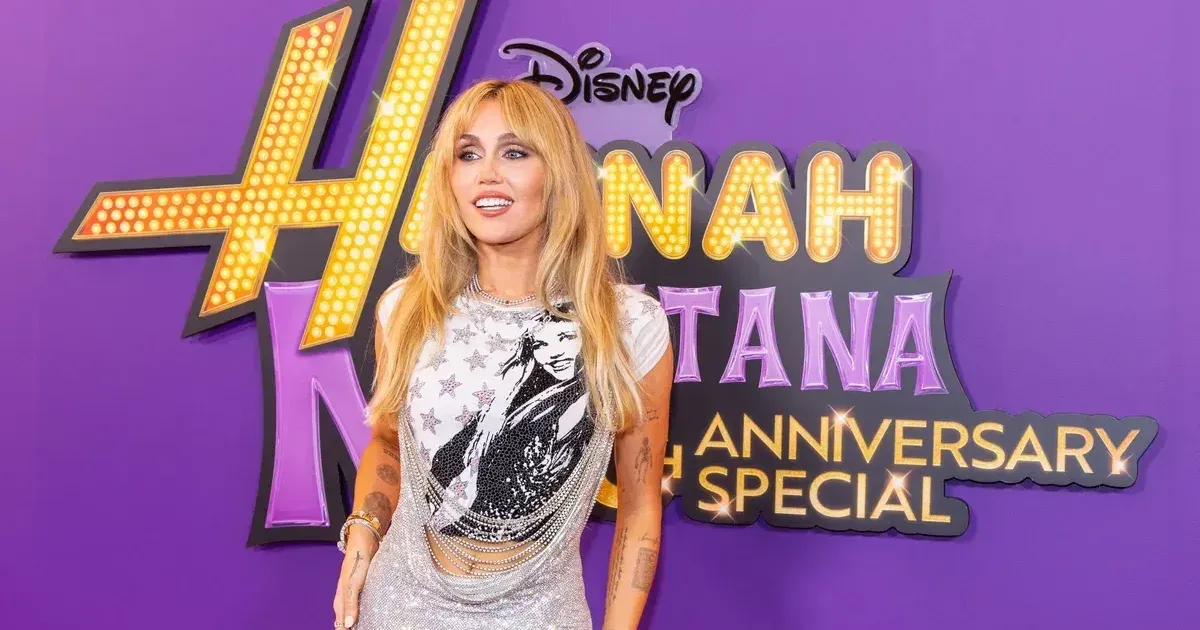
Miley Cyrus used the 20th anniversary of Hannah Montana to do something more complicated than simple nostalgia. During a week of anniversary programming and awards-show attention, she treated the Disney character as part of her artistic history rather than a phase to erase. The rollout, which included the song Younger You and an iHeartRadio Innovator Award appearance, suggested a more settled relationship with the role that made her famous. The relevant record was current by March 27, 2026.
The timing mattered. The original series turned Cyrus into a global teen star while also leaving her with a public identity she spent years trying to outgrow. By returning to Hannah Montana on her own terms, Cyrus reframed the character as a starting point instead of a constraint. That shift gave longtime fans a nostalgia moment while giving the singer a way to connect her child-star past to her adult catalog.
A Softer Return to Hannah Montana
The anniversary special introduced Younger You as a direct conversation with the younger version of Cyrus and the character she played. The song's central question asks whether that younger self loves who she has become. It is a simple line, but it fits the larger theme of the week: public reconciliation with a role that once felt separate from the artist's later identity.
Cyrus has often moved through sharp reinventions, from Disney pop to country textures, rock covers, synth-pop and adult radio ballads. The Hannah Montana anniversary did not reverse that evolution. It placed the early chapter inside it. For fans who grew up with the show, the gesture was less about pretending the past never changed than about acknowledging that childhood fame leaves a permanent mark.
The special also required cooperation with Disney-era rights holders, making the event both emotional and commercial. That is unavoidable with a character as valuable as Hannah Montana. Still, the public tone was warmer than many earlier references to the show. Cyrus appeared less interested in mocking the old image and more interested in explaining how it shaped her.
That change in tone matters because Cyrus's post-Disney career often depended on distance. Earlier reinventions made clear that she was not simply the character children remembered. The anniversary did not undo that boundary. It showed that distance can eventually make room for a more generous reading of the past.
iHeartRadio Framed the Career Arc
The iHeartRadio Music Awards gave the anniversary a broader industry frame. Cyrus accepted the Innovator Award during the same week, using the moment to connect her current standing with the years of reinvention that followed the Disney Channel era. The ceremony also placed her beside other major pop figures, including coverage of Taylor Swift at the iHeartRadio Music Awards, which made the night feel like a survey of pop longevity rather than a single nostalgia event.
The award was not only about one song or one character. It recognized the unusual durability of a performer who remained commercially relevant after leaving a tightly managed teen brand. Many child stars struggle to move beyond the role that introduced them. Cyrus has kept that role visible while also building a separate adult audience.
"I know your story isn't done, but do you love who you've become?"
That lyric worked because it did not force a clean answer. It allowed the anniversary to hold gratitude, discomfort and ambition at the same time. In a culture that often asks former child performers to either reject or repeat their early image, Cyrus chose a third option: fold it into the story without letting it own the whole story.
Pop Memory Machine
The Hannah Montana anniversary also shows how pop culture now recycles the 2000s with increasing speed. Streaming has kept old Disney Channel material available to younger viewers, while original fans now encounter it as adults. That creates a market for reunions, specials and anniversary songs, but it also creates a risk that every memory becomes a monetized event.
Cyrus avoided some of that risk by making the anniversary personal rather than purely promotional. The new song did not simply imitate the old show. It used the distance between 2006 and 2026 as the subject. That made the rollout feel less like a costume revival and more like an artist deciding what to keep from a complicated beginning.
For Cyrus, the practical benefit is clear: she can claim the affection attached to Hannah Montana without surrendering the adult career built afterward. For the industry, the week offered a model for how former teen stars can revisit old intellectual property without being trapped inside it. The strongest version of that model depends on honesty. Nostalgia works best when it admits that time has passed. The earlier version still matters to fans and to Cyrus herself, but it no longer has to define the whole career.