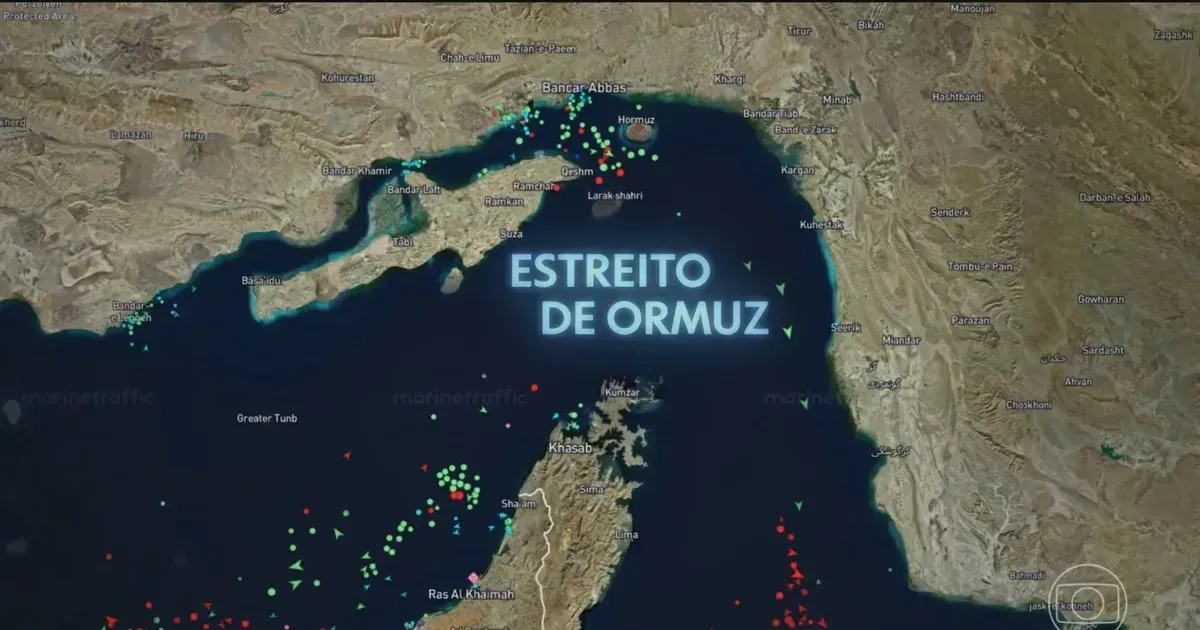
Mojtaba Khamenei used Iranian state television to describe a new restrictive phase around the Strait of Hormuz. The announcement followed days of military pressure, oil-market anxiety and warnings from shipping operators. Officials in the region were watching for operational proof alongside the rhetoric. Market participants were doing the same. The statement deepened that concern on April 9, 2026.
The Strait of Hormuz remains one of the most sensitive corridors in the global economy. Even limited interference can raise insurance costs, delay cargoes and unsettle energy markets. That is why Tehran does not need a full closure to create leverage.
Hormuz Pressure and Oil Risk
Khamenei's message appeared designed for several audiences at once. Domestic viewers heard defiance, regional rivals heard warning, and oil traders heard risk. The ambiguity is useful because it lets Iran signal escalation without immediately defining the exact operational steps.
Shipping companies will focus on what happens in the water alongside what was said on television. Naval patrols, inspection threats, drone activity and mine warnings can each change routing decisions. A restrictive phase can therefore become expensive before it becomes a formal blockade.
Tehran's Maritime Leverage
Iran has long understood that Hormuz is a pressure point because global markets respond quickly to uncertainty there. The leverage is powerful but dangerous. If Tehran pushes too far, it risks military retaliation and wider diplomatic isolation.
Regional governments face their own dilemma. They want shipping protected, but they also want to avoid a confrontation that would make the route even less secure. That tension gives outside powers, especially the United States, a central role in deterrence and de-escalation.
Regional Security Stakes
The announcement also affects countries far from the Gulf. Import-dependent economies would feel higher fuel costs quickly, and central banks would face renewed inflation pressure. That is why a maritime statement from Tehran can become a global economic story within hours.
The immediate question is whether the restrictive phase produces actual interference with vessels. If it does, markets will price in a more durable crisis. If it remains rhetoric, the warning will still remind governments how easily the Gulf can return to the center of global risk.
For energy markets, the most immediate issue is uncertainty. Traders do not need to see tankers stopped before they price in risk; they only need to believe that delays, inspections or military incidents have become more likely. That can lift crude benchmarks, raise freight costs and force refiners to consider backup supplies.
The political calculation in Tehran is equally delicate. A limited maritime squeeze can demonstrate resolve to domestic audiences and pressure rivals without crossing into a full shutdown. But the same ambiguity can misfire if a commander at sea takes a step that other governments interpret as an attack on international commerce.
Washington and Gulf governments will likely respond with a mix of warning and visible patrol activity. The goal will be to reassure shipping firms while avoiding moves that make Iran claim it is being provoked. That balance is difficult because deterrence has to be seen to work, but escalation can also feed the crisis narrative Tehran wants.
The episode shows why Hormuz remains a strategic choke point rather than a normal shipping lane. Even a partial threat can connect military signaling, oil prices, inflation expectations and domestic politics across multiple continents. That is the leverage Iran is trying to exploit, and it is also the reason a miscalculation there would carry costs far beyond the Gulf. The immediate risk is that each side begins acting on assumptions about the other's next move. Iran may believe calibrated pressure can extract concessions without triggering a direct clash. Naval commanders and shipping firms may read the same actions as preparation for a blockade. Once those interpretations diverge, a small incident can carry strategic meaning beyond its facts. That is why clear channels, visible but measured patrols and careful public language are essential. Markets will watch barrels and freight rates, but governments will watch behavior at sea: inspections, drone flights, radio warnings and the distance between military vessels. Those details will determine whether the new phase becomes pressure politics or a genuine maritime crisis. Shipping firms will now separate rhetoric from operating conditions. A restrictive phase becomes real when captains face inspections, altered routes, armed escorts or insurance warnings. Until then, Tehran is using the possibility of disruption as leverage, and that possibility is still enough to move energy markets. That distinction is why maritime insurers and energy buyers will monitor concrete signals more closely than televised language. If vessel checks, patrol patterns or warnings change, the market impact will be immediate. If the announcement remains largely rhetorical, the risk premium may fade but not disappear. The uncertainty also gives smaller regional governments a role because their ports, insurers and energy buyers will feel the consequences quickly. Their public responses may be cautious, but their private requests for deterrence and de-escalation will matter.