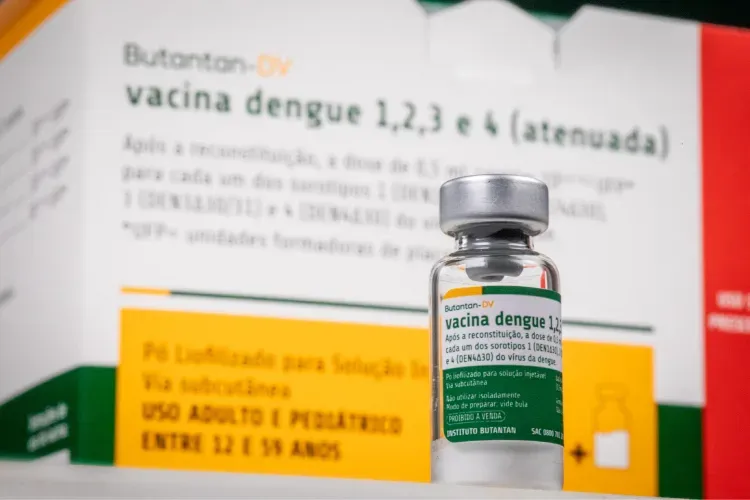
A single dose of the Butantan-DV dengue vaccine remained effective through five years of follow-up in a randomized phase 3 trial in Brazil. Vaccine efficacy was 65% against symptomatic, laboratory-confirmed dengue and 80.5% against severe dengue or dengue with warning signs.
The peer-reviewed results, published in Nature Medicine, provide long-term evidence for a vaccine that Brazil approved in November 2025 for people aged 12 to 59. The trial itself enrolled a wider age range, from 2 to 59, so the study population and the approved population should not be treated as identical.
The Trial Followed More Than 16,000 Participants
Researchers recruited 16,235 participants at 16 centers across Brazil between 2016 and 2019. They randomly assigned 10,259 people to receive one dose of Butantan-DV and 5,976 to receive placebo in a double-blind trial.
During five years of monitoring, overall vaccine efficacy against symptomatic dengue was 65%, with a 95% confidence interval from 57.8% to 71%. Efficacy was 77.1% among participants with previous dengue exposure and 58.9% among those without previous exposure.
For the combined secondary endpoint of severe dengue or dengue with warning signs, efficacy was 80.5%. The confidence interval was wider, from 50.8% to 92.4%, which reflects greater uncertainty around the estimate. No hospitalizations were reported in the vaccine group, compared with eight in the placebo group.
Protection Was Demonstrated for Two Serotypes
Butantan-DV is a live, attenuated tetravalent vaccine designed to target all four known dengue serotypes. In the trial, efficacy was 73% against DENV-1 and 55.7% against DENV-2.
Cases caused by DENV-3 or DENV-4 were not observed during follow-up. That means the study could not calculate efficacy against those two serotypes. A four-serotype formulation should therefore not be described as clinical proof of equal protection against every serotype.
The difference matters because dengue transmission changes over time and place. Results produced while DENV-1 and DENV-2 were circulating cannot by themselves predict performance during an outbreak dominated by DENV-3 or DENV-4.
Five-Year Safety Findings Were Reassuring
The researchers reported no safety concerns during the five-year follow-up. Headache was the most common solicited systemic adverse event, reported by 36.7% of vaccine recipients and 31.1% of placebo recipients, and most headaches were mild.
The proportions of unsolicited vaccine-related adverse events, including serious events, were comparable between the groups. The study also reported no imbalance in severe cases among participants who had not previously been exposed to dengue.
These are trial findings, not a promise that no recipient will experience an adverse event. Continued safety monitoring remains necessary when a vaccine moves from a controlled study into a national program serving a much larger population.
The Strong Result Still Has Clear Boundaries
Five years of randomized follow-up is more informative than an early antibody measurement. The study shows durable protection against symptomatic disease caused by the serotypes that appeared in the trial, with a stronger estimate for the combined severe or warning-sign endpoint.
It does not show 80.5% efficacy against every dengue infection. The overall symptomatic-disease estimate was 65%, and the severe or warning-sign estimate carried a broad confidence interval. Those distinctions determine whether the public receives evidence or a marketing number.
Instituto Butantan sponsored the trial and took part in its design, data management, analysis and manuscript preparation. That does not invalidate the findings, but it makes independent scrutiny, transparent surveillance and replication across different serotype patterns especially important.
The hard public-health test begins after the headline. A single-dose vaccine can reduce the logistical burden of repeat visits, but it cannot drain breeding sites, detect outbreaks or prove protection against serotypes the trial never encountered. The evidence supports a valuable additional tool. It does not support abandoning the rest of dengue control.