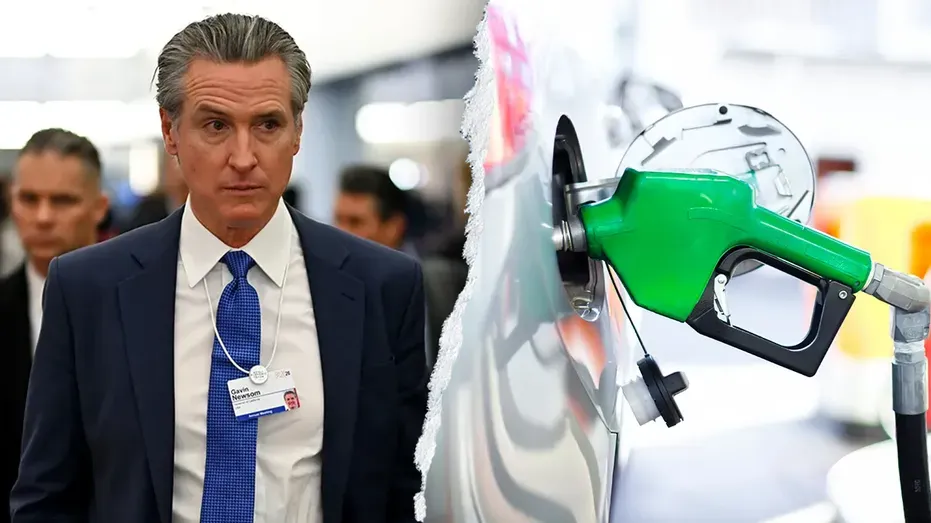
The California gas price fight sharpened on March 12, 2026, as Newsom pushed fuel costs into the center of a national campaign argument.
Newsom’s attack over California gas prices shows how fuel costs can become a campaign weapon almost overnight.
Fuel Prices Become the Attack Line
Sacramento residents woke Tuesday to a digital broadside from Governor Gavin Newsom, who sought to pin the blame for soaring fuel costs directly on the White House. Newsom targeted President Donald Trump, alleging that military tensions with Iran have created a financial burden for American families. In a series of posts on X, the governor claimed that the current administration's foreign policy will cost drivers an additional 1.5 billion dollars at the pump this week alone. Newsom characterized the situation as a direct consequence of what he termed a war with Iran, positioning himself as a defender of California consumers against federal volatility. Critics within the state immediately challenged this narrative, pointing instead to local fiscal policies. Steve Hilton, a Republican candidate for governor, argued that Newsom is using international conflict to mask the impact of California's unique tax structure. At 5.33 dollars per gallon, California currently maintains the highest average fuel prices in the nation. This figure sits sharply higher than the national average of 3.57 dollars, creating a gap that Hilton attributes to Newsom's environmental agenda rather than geopolitical events. Washington and Hawaii, the next most expensive states, trail California by more than 60 cents per gallon. California drivers pay roughly 70 cents in state taxes for every gallon of gasoline they purchase.
California Has Its Own Cost Problem
As California drivers faced another round of expensive pump prices, Hilton called for an immediate suspension of the state gas tax, accusing the governor of prioritizing a national book tour over the immediate financial needs of his constituents. The Republican candidate suggested that the governor's climate policies act as a domestic price floor that keeps California isolated from lower prices seen in the rest of the country. While Newsom argues that his administration is developing tools to fight price spikes, Hilton maintains that the most effective tool remains the reduction of state-imposed fees. Such a policy shift appears unlikely given Newsom's long-term commitment to carbon reduction targets.
Inside the Trump National Doral resort in Florida, House Republicans faced their own struggles with the economic narrative. Gathering for their annual policy retreat, GOP leadership hoped to solidify a 2026 midterm strategy focused on the cost of living. Speaker Mike Johnson spoke to members behind closed doors about a potential domestic policy bill that would follow the previous year's tax legislation. Yet, details regarding the contents or timing of this bill remained scarce.
Four sources present at the meeting indicated that some senior members are worried about the ticking clock before the upcoming elections. Representative Andy Harris of Maryland offered a blunt assessment of the party's current legislative prospects.
Blame Does Not Lower the Pump Price
Harris, who leads the Freedom Caucus, suggested that voters might have to wait for the Iran conflict to subside before seeing meaningful relief at the pump. He predicted that stability in inflation and energy prices would eventually manifest, but he admitted the GOP has limited options for major legislative action before November. His comments reflect a growing realization that the party may have to rely on market stabilization rather than new laws to win over skeptical voters. Legislative urgency has collided with political reality.
Donald Trump further complicated the GOP's economic messaging during the retreat's opening session. Rather than focusing on the affordability crisis or gas prices, Trump urged House members to prioritize an overhaul of federal election laws. He also pushed for new restrictions on transgender rights, effectively sidelining the economic concerns that many strategists believe are central to the midterm cycle. Trump reportedly dismissed the idea that housing or fuel costs were the primary topics of conversation among the electorate, much to the private frustration of some attendees.
A $1.76 Gap Neither Side Can Explain Away
Newsom’s attack works only if voters accept that a $5.33 California gallon can be explained mainly by decisions in Washington. Hilton’s counterattack works only if they pretend a conflict-driven national oil shock has no effect. The $1.76 gap between California and the national average makes both positions incomplete. Federal policy can raise the national baseline; California’s roughly 70 cents per gallon in state taxes, refinery rules and constrained supply can widen the premium.
That leaves both parties with an accountability problem. Newsom cannot shape the state’s cost structure and blame every spike on Trump. Trump cannot own foreign-policy decisions, dismiss fuel costs as a secondary concern and then ask voters to trust Republicans on affordability. Waiting for the market to calm is not a governing plan. The receipt at the pump is effective precisely because it records the combined cost of choices made in Sacramento and Washington, no matter which politician produces the sharper campaign post.