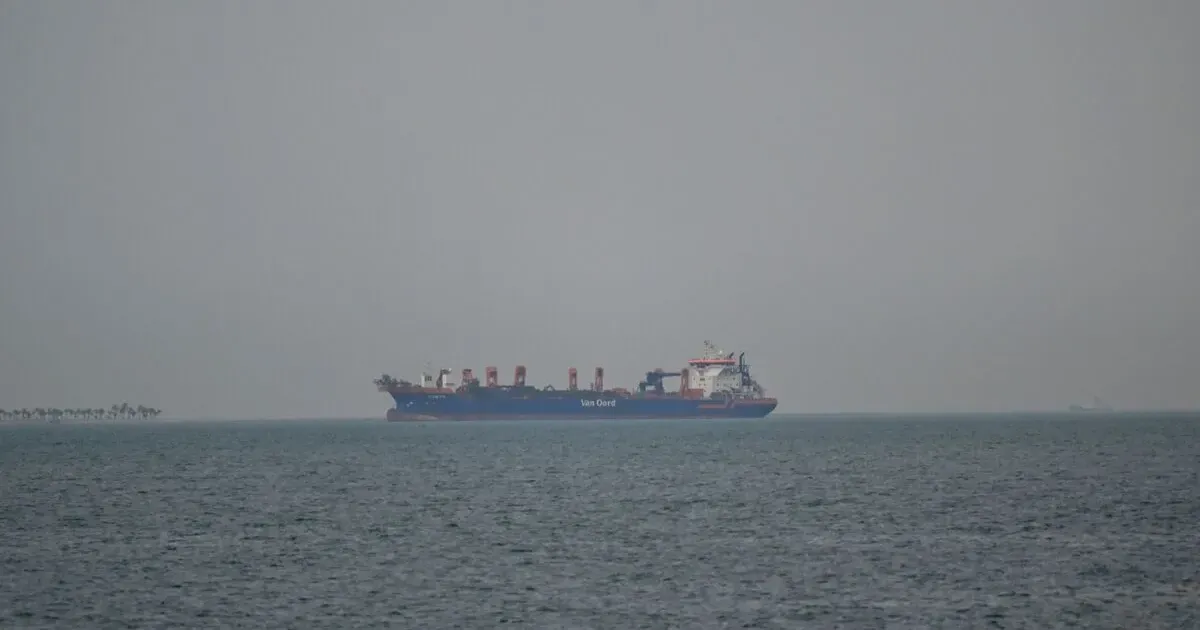
Oman’s clearing of Mina Al Fahal shows how fast the regional fuel crisis can reach ports beyond the Strait of Hormuz. The port evacuation came on March 12, 2026
Mina Al Fahal Goes Quiet
The port order brought a sudden chilling of activity at one of the most important arteries of the global energy trade. Port authorities in Oman ordered a total evacuation of all vessels from the Mina Al Fahal oil terminal early this morning. Notice of the move came through direct communications from port agents to vessel captains, instructing every ship to weigh anchor and move into deep water immediately. This sudden clearing of the hub, which serves as the primary export point for Omani crude, indicates a mounting fear that the regional conflict is no longer contained within the Persian Gulf. Local observers noted that the terminal, usually a hive of activity with tankers queuing for miles, sat empty by noon. Hormuz remains the focal point of a crisis that is currently strangling the economic lifeblood of the Asian continent. High oil prices and the de facto closure of the strait left governments from Bangkok to Seoul with few options but to initiate drastic energy conservation protocols. Once the shipping lanes became impassable, the physical reality of energy dependence began to outweigh digital market theories. Asian nations are now bearing the brunt of a geopolitical stalemate that shows no signs of resolution. Bangkok officials moved quickly to preserve what remains of the national supply.
Asian Governments Start Conserving Fuel
Thailand ordered all civil servants to abandon their offices and work from home for the duration of the current emergency. Civil servants must now take the stairs rather than elevators and maintain air conditioning at 27 degrees Celsius to minimize electrical load. To cope with the rising indoor heat, the government even mandated that employees swap formal suits for short-sleeved shirts. Statistics from Reuters indicate Thailand has approximately 95 days of energy reserves left, a clock that is ticking louder with every day the strait remains closed. Energy security has collapsed into energy rationing. Dhaka took the unusual step of bringing forward the Eid-al-fitr holiday to shutter universities early. Pakistan followed this lead by instituting a mandatory four-day work week for all government bureaus to curb fuel consumption. India chose a more direct market intervention by suspending liquefied petroleum gas shipments to commercial operators to prioritize supplies for households, showing that the fuel crisis was spreading beyond a single shipping chokepoint. Such a move protects families but leaves the hospitality industry in a precarious state. Hotels and restaurants in Mumbai and Delhi now face potential closures as their fuel supplies vanish.
Hormuz Risk Spreads Beyond the Strait
Seoul and Tokyo are feeling the pressure of their extreme dependence on Middle Eastern crude. South Korean President Lee Jae Myung introduced a strict price cap on petroleum products on Monday to shield consumers from skyrocketing costs. Presidential policy advisor Kim Yong-beom revealed during a March 9 briefing that the conflict has held back roughly 1.7 million barrels of oil destined for Korean shores every single day. Japan continues to weigh similarly desperate options as Industry Minister Ryosei Akazawa monitors rapidly depleting reserves. Both nations source between 70% and 90% of their energy from this single volatile region. Silicon Valley and the global tech sector are watching the disruption with a different kind of anxiety. Ban Seng Teh, the Executive Vice President and Chief Commercial Officer at Seagate Technology, offered a surprisingly resilient outlook during a recent broadcast. He suggested that the current conflict will not sharply hamper chipmaking in the short run. Seagate's supply chain contains enough built-in redundancy to buffer the data storage giant from immediate shocks. Resilience remains the watchword for hardware manufacturers, even as the energy required to power their data centers becomes increasingly expensive.
Tech Resilience Has Limits
The physical world moves slower than the digital one. Markets are reacting with predictable volatility to the news from Oman. Crude futures jumped sharply once the Mina Al Fahal evacuation became public knowledge, reflecting fears that Oman is preparing for a wider naval engagement. Analysts at various financial institutions suggest that the loss of Omani export capacity, even temporarily, removes one of the few remaining outlets for crude that does not rely on the internal waters of the Persian Gulf.
Global shipping lanes are now cluttered with idle tankers waiting for security guarantees that no navy seems willing to provide. Vietnam also called on businesses to let people work from home to reduce the need for travel and transportation. The Philippines pushed for a four-day work week and ordered officials to limit travel to essential functions only. These measures reflect a regional realization that the energy crisis is a marathon rather than a sprint.
While Seagate and other tech firms believe their buffers will hold, the logistical reality for nations requiring millions of barrels of crude per day is far grimmer. Every day without a tanker arrival brings Asia closer to an economic standstill.
Energy Dependence Always Collects Its Bill
Oman cleared vessels from Mina Al Fahal during a widening regional fuel crisis. Asian governments responded with conservation steps, remote work and fuel prioritization. The disruption showed how Hormuz risk can spread to ports outside the strait itself. Technology supply chains may have buffers, but national energy systems have harder physical limits.
Mina Al Fahal matters because it is a key Omani crude export terminal and a signal point for wider maritime risk. Asian governments reacted quickly because many depend heavily on Middle Eastern energy and cannot easily replace delayed crude or fuel shipments.
The evacuation shows how quickly energy risk jumps from shipping lanes to office rules, holiday calendars and household supply. Governments can order shorter weeks and cooler buildings, but those are symptoms. The deeper problem is an industrial system still dependent on narrow maritime routes that everyone knows are vulnerable. Asia's conservation orders are not efficiency theatre; they are the first admission that physical fuel scarcity can outrun policy language.
If governments cannot protect replacement routes before panic begins, they are managing scarcity rather than securing supply.