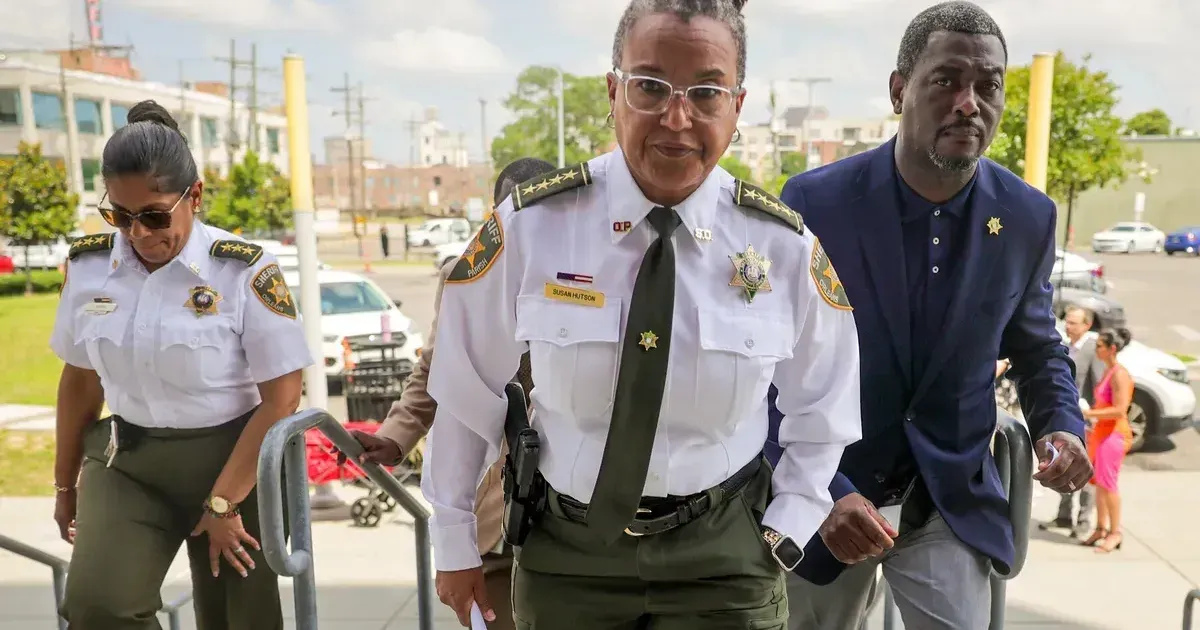
Susan Hutson, the elected sheriff of New Orleans, faces a 30-count criminal indictment tied to her leadership of the Orleans Parish jail. A special grand jury returned the charges on April 29, 2026, nearly a year after 10 inmates escaped from the Orleans Parish Justice Center. Bianka Brown, the sheriff's office chief financial officer, was separately indicted on 20 counts. The indictment is politically sensitive because the sheriff oversees a jail system already scrutinized for security, staffing and detainee treatment. Prosecutors framed the counts as criminal allegations rather than administrative criticism, which means the case will turn on evidence presented in court rather than public frustration with the office. The sheriff's office has been under particular pressure because jail conditions in New Orleans have long drawn federal attention. That history does not prove the charges, but it raises the stakes of the prosecution: voters, detainees and court monitors will all watch whether the criminal case produces facts about management, money and accountability. Hutson can fight the counts in court, while the parish still has to keep the jail functioning during the legal process. The political calendar adds another layer because elected sheriffs answer to voters while also running agencies that courts depend on every day. If Hutson remains in office during the case, deputies, detainees and parish officials will have to operate under a leadership cloud. If pressure builds for resignation, the legal fight could become a succession fight before a jury hears the evidence. The court schedule will also determine how quickly the public learns whether the counts overlap or describe separate transactions. That can affect staffing morale and cooperation with outside monitors. The case could also influence how the parish supervises jail contracts, internal audits and emergency staffing while the sheriff defends herself. Those questions are separate from guilt or innocence, but they show why the indictment can affect day-to-day governance before trial. A prolonged case could also affect budget hearings and public records requests. That oversight layer will follow the case closely as the criminal docket moves forward through pretrial filings and public ethics scrutiny in New Orleans over the coming months and election cycle.
Prosecutors built the case around the May 15, 2025 jailbreak, when detainees broke out of the facility and triggered a long search across the city and region. Louisiana Attorney General Liz Murrill said the charges focus on whether Hutson failed to meet basic legal duties before and after the escape. Hutson is not accused of personally helping the inmates flee, but prosecutors argue that leadership decisions and recordkeeping failures helped create the conditions for the crisis.
Accountability for jail operations rests largely with the sheriff under Louisiana law, which is why the indictment carries weight beyond the escape itself. Public safety concerns intensified after officials acknowledged delays and breakdowns in the response. For residents, the case turned a long-running debate over jail reform into a criminal proceeding against the office's top elected official.
Security Failures and the 2025 Jailbreak
Basic control failures emerged inside the Orleans Parish Justice Center. Earlier accounts of the jailbreak said inmates left through a breach connected to a cell area, while investigators examined the role of a jail maintenance worker accused of helping create the opening. All 10 escapees were eventually captured, but the manhunt consumed local, state and federal resources and led to additional arrests of people accused of helping fugitives avoid capture.
Federal monitors had warned before the escape that the jail faced dangerous lapses in supervision and inmate management. Those warnings now sit at the center of the prosecution's argument that the breakdown was not an isolated mistake. If officials were repeatedly told about weaknesses and failed to act, the state may use that record to argue that the escape was foreseeable. Prosecutors must still prove that any failure by Hutson rose to criminal malfeasance rather than poor administration.
Timing also matters politically. Hutson was already nearing the end of her term, and the indictment landed with only days left before a transfer of authority. That makes the case both a legal test for the sheriff and a broader referendum on how New Orleans manages a jail that has been under repeated scrutiny.
Payroll Fraud and Records Charges
Financial allegations in the indictment center on malfeasance, obstruction, falsifying public records and payroll fraud. Brown's separate indictment suggests investigators are examining how records and payments inside the sheriff's office were handled, including whether official documents accurately reflected work, compensation and administrative decisions. The public filings do not by themselves prove that jail maintenance money was diverted, so the case should be read as an allegation rather than a finding.
Those allegations still matter because jail security depends on reliable staffing, accurate records and lawful use of public funds. If payroll records or official reports were manipulated, prosecutors could argue that the same administrative culture contributed to unsafe conditions inside the jail. Defense lawyers are likely to argue that operational failures do not automatically amount to criminal conduct.
Legal proceedings will turn on that distinction. Louisiana malfeasance law requires proof that a public official knowingly failed to perform a duty or performed it unlawfully. Prosecutors will have to connect specific acts, records or omissions to the charges instead of relying only on public anger over the jailbreak. Defense attorneys can be expected to press the difference between a badly managed jail and a criminal conspiracy inside an elected office.
For New Orleans, the indictment shifts the jail crisis from oversight hearings into a courtroom. A conviction could bring penalties for the officials involved and deepen pressure for stricter supervision of the Orleans Parish jail. An acquittal would still leave the city with the same operational questions that followed the escape: staffing, supervision, infrastructure and public trust. Whoever takes over the sheriff's office will inherit those problems regardless of how the criminal case ends, and city leaders will still need measurable jail safeguards before another preventable crisis tests the system again. That work cannot wait for a verdict.