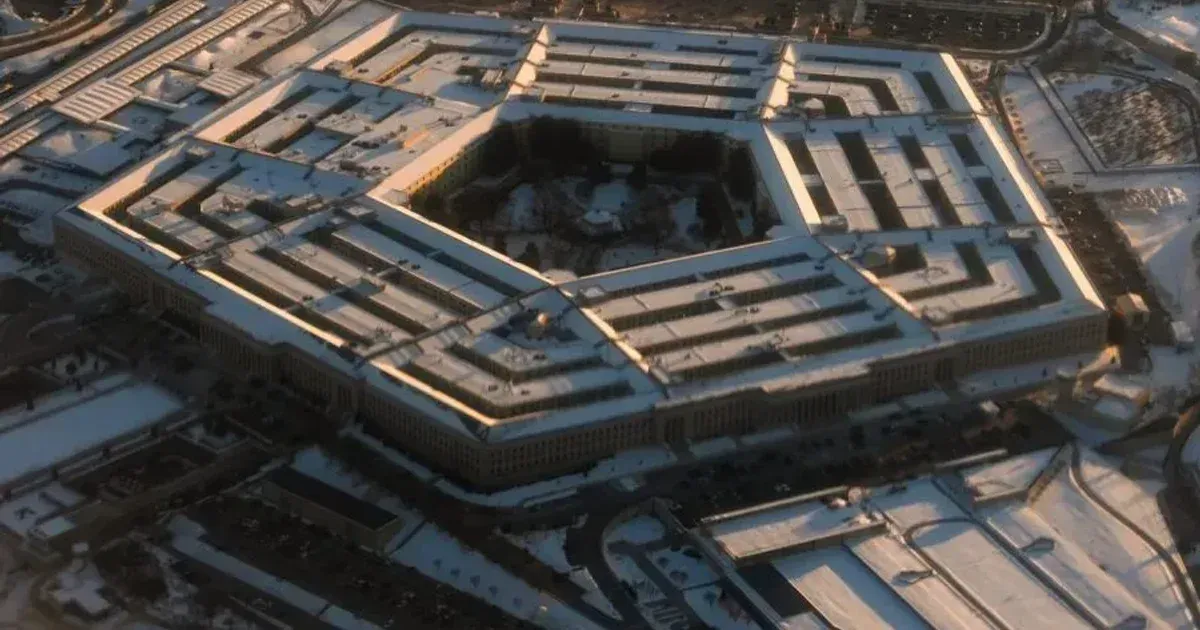
The Pentagon has authorized lethal military action against certain alleged narco-terror targets, pushing part of the regional drug mission further from ordinary law-enforcement language. Officials had already been describing the campaign in more aggressive terms. By the time the policy was reported on April 20, 2026, Caribbean interdictions, intelligence standards and congressional oversight were all under sharper scrutiny.
The change does not mean every trafficking case becomes a military target. It does mean commanders may have more flexibility when officials believe a vessel, cell or network presents an imminent threat tied to a designated group.
U.S. Southern Command has been central to the region's maritime mission, coordinating surveillance, interdiction and partner operations across crowded sea lanes where trafficking, commerce and local sovereignty often intersect.
Military Role Expands
The policy gives commanders a harder tool, but it also raises the stakes for intelligence review. A mistaken identification at sea can carry diplomatic, legal and human costs that are harder to repair than a failed interdiction.
The Caribbean has long been treated as a drug-trafficking corridor, but military operations there usually sit beside Coast Guard and law-enforcement procedures. Lethal authority changes the tone of the mission because it shifts the public question from seizure and arrest to targeting and force.
Supporters argue that heavily armed trafficking groups have outgrown traditional interdiction. They point to faster boats, better communications, corrupt port networks and links between criminal organizations and armed actors.
Critics will ask whether the administration is creating a battlefield designation without enough public evidence or congressional oversight. That challenge will grow if the first operation produces disputed facts, civilian casualties or a partner-government protest.
Targeting Standards Become Central
The operational case is that some trafficking groups are moving more than narcotics. Officials argue that networks carry military-grade weapons, corrupt local institutions, move money for armed groups and threaten partner governments.
The legal case is more complicated. Lethal force requires a clearer standard than interception, seizure or arrest. If the government cannot explain how targets are identified and reviewed, the policy will invite court challenges and congressional resistance.
Vessels can change names, flags, cargo documents and routes. Crews may include coerced workers, low-level smugglers or people whose role is not clear from overhead surveillance. The more complex the network, the more careful the targeting process has to be.
Targeting review will have to answer several questions: what evidence links a target to a designated group, what makes the threat imminent, how civilian presence is assessed and what happens when intelligence later proves incomplete.
Partner Governments Will Watch
Caribbean and Latin American governments may welcome tougher action against trafficking groups, but they also guard sovereignty closely. A policy that looks coordinated could gain support; one that looks imposed from Washington could narrow the partner network.
Joint Task Force Southern Spear is expected to play a larger role if the campaign expands, especially in intelligence fusion and allied coordination. That makes partner trust more important, not less. Some regional governments may want stronger U.S. help against violent networks while still resisting any suggestion that their waters can be treated as an open battlefield. The distinction will matter in port access, intelligence sharing and public legitimacy. Congressional oversight could intensify if the first operation produces civilian casualties or disputed evidence. Lawmakers may ask whether the authority resembles counterterrorism rules used elsewhere or creates a new category of force with weaker reporting.
Oversight Test
The first cases under the authorization will set the tone. If they are narrow, documented and coordinated with partners, the policy may be defended as a hard but limited tool. If they are opaque, the controversy will grow faster than the security benefit. The administration's challenge is to show that force is precise enough to disrupt dangerous networks without turning maritime enforcement into an open-ended military campaign. The Pentagon will also have to define success. Destroying one vessel or disrupting one cell can produce a tactical result. A strategic result would require proof that trafficking routes, financing and partner-government vulnerability are being reduced over time. That distinction matters because lethal authorities can create pressure to show visible action. The easiest metric becomes the number of operations, not whether the underlying network is weaker. That is a dangerous incentive in a region where trafficking groups can adapt quickly. A durable campaign would combine force with prosecutions, financial disruption, port security and regional capacity building. Without those pieces, lethal strikes risk becoming dramatic events that do not solve the structural problem. The Pentagon also has to avoid confusing tactical secrecy with strategic opacity. Some intelligence cannot be public, but the public can still be told what legal standard governs the campaign, which officials approve action and what review follows a strike. Clear standards are not a constraint on security; they are what keep security policy from becoming improvisation. The policy also raises a classification problem. If officials use intelligence that cannot be disclosed, they may be able to justify action internally while still leaving the public with little more than a broad assertion. That gap can damage legitimacy even when the underlying threat is real. After-action review will therefore matter. The administration should be able to explain whether a target was correctly identified, whether civilian risk was considered, whether partner governments were notified and whether any evidence changed after the operation. There is a regional diplomacy cost as well. Countries that cooperate on interdiction may be less comfortable if the mission begins to look like unilateral battlefield management. Cooperation is strongest when partners know the rules before an incident, not after one. The narrowest version of the policy may survive scrutiny. The broadest version will struggle. That is the central issue for the Pentagon: lethal force can be a tool against extreme threats, but it cannot become a substitute for the slower work of building cases, strengthening ports and reducing the networks that make trafficking profitable. The debate will also test how Congress treats the language of narco-terrorism. A label can clarify a threat, but it can also expand executive discretion if lawmakers do not define the boundaries. That is why hearings, reporting rules and after-action disclosure will matter early. For partner governments, the key question is whether the policy strengthens shared security or shifts risk onto their waters. If Washington answers that question clearly, cooperation may hold. If it does not, the campaign could lose political support even before its operational results are known. That boundary will define the policy more than the announcement itself. If the rules are clear, the authority can remain exceptional. If the rules are vague, every operation will invite the suspicion that a law-enforcement mission has quietly become a war footing. That oversight question remains unresolved.