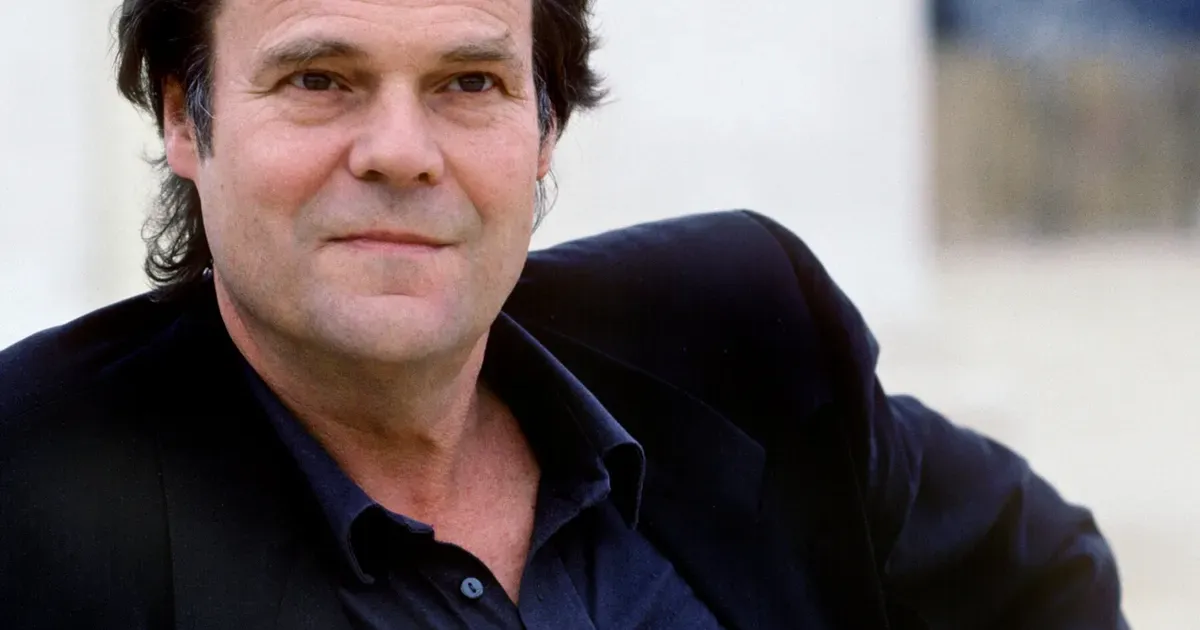
Peter Schneider’s death closes a literary career built around Berlin, division and the psychological afterlife of history. The literary world marked the loss on March 12, 2026.
A Berlin Writer of Invisible Borders
Peter Schneider, the novelist who famously mapped the invisible borders separating East and West Berlin, died Tuesday at the age of 85. He leaves behind a literary catalog that is a permanent record of the Cold War and its lingering psychological effects. His death marks the end of an era for German literature, specifically for the generation that sought to reconcile the horrors of the past with the fragmented reality of the present. Schneider passed away in Berlin, the city that acted as his primary muse and his most complex subject for over sixty years. Literary circles recognized him early on as a voice of the 1968 student movement. He captured the restlessness of a youth culture that felt suffocated by the silence of their parents regarding the Nazi era. His 1973 novella, Lenz, became a cult classic for activists, portraying the disorientation of a radical who finds himself adrift in a society he cannot fully change. This early success established him as a writer deeply concerned with how ideology infects the individual mind. He did not just write about politics; he wrote about the way politics feels when it is lived in the streets of a divided city. His 1982 book, The Wall Jumper, secured his place in the global canon. It introduced the concept of the wall in the head, a phrase that entered the German lexicon to describe the internal divisions that persisted long after the physical Wall fell. Critics at the time praised his ability to see through the concrete, and Schneider's work on internal borders gained renewed relevance. While politicians spoke of reunification as a simple matter of logistics and law, Schneider understood that decades of separation had created two distinct species of people. He watched as neighbors looked across the border with a mixture of envy, fear, and profound misunderstanding.
The Wall in the Head Endured
Concrete remains easier to dismantle than consciousness. Germany eventually reunited in 1990, but Schneider remained skeptical of the immediate euphoria. He argued in various essays and later novels that the East and West were joined by a shared language but separated by a gulf of experience. West Berliners lived in a subsidized island of bohemian freedom, while East Berliners navigated a world of surveillance and state-mandated collectivism. This mental partition did not vanish when the checkpoints opened. Schneider spent much of his later career documenting the friction that occurs when two different versions of reality are forced to occupy the same space. Schneider was born in 1940 in Lubeck, growing up in a Germany that was literally being rebuilt from rubble. He moved to West Berlin in the early 1960s, just as the city was becoming the focal point of global tension.
The construction of the Wall in 1961 transformed West Berlin into a democratic enclave surrounded by the Soviet bloc. That pressurized environment sharpened his eye for the absurdities of the Cold War. He participated in the legendary student protests led by Rudi Dutschke, though he eventually transitioned from a participant to an observer of radicalism. Revolutionary fervor often yields to the sober reality of age and reflection.
Living in such a pressurized environment forced him to develop a sharp eye for the absurdities of the Cold War.
Schneider never lost his edge, but his work became more nuanced as the decades passed. He began to explore how memory can be used as both a weapon and a shield.
A Career Built on Skepticism
In works like Eduard's Homecoming, he examined the complications of property and identity in the post-reunification era. This focus on the practical difficulties of unity made him a favorite among historians who wanted a more grounded perspective on the transition. Writing for him was an act of constant inquiry. He did not provide easy answers about German guilt or the path to a shared future.
Instead, he presented the messiness of life in a city that was once the capital of a nightmare and later the frontier of a standoff. Readers in the United States and the United Kingdom found his work particularly illuminating because it bypassed the dry statistics of the Cold War in favor of the human story. He showed how a wall could run through a marriage or a friendship as easily as it ran through a city square. Some novelists write for their time, but Schneider wrote for the future.
His warnings about the persistence of internal borders seem particularly relevant today as new cultural and ideological walls rise across Europe and America. He saw that people often prefer the safety of a divided world to the complexity of a truly open one. The psychological insight is what keeps The Wall Jumper on university reading lists decades after its publication. Schneider refused to accept the easy narrative of a healed nation.
Most of his contemporaries have also passed, leaving a void in the German intellectual environment. He was part of a group that included Gunter Grass and Uwe Johnson, writers who felt a moral obligation to use their craft to examine the conscience of their country.
Political Unity Does Not Heal Memory
Peter Schneider died at 85 after a major career in German literature. His work explored Berlin, Cold War division and the psychological aftermath of reunification. The phrase "wall in the head" captured divisions that outlasted physical borders.
He gave literary shape to the emotional and political divisions that defined postwar Germany. Schneider's value was his refusal to mistake official unity for emotional repair. He understood that borders survive inside habits, resentments and family histories long after checkpoints disappear. That skepticism looks less gloomy now than accurate.