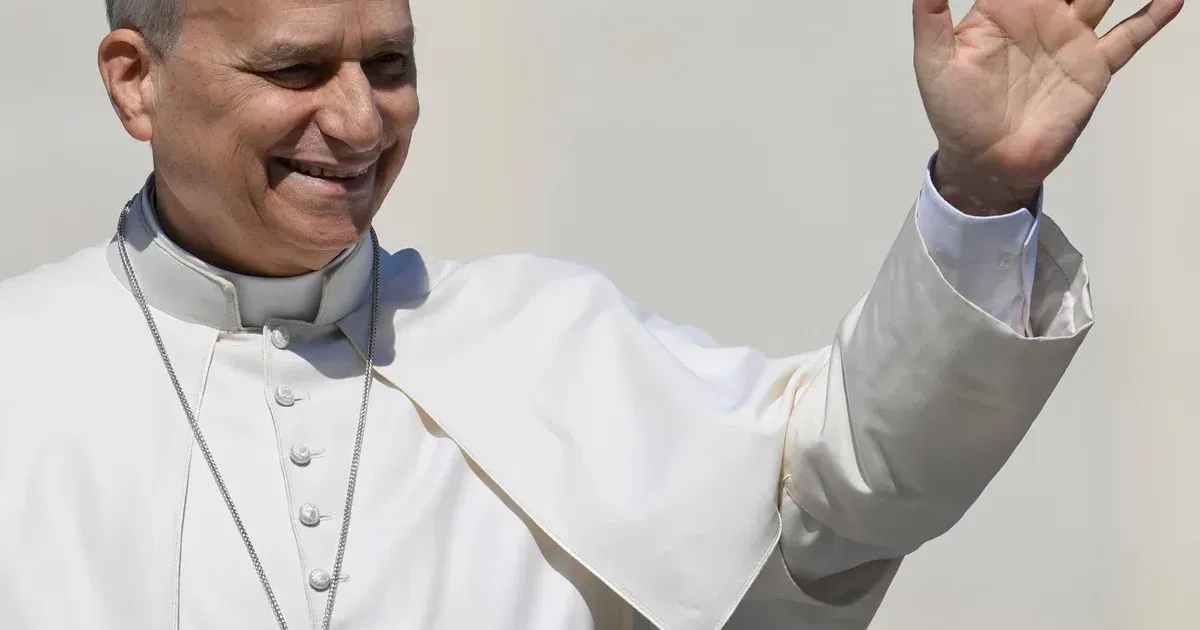
Pope Leo XIV's visit to Monaco carried more weight than the size of the principality suggests. The trip placed papal symbolism inside one of Europe’s wealthiest settings. That contrast gave the visit its news value beyond ceremony. The message was aimed at both Catholic identity and public inequality. The relevant record was current by March 28, 2026. A microstate can become a large stage when it concentrates monarchy, money, diplomacy and religious history inside a few visible square miles. It was the first papal appearance there in nearly five centuries, and it placed the new pontiff inside one of Europe's most concentrated symbols of wealth, monarchy and Catholic continuity.
Prince Albert and Princess Charlene received the pope during a tightly managed one-day visit that mixed ceremony, diplomacy and moral messaging. Monaco's official Catholic identity gave the Vatican a friendly stage. Monaco's reputation as a haven for global capital gave the message its edge.
Rare Papal Visit
The historical distance mattered. Papal travel is usually read through the priorities of the moment, but a gap of nearly five centuries turns itinerary into message before a single speech is delivered. A 488-year gap turns even a brief visit into a civic event, especially in a microstate where royal ritual and religious symbolism remain part of public identity. Crowds gathered along the route not only to see a pope, but to witness Monaco being acknowledged by the center of the Catholic world. The visit also allowed Leo to define part of his early papacy. Rather than choosing only a large European capital, he went to a small state where the contrast between faith and wealth could not be avoided. That contrast made the trip more than ceremonial.
Wealth and Responsibility
Leo's central message was that wealth must become service rather than insulation. In Monaco, the line also asks whether private generosity can compensate for economic structures that allow wealth to cluster so intensely in the first place. That is standard Catholic social teaching, but Monaco gives the line a sharper audience because the principality is built around the management, display and protection of wealth. In Monaco, that language lands differently than it would in a poorer country. The audience included people and institutions with the means to fund hospitals, climate programs, refugee support and anti-poverty work at significant scale.
The pope did not need to name casinos, tax residency or luxury real estate for the setting to do that work. Monte Carlo supplied the context. A call for humility and charity sounded sharper because it was delivered in a place where financial security is part of the national brand.
Local officials pointed to existing philanthropy, including foundations tied to health, conservation and humanitarian aid. The Vatican's challenge was not to deny that work, but to push beyond charity as reputation management toward charity as obligation.
Vatican Diplomacy
The visit also fit a diplomatic strategy. Early papal trips teach governments what kind of pontificate they are dealing with, and this one suggested a leader willing to use symbolic geography as part of the argument. Smaller Catholic-linked states can offer the Holy See symbolic influence at a time when larger European governments are often more secular and more politically complicated. Monaco gives the Vatican a courteous stage with global visibility. Prince Albert's environmental work gave the meeting another point of connection. Ocean protection, Mediterranean migration and climate vulnerability all sit within the moral vocabulary recent popes have used to keep Catholic social teaching relevant in policy debates.
Security, protocol and royal setting gave the day a traditional frame. The substance was more modern: whether old institutions can still speak credibly to global inequality. The Monaco visit also speaks to the way Catholic diplomacy uses place. A speech about wealth delivered in a poor country can sound like consolation; the same speech in Monaco sounds like direct address. Leo chose the harder audience because the setting made evasion more difficult.
For Monaco, the visit carried reputational value but also pressure. The principality can present itself as a Catholic state with philanthropic reach, yet the pope's message asks whether charity is large enough when wealth accumulation itself remains so concentrated. That question will linger after the motorcade and flags disappear.
Monaco Message
The analysis is that Leo used Monaco as a test case for his economic message. The Vatican cannot redistribute Monaco's fortunes, but it can challenge the moral comfort that often surrounds philanthropy when giving is treated as optional reputation work rather than a duty attached to abundance. Preaching about poverty in a wealthy enclave risks looking theatrical, but avoiding such places would be worse. If the Church wants to influence capital, it has to speak where capital gathers.
The unresolved question is whether the visit changes behavior or simply produces a dignified memory. Monaco's wealthy residents can applaud moral language without altering how money moves. That is the limit of papal diplomacy: it can frame conscience, but it cannot force conversion of habit.
Still, the choice of Monaco was not accidental. It let the new pope introduce himself as a moral actor willing to stand inside elite spaces and make those spaces answer religiously for the power they hold. That is a more ambitious posture than speaking only to audiences already convinced of the Church's social message. It also sets a benchmark for where Leo may choose to speak next. The location suggests that wealth itself will be one of his recurring audiences. It announced that Leo intends to address wealth directly, not only from the margins but from inside the rooms where wealth is comfortable. The message now has a clear target.