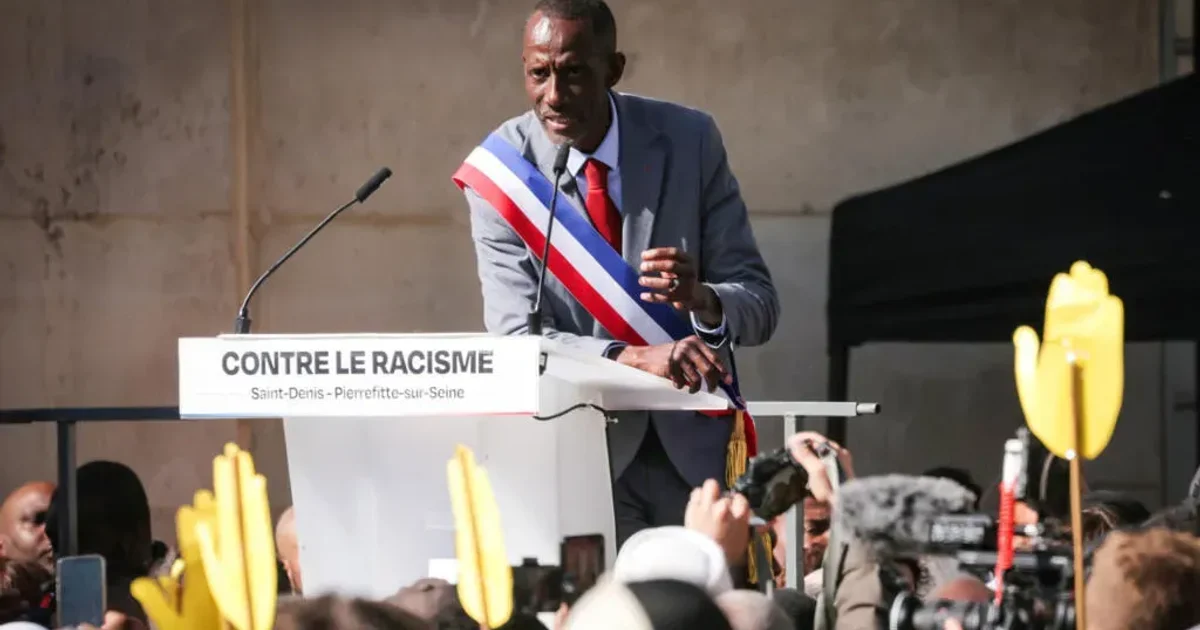
Thousands of demonstrators gathered in the largest Paris suburb to defend Mayor Bally Bagayoko against a surge of racist abuse. Bally Bagayoko, a left-wing politician, recently secured a clear majority in the first-round vote of the local election. The April 4, 2026 rally turned a local election dispute into a national racism debate. Success at the polls triggered a visceral reaction across social media platforms and national television networks. Protesters marched to denounce what they described as a coordinated campaign of disinformation and racial bigotry targeting the newly elected official.
Video footage from the rally showed a dense corridor of supporters carrying banners that called for an end to racial discrimination in French politics. Crowds moved through the urban center with a shared focus on protecting the democratic mandate of their chosen leader. Organizers noted that the turnout exceeded initial expectations, drawing residents from across the metropolitan area. Participation reached into the thousands as the march progressed toward the town hall. Mayor Bally Bagayoko has faced a barrage of insults since the election results were finalized. Critics and anonymous accounts on social media began circulating false claims about his background and political intentions. Television commentators on national channels also joined the fray, making derogatory remarks that prompted a public outcry. France currently faces a growing divide between its multicultural suburban populations and the traditionalist rhetoric often found in mainstream media circles.
Prosecution officials in Paris opened a formal investigation into the comments made on national television. Legal experts suggest the probe will focus on whether the rhetoric crossed the threshold into illegal hate speech under French law. Article R625-7 of the Penal Code provides a framework for punishing public provocation to discrimination or hatred. Investigators are reviewing transcripts from several broadcasts to determine the extent of the violations. This legal scrutiny responds to a formal complaint filed by the mayor's legal team.
Mayor Bally Bagayoko Wins First Round Vote
Voters in the suburb delivered a decisive blow to the opposition by handing Bally Bagayoko a majority in the first round. Achieving a victory without a runoff election is a rare feat in the complex landscape of French municipal politics. Local residents pointed to his focus on housing reform and youth employment as the main reasons for his popularity. Support remained high even as national political figures expressed skepticism about his left-wing agenda. The electoral victory confirmed a shift in local priorities toward more inclusive social policies.
Opponents of the mayor have struggled to provide a coherent political alternative. Instead, the discussion shifted toward personal attacks and the questioning of French universalist values. French political culture often avoids the explicit mention of race, yet the attacks on Bally Bagayoko have forced a conversation about the limitations of this colorblind approach. Voters expressed frustration that their democratic choice was being undermined by racialized narratives from outside the district.
Election data indicate that turnout was particularly high in working-class neighborhoods where Bally Bagayoko campaigned heavily. Grassroots organizations mobilized thousands of young people to cast their ballots, many for the first time. The resulting mandate gave the mayor a strong platform to implement his proposed reforms. National media outlets, however, focused more on the controversy surrounding his identity than on the specifics of his policy platform.
Disinformation campaigns targeted specific demographics within the suburb to sow distrust. False reports regarding the mayor's stance on religious secularism appeared in localized digital groups. Analysts observed that these tactics were designed to depress voter turnout or incite civil unrest. Despite these efforts, the community rallied around the mayor in the days following the official count.
French Prosecutors Open Racism Investigations
Justice officials confirmed that the investigation into televised comments is moving forward with high priority. Prosecutors are looking at specific segments where guests and hosts allegedly used racial slurs or dehumanizing metaphors. French law allows for heavy fines and even prison time for those found guilty of inciting racial hatred. Public broadcasters are also under pressure to explain why these comments were allowed to air without immediate pushback from moderators. Accountability for media companies is a central demand of the protest movement.
Paris Protest Defends Local Democracy
The protest matters because the abuse targeted both a person and the legitimacy of the voters who chose him. Prosecutors now have to show whether racist rhetoric in local politics will carry real consequences.