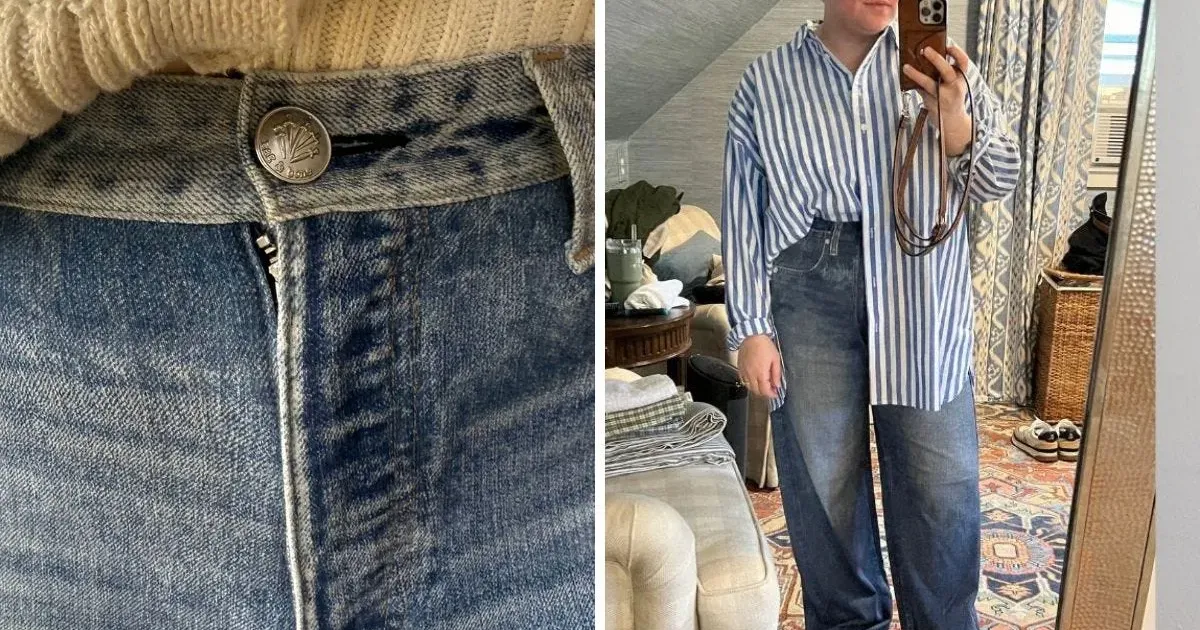
Rag and Bone's Miramar pants deliberately blur the line between luxury dressing and home comfort. The Miramar line drew renewed attention on March 11, 2026.
Digital Denim Sells the Illusion
Manhattan fashion showrooms often showcase rigid denim that requires months of breaking in before it becomes remotely wearable. Rag and Bone upended this traditional expectation when it introduced the Miramar line, a collection that uses high-definition digital printing to transpose the appearance of vintage denim onto soft, 100% cotton terry. What looks like a weathered pair of wide-leg jeans is, in reality, a pair of sweatpants engineered for maximum flexibility. Consumer demand for such hybrid garments has surged as professional environments increasingly embrace relaxed dress codes. While purists might scoff at the lack of authentic indigo dye, the market performance of the Miramar collection suggests that modern shoppers prioritize tactile comfort over textile heritage. Every detail of the original denim garment is captured in the print, including the copper rivets, the specific grain of the twill, and even the subtle wear patterns around the knees.
The line sells the look of effort without the discomfort of denim, which explains why the illusion has become part of its luxury appeal.
This fusion of aesthetic rigor and physical ease has positioned the Miramar as a staple in the premium apparel sector. Digital printing technology has evolved sharply since its early days of flat, unconvincing graphics. Designers at Rag and Bone utilize a trompe l'oeil technique, which translates from French as to deceive the eye. By scanning authentic vintage jeans, they create a blueprint that includes every imperfection, stitch, and wash gradient. The resulting image is then applied to the cotton fabric with enough precision that observers often cannot tell the difference from several feet away. The visual deception remains nearly perfect.
Authentic features like the button fly and the belt loops are merely two-dimensional images, yet they retain a three-dimensional appearance through clever shading and highlights. Real hip pockets are integrated into the design for utility, but the rear pockets are entirely faux, maintaining the smooth silhouette of loungewear while avoiding the bulk of extra fabric layers. The luxury loungewear market has seen a massive influx of capital as brands pivot away from restrictive tailoring. Rag and Bone, founded in 2002 by Marcus Wainwright and David Neville, has always sat at the intersection of British heritage and New York edge. Their decision to lean heavily into the Miramar line reflects a broader economic realization that the modern luxury consumer is willing to pay upwards of 200 dollars for sweatpants if they can pass for high-end denim.
Retail data from the early 2020s showed a decline in rigid denim sales, prompting established brands to innovate or lose market share. Success in this category requires more than comfort; it requires a convincing silhouette that does not look like gym attire. Competitive brands have attempted similar feats, but Rag and Bone remains the leader in the trompe l'oeil space because of the sheer resolution of their textile prints. Most consumers cite the versatility of the pant as the primary justification for the price tag, noting that the garment transitions easily from a home office to a casual dinner.
Engineering Comfort Through Trompe L'oeil
Twelve months of continuous wear-testing reveals that the Miramar Wide-Leg Cotton Pant maintains its shape far better than traditional jersey.
Cotton terry is prone to bagging out at the knees, yet the specific weight of the Miramar fabric provides enough structure to mimic the drape of real wide-leg jeans. The wide-leg variant features a 31.5-inch inseam and a high-rise waist, designed to puddle slightly at the ankle. This specific style comes in four distinct shades of denim blue, ranging from a dark indigo to a heavily distressed light wash. Critics who argue that printed fabric is a shortcut for quality often overlook the complexity of the printing process itself. Ensuring that the faux seams align perfectly across the actual garment seams requires a level of manufacturing precision that cheaper imitators cannot match. The mathematical alignment of the print to the pattern pieces is essential for maintaining the illusion of a real pair of jeans.
Why Comfort Became the Luxury Product
Walk into any high-end boutique today and you will notice a quiet surrender to the elastic waistband. We are living through an era of aesthetic fraud, where the appearance of effort is meticulously manufactured to hide a total lack of discipline. Rag and Bone has mastered this deception, selling us the lie of denim while we indulge in the sloth of sweatpants. It is a brilliant business move, certainly, but it also reflects a culture that has grown too soft to endure the break-in period of a real pair of Levi's. This shift toward the trompe l'oeil life is symptomatic of a broader societal trend where the image of the thing matters infinitely more than the thing itself. We want the prestige of the look without the discomfort of the reality.
While the engineering behind the Miramar is impressive, we should ask ourselves why we are so eager to pay designer prices for pajamas that pretend to be something else. Perhaps the reason is that we have become a civilization that values the performance of style over the substance of quality. If the future of fashion is a high-resolution print on a generic cotton base, then we have traded our textile heritage for a comfortable, digital illusion.