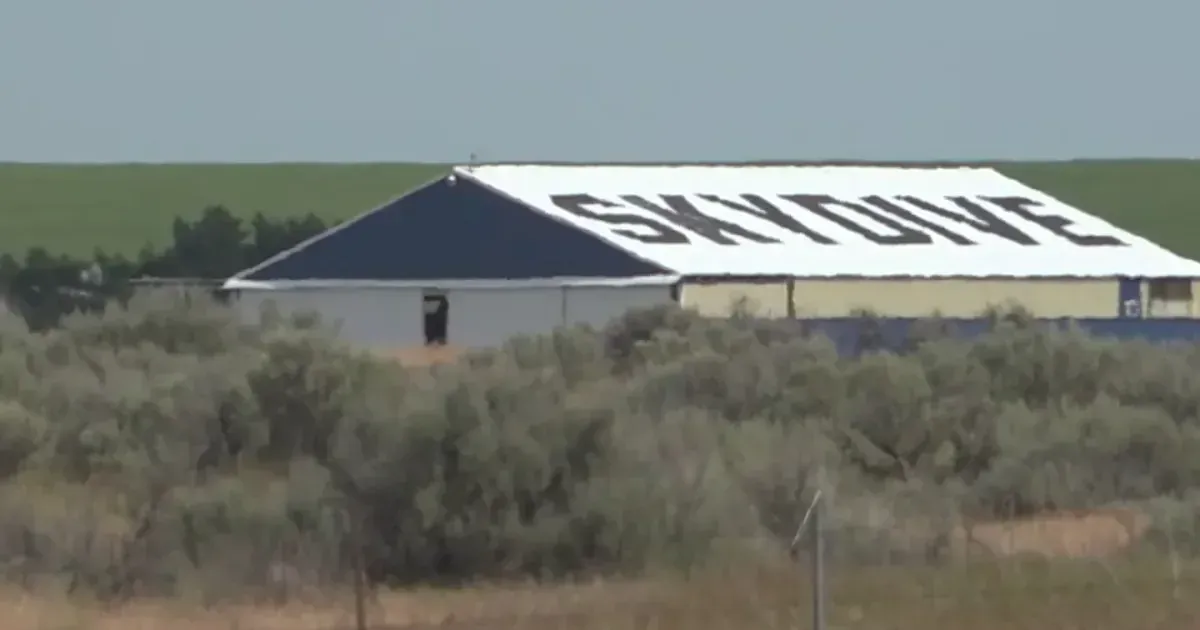
Randy Hubbs died during a multi-person skydiving excursion in rural Washington after a midair collision left him unresponsive before impact. Hubbs was participating in a group jump, a maneuver that requires precise spatial awareness and timed separation, when he struck another participant in flight. Local law enforcement in Adams County confirmed the fatality on May 26, 2026, following an emergency response to the designated drop zone area.
Initial reports from the scene suggest the incident occurred during the latter stages of the descent. Hubbs reportedly became unresponsive at an altitude of approximately 500 feet above ground level. This loss of consciousness prevented the experienced jumper from steering his parachute or preparing for a controlled landing. Witnesses on the ground observed his canopy drifting away from the primary landing area as the remaining members of the group touched down safely.
Adams County officials arrived shortly after the collision was reported to secure the site and coordinate with medical teams. Investigators began interviewing the other jumpers involved in the formation to determine the exact sequence of the contact. Evidence suggests the strike occurred with sufficient force to incapacitate Hubbs instantly. Parachute experts often cite the final 1,000 feet of a jump as the most critical window for canopy control and traffic management.
The impact of the collision forced Hubbs into an unguided flight path. Federal Aviation Administration regulations govern the conduct of group jumps, specifically addressing the separation distances required between participants. Investigators are reviewing whether the group maintained those intervals or whether environmental factors such as sudden wind shear contributed to the proximity. Preliminary findings do not indicate any mechanical failure with the parachute equipment itself, and deputies recovered the gear for forensic analysis.
Adams County Emergency Response and Investigation
Local deputies and emergency medical services focused their search on the perimeter of the drop zone where Hubbs was last seen drifting. Because the jumper was unresponsive, he could not use emergency toggles to avoid obstacles or flare the parachute for landing. Medical personnel pronounced him dead at the scene once his location was secured. The second jumper involved in the collision reportedly survived, though authorities have not released details about that person's condition.
One witness described the descent as a gradual drift away from the target area. Safety protocols for formation skydiving include rigorous pre-flight briefings that outline break-off altitudes and landing patterns. Federal Aviation Administration inspectors typically join such investigations to ensure the parachute was packed according to certified standards and that the altimeter was functioning. These reviews are standard procedure for any fatality involving civilian aviation or skydiving activities in the United States.
While the investigation continues, the Adams County Sheriff's Office is maintaining a cordon around the impact site to preserve physical evidence. Skydiving operations at the local facility are often paused during such inquiries to allow for a full safety audit. Hubbs was known within the local jumping community, and peers have begun cooperating with investigators to provide context on his experience level and the planned flight path of the group.
Canopy Collision Risks
Why do midair collisions remain a primary concern for the skydiving industry? Despite advances in automatic activation devices and canopy technology, the human element of spatial judgment during high-speed group maneuvers introduces a variable that hardware cannot always reduce. Most fatalities in the sport today result not from equipment failure but from canopy-to-canopy contact or midair strikes at low altitudes where the window for emergency recovery is nearly nonexistent.
This incident highlights the narrow margin for error in group formations. As jumpers move closer together to achieve complex aerial shapes, the closing speeds during a mistake can exceed 60 miles per hour. The industry must now consider whether current break-off altitudes, typically set at 3,000 to 4,000 feet, provide enough buffer for modern high-performance canopies. A single second of target fixation can lead to the type of tragedy seen in Adams County. The investigation will therefore matter beyond one fatal jump, because its findings can clarify whether spacing, communication, weather or descent planning created the conditions for the collision and whether additional training guidance is needed before future formation jumps.