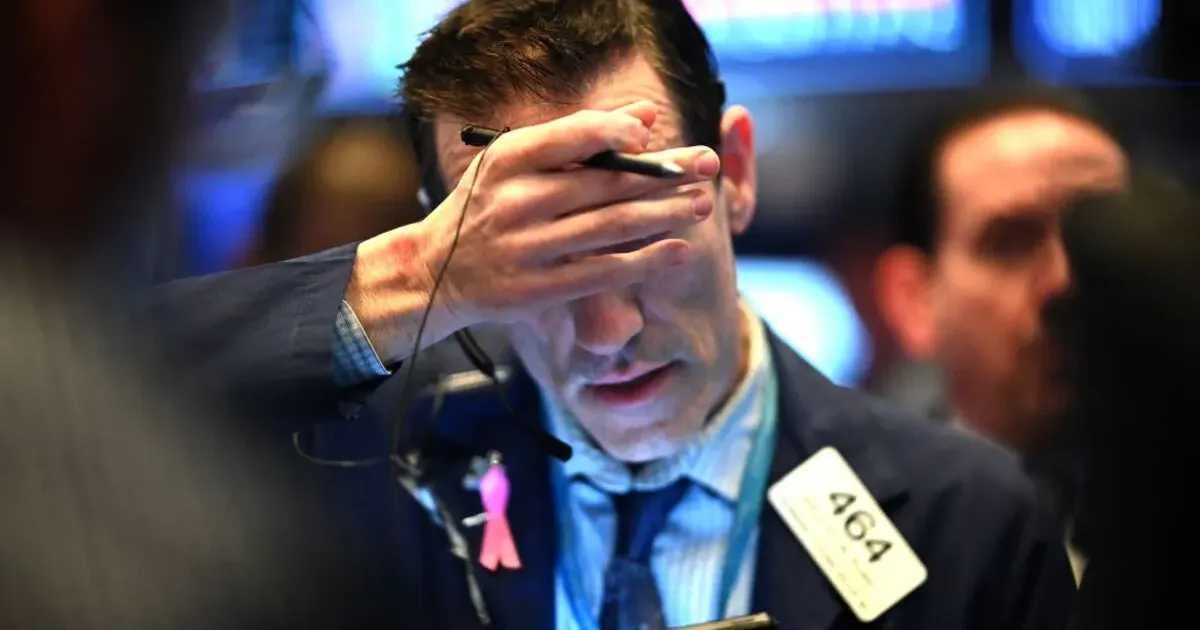
New recession research is challenging the idea that downturns reset economies cleanly or cheaply. The research debate sharpened on March 12, 2026
Downturns Do Not Cleanly Reset
Tyler Goodspeed spends his days analyzing how much pain a national economy can actually endure before it snaps. As the chief economist for ExxonMobil and a former chair of the Council of Economic Advisers, his view of the financial world is shaped by raw energy flows and high-level policy data. He recently appeared on the Trumponomics program to dismantle a long-held fear shared by many in the United States and the United Kingdom. Most retail investors believe a single bad month of jobs data or a stock market correction indicates an immediate downturn. Goodspeed argues otherwise, suggesting that the threshold for a true recession is much higher than the public assumes. History shows that modern diversified economies possess a resilience that borders on the stubborn. Even significant shocks to specific sectors often fail to drag the entire gross domestic product into negative territory for the sustained periods required for a formal recession declaration. Goodspeed points to the sheer volume of economic ruin necessary to tip the scales. A few failing banks or a dip in tech valuations usually lacks the gravity to pull down a multi-trillion-dollar system supported by deep labor markets and massive energy infrastructure.
Labor Markets Carry the Damage
Energy costs serve as the primary pulse of the global economy. When fuel remains accessible and production costs stay within certain margins, the broader system can absorb heavy blows in other areas. ExxonMobil records indicate that while consumer sentiment can turn sour quickly, actual industrial output often stays steady despite headlines of impending doom. Corporations have also learned to hoard cash and extend debt maturities, creating a buffer that did not exist in previous decades. These financial fortifications mean that high interest rates take much longer to filter through the system and cause actual damage to employment. Growth can stagnate without falling into the abyss. Goodspeed notes that the technical definition of a recession, two consecutive quarters of negative growth, remains elusive because the US economy has become a collection of loosely coupled engines. If the housing market stalls, the energy sector might be booming, because the findings challenged the easy story that recessions naturally clear the way for growth. If retail spending slows, government infrastructure projects often pick up the slack.
Policy Cannot Pretend Pain Is Efficient
Such decoupling prevents the domino effect that many analysts fear every time the Federal Reserve raises rates. Public perception rarely aligns with real-time economic data. While news outlets focus on the struggle of the average household, the aggregate numbers frequently show a different story of persistent spending and high employment. Goodspeed emphasizes that we are often looking at the wrong indicators when we try to time a market crash.
He suggests that we overvalue the impact of psychological shifts and undervalue the mechanical momentum of a massive labor force. Ruin is not a sudden event but a slow erosion. For a recession to take hold, a collapse must occur in the foundational pillars of the economy simultaneously. This requires a level of synchronized failure that is rare in a globalized trade environment.
Even during periods of high inflation, the sheer velocity of money can keep the GDP numbers afloat long after the average citizen feels like they are in a depression.
The Research Cuts Against Easy Optimism
Government agencies often release data that is months out of date by the time it reaches the public. This delay creates a fog where investors react to ghosts of the past rather than the reality of the present. Goodspeed argues that policy errors are a greater threat than market fluctuations. If the government overreacts to a minor dip, they risk creating the very instability they seek to prevent.
The resilience of the private sector is often underestimated by those who believe the economy is a fragile glass vase. Markets are far more like a rubber ball. They can be compressed and distorted by external pressures, but they have an inherent desire to return to their original shape. Goodspeed observes that the current fiscal environment, despite its challenges, lacks the specific ingredients for a deep, systemic collapse.
He points to the lack of massive subprime bubbles or over-leveraged industrial giants as a reason for optimism.
Destruction Is Not a Strategy
The lazy romance of creative destruction treats recession pain as if it were a cleansing ritual. That is an economist's abstraction, not a worker's life. Weak firms may disappear, but viable jobs, local businesses and community balance sheets can disappear with them.
Policy should treat recession damage as a cost to reduce, not a fire to admire from a safe distance. If downturns require more destruction than experts previously assumed, the conclusion is not that society should tolerate more pain. The conclusion is that policymakers should move earlier, because destruction is not a strategy when real people are the material being destroyed.